Dubai Telegraph - WHO clarifies terminology for air-transmitted pathogens

EUR -
AED 4.183233
AFN 72.900796
ALL 91.877285
AMD 414.797448
ANG 2.039348
AOA 1045.665194
ARS 1736.794975
AUD 1.614555
AWG 2.050323
AZN 1.940938
BAM 1.955317
BBD 2.295033
BDT 140.215334
BGN 1.917554
BHD 0.429594
BIF 3432.051477
BMD 1.139068
BND 1.45584
BOB 13.964547
BRL 5.909605
BSD 1.139418
BTN 109.116023
BWP 15.516164
BYN 3.442749
BYR 22325.7403
BZD 2.291733
CAD 1.611725
CDF 2665.420428
CHF 0.943457
CLF 0.027745
CLP 1095.522249
CNY 7.646851
CNH 7.670833
COP 3814.157008
CRC 518.071915
CUC 1.139068
CUP 27.347239
CVE 110.237745
CZK 24.358299
DJF 202.909834
DKK 7.475483
DOP 67.763247
DZD 152.391449
EGP 59.13438
ERN 17.086026
ETB 184.850299
FJD 2.559772
FKP 0.859986
GBP 0.859642
GEL 2.97871
GGP 0.859986
GHS 13.234728
GIP 0.859986
GMD 83.725913
GNF 10021.522331
GTQ 8.701849
GYD 238.411056
HKD 8.934226
HNL 30.583439
HRK 7.533575
HTG 149.123132
HUF 365.202455
IDR 20405.384913
ILS 3.471949
IMP 0.859986
INR 109.142689
IQD 1492.730945
IRR 1565734.922454
ISK 136.984803
JEP 0.859986
JMD 180.27543
JOD 0.807645
JPY 179.158416
KES 147.67349
KGS 99.609484
KHR 4633.85435
KMF 493.217009
KPW 1025.161906
KRW 1543.648431
KWD 0.351563
KYD 0.949565
KZT 504.7852
LAK 25558.681004
LBP 102039.372314
LKR 376.226984
LRD 195.991544
LSL 18.590804
LTL 3.363373
LVL 0.689012
LYD 7.285199
MAD 10.934597
MDL 20.225999
MGA 5030.756222
MKD 61.55978
MMK 2391.810486
MNT 4098.584327
MOP 9.206124
MRU 45.840667
MUR 54.140351
MVR 17.599037
MWK 1975.811511
MXN 20.137822
MYR 4.640683
MZN 72.79829
NAD 18.590804
NGN 1510.837951
NIO 41.929634
NOK 10.830092
NPR 174.585836
NZD 1.992947
OMR 0.439191
PAB 1.139418
PEN 3.868244
PGK 5.076745
PHP 71.01754
PKR 315.746636
PLN 4.37146
PYG 6716.339487
QAR 4.153473
RON 5.27298
RSD 117.420969
RUB 96.076247
RWF 1684.083636
SAR 4.274755
SBD 9.11313
SCR 15.836085
SDG 685.153819
SEK 11.296996
SGD 1.45562
SHP 0.859999
SLE 28.078458
SLL 23885.685201
SOS 651.238991
SRD 42.905863
STD 23576.41575
STN 24.493944
SVC 9.970535
SYP 14810.167401
SZL 18.586405
THB 38.01645
TJS 10.511601
TMT 3.99813
TND 3.373266
TOP 2.742603
TRY 55.748859
TTD 7.750084
TWD 36.141163
TZS 3024.152324
UAH 51.024285
UGX 4462.896617
USD 1.139068
UYU 45.648714
UZS 13485.665874
VES 970.977713
VND 29588.440307
VUV 134.963505
WST 3.127488
XAF 655.957
XAG 0.017716
XAU 0.000265798393
XCD 3.07839
XCG 2.053592
XDR 0.80538
XOF 655.957
XPF 119.331742
YER 269.560946
ZAR 18.57165
ZMK 10252.986409
ZMW 22.227505
ZWL 366.779554
SSP 6507.032816
MXV 2.282055
  • BCC

    1.0400

    77.14

    +1.35%

  • BCE

    -0.3300

    20.97

    -1.57%

  • NGG

    0.2600

    75.49

    +0.34%

  • CMSD

    -0.0700

    20.3

    -0.34%

  • RIO

    0.0900

    94.56

    +0.1%

  • CMSC

    -0.1100

    20.4

    -0.54%

  • GSK

    -0.4100

    49.24

    -0.83%

  • JRI

    -0.1500

    11.02

    -1.36%

  • BTI

    -0.3900

    55.63

    -0.7%

  • RBGPF

    -0.5900

    65.4

    -0.9%

  • BP

    -0.2600

    44.15

    -0.59%

  • VOD

    0.1300

    16.62

    +0.78%

  • RYCEF

    -0.3600

    19.31

    -1.86%

  • RELX

    0.0100

    33.52

    +0.03%

  • AZN

    2.0200

    166.58

    +1.21%

WHO clarifies terminology for air-transmitted pathogens
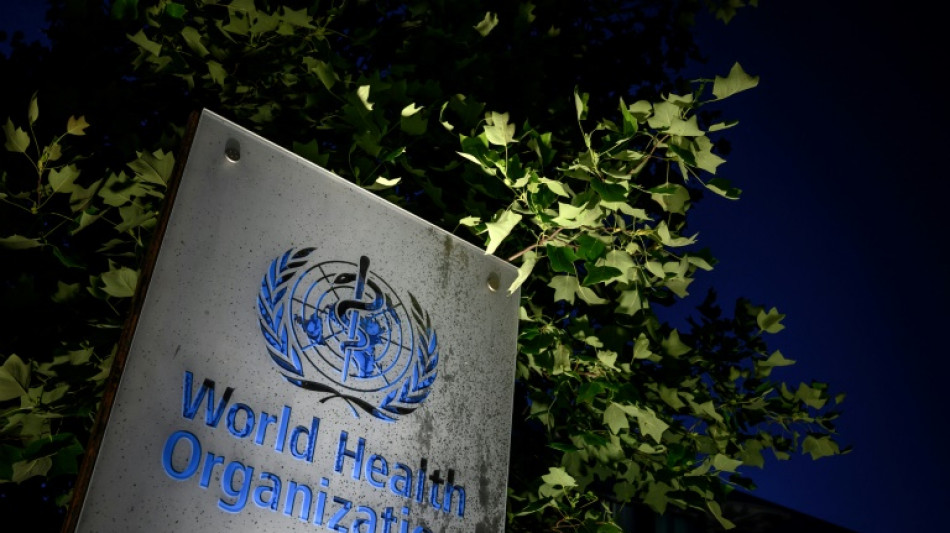
WHO clarifies terminology for air-transmitted pathogens / Photo: Fabrice COFFRINI - AFP

WHO clarifies terminology for air-transmitted pathogens

The World Health Organization on Thursday announced a new, catch-all terminology for pathogens that transmit through the air, erasing a distinction that caused dangerous confusion during the Covid pandemic.

Text size:

During the Covid-19 crisis the standoff between experts arguing over whether the SARS-CoV-2 virus spread through droplets or through an aerosol mist proved a crucial public health challenge.

In the initial months of the pandemic in early 2020, the WHO and other experts said the virus was spreading via droplets, emitted through coughs and sneezes.

It was understood that such droplets did not linger in the air but sank to cover surfaces that others might touch. That meant the main advice to ward off infection was frequent and thorough handwashing.

It took a while before most experts acknowledged that the virus was spreading more easily through the air, which required other precautions.

But as experts argued over whether or not Covid was airborne, it became apparent that there was a lack of a common understanding and terminology across scientific disciplines to describe the transmission of pathogens through the air.

"Varying terminologies highlighted gaps in common understanding and contributed to challenges in public communication and efforts to curb the transmission of the pathogen," the WHO said in a statement.

- 'Infectious respiratory particles' -

The WHO said that after more than two years of consultations, it had been agreed that all pathogen particles transmitted through the air, regardless of size, should be referred to as "infectious respiratory particles", or IRPs.

The new terminology will apply not just to the Covid virus, but to other respiratory infections such as tuberculosis, influenza and measles.

Broad agreement on the new terminology across the scientific community should improve understanding and make collaboration easier across disciplines, WHO chief scientist Jeremy Farrar told reporters in Geneva.

"It is difficult to make scientific progress unless we all agree with the terminology," he said.

The new terminology should simplify "the categorisation, so that we no longer have what I think were, to some degree, false dichotomies", he added.

Rather than distinguishing between two modes of transmission based on the size of the particles being transmitted, it is important to recognise there are many other factors driving transmission, he said. These factors included air humidity, temperature and airflow.

Agreeing on a single term was like reaching "base camp", Farrar said. From there, there was still a long climb to agreeing the best measures to take to avoid infection in hospitals, schools and transport systems.

The WHO said it did however maintain the distinction between two types of through-the-air transmission.

The first was airborne transmission or inhalation, when IRPs are expelled into the air and inhaled by another person.

The second was direct deposition, when IRPs are expelled into the air from an infectious person and then directly deposited on the exposed mouth, nose or eyes of another person nearby.

Y.El-Kaaby--DT