Dubai Telegraph - Chemists cook up way to remove microplastics using okra

EUR -
AED 4.391885
AFN 77.73245
ALL 96.680737
AMD 453.362804
ANG 2.140727
AOA 1096.625236
ARS 1729.226144
AUD 1.698812
AWG 2.154085
AZN 2.028889
BAM 1.957435
BBD 2.408311
BDT 146.112017
BGN 2.008331
BHD 0.450835
BIF 3542.258106
BMD 1.195884
BND 1.512663
BOB 8.261899
BRL 6.222752
BSD 1.195699
BTN 110.012871
BWP 15.593022
BYN 3.377721
BYR 23439.31995
BZD 2.404808
CAD 1.616404
CDF 2678.779488
CHF 0.916645
CLF 0.02601
CLP 1027.371699
CNY 8.316952
CNH 8.30659
COP 4383.248501
CRC 591.594034
CUC 1.195884
CUP 31.690917
CVE 110.357158
CZK 24.337307
DJF 212.927814
DKK 7.465781
DOP 75.122734
DZD 154.53088
EGP 55.993597
ERN 17.938255
ETB 186.006132
FJD 2.620901
FKP 0.867735
GBP 0.86622
GEL 3.22287
GGP 0.867735
GHS 13.062909
GIP 0.867735
GMD 87.299208
GNF 10492.762405
GTQ 9.174662
GYD 250.158905
HKD 9.333932
HNL 31.555352
HRK 7.530596
HTG 156.730884
HUF 381.486376
IDR 20081.278602
ILS 3.694441
IMP 0.867735
INR 110.038016
IQD 1566.408092
IRR 50376.599827
ISK 145.000561
JEP 0.867735
JMD 187.616677
JOD 0.847875
JPY 183.172901
KES 154.269291
KGS 104.579962
KHR 4809.015963
KMF 492.703782
KPW 1076.375603
KRW 1714.681599
KWD 0.366466
KYD 0.996432
KZT 600.661607
LAK 25720.478924
LBP 107075.918068
LKR 369.948941
LRD 221.204726
LSL 18.865955
LTL 3.531133
LVL 0.723378
LYD 7.511273
MAD 10.828142
MDL 20.111795
MGA 5344.46311
MKD 61.626944
MMK 2511.849432
MNT 4265.588281
MOP 9.613128
MRU 47.696831
MUR 53.99394
MVR 18.48828
MWK 2073.331419
MXN 20.609949
MYR 4.696829
MZN 76.249441
NAD 18.865955
NGN 1660.173487
NIO 44.00675
NOK 11.406572
NPR 176.020993
NZD 1.972706
OMR 0.459806
PAB 1.195699
PEN 3.998739
PGK 5.196339
PHP 70.554756
PKR 334.470313
PLN 4.210192
PYG 8023.700515
QAR 4.35884
RON 5.096258
RSD 117.415452
RUB 89.975943
RWF 1744.556863
SAR 4.485257
SBD 9.659961
SCR 16.576912
SDG 719.323943
SEK 10.557477
SGD 1.512865
SHP 0.897222
SLE 29.059164
SLL 25077.081761
SOS 682.169673
SRD 45.447765
STD 24752.377509
STN 24.520477
SVC 10.462737
SYP 13225.965024
SZL 18.85975
THB 37.468206
TJS 11.167926
TMT 4.185593
TND 3.42426
TOP 2.879401
TRY 51.931491
TTD 8.115777
TWD 37.562108
TZS 3067.441821
UAH 51.173434
UGX 4253.5521
USD 1.195884
UYU 45.247786
UZS 14550.150691
VES 428.695774
VND 31092.975444
VUV 142.990644
WST 3.24899
XAF 656.505241
XAG 0.010167
XAU 0.00022
XCD 3.231936
XCG 2.155
XDR 0.815622
XOF 656.505241
XPF 119.331742
YER 285.109995
ZAR 18.86427
ZMK 10764.390235
ZMW 23.644745
ZWL 385.074054
  • RYCEF

    0.0600

    16.66

    +0.36%

  • SCS

    0.0200

    16.14

    +0.12%

  • CMSC

    0.0260

    23.726

    +0.11%

  • RELX

    -1.3100

    36.07

    -3.63%

  • NGG

    -0.0300

    84.65

    -0.04%

  • VOD

    0.0350

    14.605

    +0.24%

  • GSK

    0.9250

    51.025

    +1.81%

  • BTI

    -0.3900

    59.77

    -0.65%

  • RBGPF

    0.0000

    82.4

    0%

  • AZN

    -0.2750

    92.945

    -0.3%

  • RIO

    0.8450

    94.215

    +0.9%

  • BCC

    -0.6400

    80.21

    -0.8%

  • CMSD

    0.0242

    24.075

    +0.1%

  • BP

    0.4600

    38.16

    +1.21%

  • JRI

    0.0900

    13.08

    +0.69%

  • BCE

    0.1800

    25.45

    +0.71%

Chemists cook up way to remove microplastics using okra

Chemists cook up way to remove microplastics using okra

Extracts of okra and other slimy plants commonly used in cooking can help remove dangerous microplastics from wastewater, scientists said Tuesday.

Text size:

The new research was presented at the spring meeting of the American Chemical Society, and offers an alternative to the synthetic chemicals currently used in treatment plants that can themselves pose risks to health.

"In order to go ahead and remove microplastic or any other type of materials, we should be using natural materials which are non-toxic," lead investigator Rajani Srinivasan, of Tarleton State University, said in an explainer video.

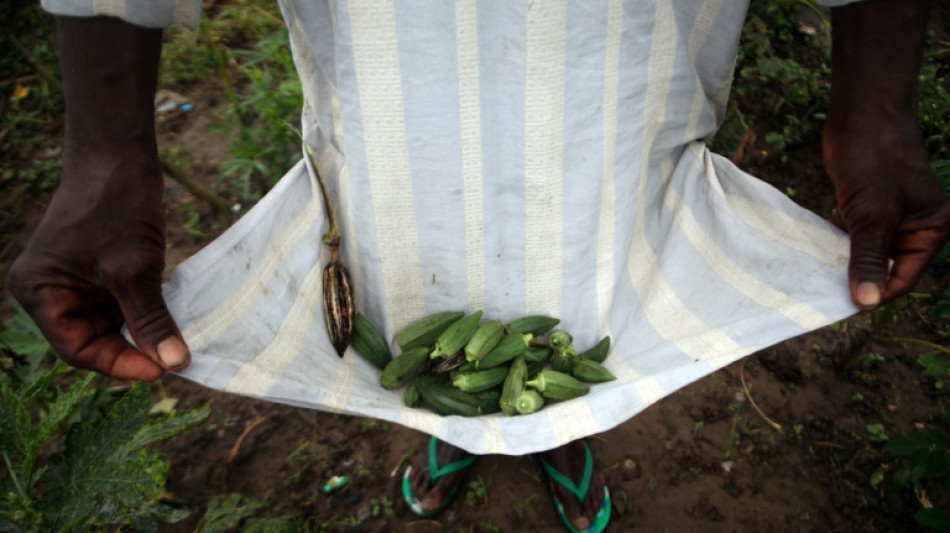
Okra is used as a thickening agent in many cuisines, such as Gumbo, a stew from Louisiana. It's also a staple of cuisine in South Asia, where it's called bhindi.

Srinivasan's past research had examined how the goo from okra and other plants could remove textile-based pollutants from water and even microorganisms, and she wanted to see if that would equally apply to microplastics.

Ingested microplastics -- defined as pieces five millimeters or smaller -- have been shown to harm fish in several ways, from disrupting their reproductive systems to stunting growth and causing liver damage.

The source of microplastics is the estimated eight billion tons of plastic produced since the 1950s, less than 10 percent of which has been recycled.

The rest eventually breaks down and is today found in every corner of the globe, from oceans and waterways to the air and soil, as well as our food.

It is feared there could be health impacts on humans, though more research is needed. Microplastics can also be carcinogenic and mutagenic, meaning they can potentially increase risks of cancer and DNA mutations.

Typical wastewater treatment removes microplastics in two steps.

First, those that float are skimmed off the top of the water. These however account for only a small fraction, and the rest are removed using flocculants, or sticky chemicals that attract microplastics into larger clumps.

The clumps sink to the bottom and can then be separated from the water.

The problem is that these synthetic flocculants, such as polyacrylamide, can break down into toxic chemicals.

So, Srinivasan and colleagues set about investigating how extracts of supermarket-bought okra, aloe, cactus, and fenugreek, tamarind and psyllium would perform.

They tested chains of carbohydrates, known as polysaccharides, from the individual plants, as well as in combination, on various microplastic-contaminated water, examining before and after microscopic images to determine how many particles had been removed.

They found that polysaccharides from okra paired with those from fenugreek could best remove microplastics from ocean water, while polysaccharides from okra paired with tamarind worked best in freshwater samples.

Overall, the plant-based polysaccharides worked just as well or better than polyacrylamide. Crucially, the plant-based chemicals are both non-toxic and can be used in existing treatment plants.

Ultimately, said Srinivasan, she hopes to scale up and commercialize the process, enabling greater access to clean and safer drinking water.

A.Al-Mehrazi--DT