On land and sea, climate change causing 'irreversible' losses: UN
Climate change has already caused "irreversible losses" for Nature, UN experts have said, warning that if emissions are not cut quickly, warming could trigger chain reactions with potentially catastrophic effects for all species, including humans.
All forms of life on Earth are linked together by a vast web of causes and consequences, the Intergovernmental Panel on Climate Change (IPCC) said in a new report on the impacts of global warming published this week.
Those effects are severe and wide ranging across the world's natural habitats.
"Climate change has caused substantial damages, and increasingly irreversible losses, in terrestrial, freshwater and coastal and open marine ecosystems," the IPPC says in its key Summary for Policymakers.
And "unsustainable development" is only increasing the vulnerability to danger.
- 'Tipping point' -
Many natural systems have already reached or are close to the limit of their ability to cope with the effects of a warming planet.
The oceans have absorbed huge quantities of carbon dioxide from the atmosphere as emissions have grown, but this has come at the cost of changing the water chemistry -- ocean acidification -- that harms sea life.
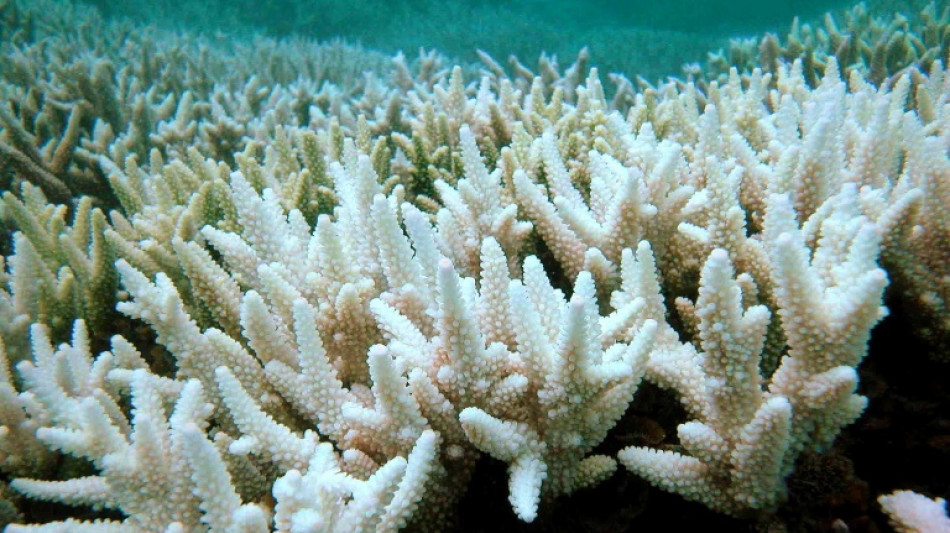
Warming is also linked to an increasing number of powerful marine heatwaves that drive harmful algal blooms, kill fish and cause coral bleaching.
Coral reefs are home to at least a quarter of all marine animals and plants.
But battered by repeated marine heatwaves, the world's shallow water corals are "unlikely to last the century", the IPCC said, if global warming continues without a dramatic reduction in emissions.
Forests, tropical or boreal, are also particularly threatened by rising temperatures, drought and fire.
Mortality increases of 20 percent have been recorded for trees in some areas.
At four degrees Celsius of warming, the IPCC report said, half of the Amazon could reach a "tipping point", becoming a savannah and starting to release its vast store of C02, further accelerating warming.
At just 2C, the world's permafrost could begin to thaw, releasing immense quantities of methane, a greenhouse gas much more powerful over the short term than CO2.
While the Paris agreement goal is to limit warming at 1.5C above pre-industrial levels, current international plans and pledges would see temperatures rise up to 2.7C.
- Extinctions -
The Earth is already believed to be entering its sixth mass extinction, driven by humanity's overconsumption and comprehensive destruction of species and habitats.
And global warming is increasingly adding to that threat, with two species -- the Golden Toad of Costa Rica and the Australian rodent Bramble Cays Melomys -- recognised as extinct because of climate change, the IPCC said.
A best case scenario is that nine percent of all the world's species will likely be "at high risk" of extinction with 1.5C of warming, the IPCC said.
At 4C the most pessimistic scenario is 39 percent imperilled.
Even the very lowest estimates are a thousand times higher than the natural rate of extinctions.
- Protection call -
On land or sea, for animal or plant, the threat is everywhere.
But the IPCC said only 15 percent of land, 21 percent of freshwater and eight percent of oceans are protected, throwing its weight behind calls to effectively safeguard 30 to 50 percent of the planet to maintain the "resilience of biodiversity and ecosystem services at a global scale".
That is because protecting nature is a virtuous circle: trees store carbon and provide shade, wetlands reduce flooding and protect coasts from erosion, insects participate in pollination.
Conversely, enabling destruction multiplies the dangers.
"Exploitation of wildlife and degradation of natural habitats have increased opportunities for 'spill over' of pathogens from wildlife to human populations and increased emergence of zoonotic disease epidemics and pandemics," the IPCC notes.
Many of these risks are now unavoidable in the short term, regardless of the trajectory of emissions of greenhouse gases, warns the report.
So the IPCC emphasises the need to fight global warming both by reducing emissions and preparing for its impacts.
And "the best way to achieve this is to let nature do the job," UN Environment Programme chief Inger Andersen told a press conference this week.
"We need large scale ecosystem restoration from ocean to mountain top."
S.Al-Balushi--DT