Dubai Telegraph - Ozone pollution linked to increased heart disease: study

EUR -
AED 4.301716
AFN 77.102387
ALL 96.616471
AMD 443.59572
ANG 2.096746
AOA 1074.110656
ARS 1684.073797
AUD 1.758993
AWG 2.108396
AZN 1.969468
BAM 1.957105
BBD 2.345093
BDT 142.274846
BGN 1.956007
BHD 0.441553
BIF 3442.853937
BMD 1.171331
BND 1.509332
BOB 8.045363
BRL 6.406593
BSD 1.164301
BTN 104.676122
BWP 15.509538
BYN 3.38224
BYR 22958.084827
BZD 2.341701
CAD 1.616097
CDF 2613.239193
CHF 0.932854
CLF 0.027423
CLP 1075.808999
CNY 8.274988
CNH 8.264125
COP 4497.758224
CRC 573.294418
CUC 1.171331
CUP 31.040268
CVE 110.338556
CZK 24.254104
DJF 207.332642
DKK 7.469173
DOP 74.991593
DZD 152.193302
EGP 55.679188
ERN 17.569963
ETB 181.362875
FJD 2.661028
FKP 0.878173
GBP 0.875095
GEL 3.150162
GGP 0.878173
GHS 13.36591
GIP 0.878173
GMD 86.093306
GNF 10127.924632
GTQ 8.912942
GYD 243.592389
HKD 9.11565
HNL 30.667099
HRK 7.533972
HTG 152.464242
HUF 384.781097
IDR 19525.616879
ILS 3.760118
IMP 0.878173
INR 105.789742
IQD 1525.229804
IRR 49342.312982
ISK 148.653646
JEP 0.878173
JMD 186.706858
JOD 0.830471
JPY 182.433563
KES 151.043402
KGS 102.432364
KHR 4665.189668
KMF 494.301362
KPW 1054.231935
KRW 1724.076032
KWD 0.359305
KYD 0.970243
KZT 603.629828
LAK 25249.724748
LBP 104262.760889
LKR 359.538149
LRD 205.499626
LSL 19.790509
LTL 3.458635
LVL 0.708527
LYD 6.336359
MAD 10.761174
MDL 19.82213
MGA 5198.532133
MKD 61.550841
MMK 2459.697828
MNT 4154.37601
MOP 9.332201
MRU 46.432945
MUR 53.96325
MVR 18.043867
MWK 2018.971787
MXN 21.296909
MYR 4.814311
MZN 74.859436
NAD 19.790509
NGN 1696.918251
NIO 42.849297
NOK 11.831326
NPR 167.483226
NZD 2.014724
OMR 0.450386
PAB 1.164276
PEN 3.91441
PGK 4.940378
PHP 69.135453
PKR 329.125834
PLN 4.227977
PYG 7933.458103
QAR 4.244229
RON 5.090017
RSD 117.381377
RUB 92.827568
RWF 1694.651428
SAR 4.395478
SBD 9.640746
SCR 16.086003
SDG 704.554117
SEK 10.833077
SGD 1.515035
SHP 0.878802
SLE 28.228883
SLL 24562.220258
SOS 664.251324
SRD 45.233288
STD 24244.183864
STN 24.516763
SVC 10.187748
SYP 12951.233403
SZL 19.783611
THB 37.189173
TJS 10.769872
TMT 4.111371
TND 3.422281
TOP 2.820284
TRY 49.900805
TTD 7.89523
TWD 36.561336
TZS 2881.45984
UAH 49.291291
UGX 4156.771079
USD 1.171331
UYU 45.630419
UZS 13975.25684
VES 301.742191
VND 30838.213177
VUV 143.479984
WST 3.256414
XAF 656.402992
XAG 0.018862
XAU 0.000278
XCD 3.16558
XCG 2.098417
XDR 0.816355
XOF 656.4086
XPF 119.331742
YER 279.391668
ZAR 19.827656
ZMK 10543.376279
ZMW 27.076397
ZWL 377.168059
  • RYCEF

    0.2300

    14.85

    +1.55%

  • VOD

    0.0350

    12.595

    +0.28%

  • SCS

    0.0200

    16.14

    +0.12%

  • RIO

    0.4100

    76.65

    +0.53%

  • NGG

    0.2600

    74.9

    +0.35%

  • GSK

    0.4700

    48.88

    +0.96%

  • AZN

    -0.4450

    91.065

    -0.49%

  • BTI

    0.1450

    58.905

    +0.25%

  • BCC

    0.7400

    77.75

    +0.95%

  • JRI

    -0.0350

    13.685

    -0.26%

  • RELX

    0.2900

    40.37

    +0.72%

  • RBGPF

    3.1200

    81.17

    +3.84%

  • BCE

    0.3400

    23.53

    +1.44%

  • CMSC

    0.0650

    23.365

    +0.28%

  • CMSD

    0.0350

    23.315

    +0.15%

  • BP

    -0.1600

    35.72

    -0.45%

Ozone pollution linked to increased heart disease: study
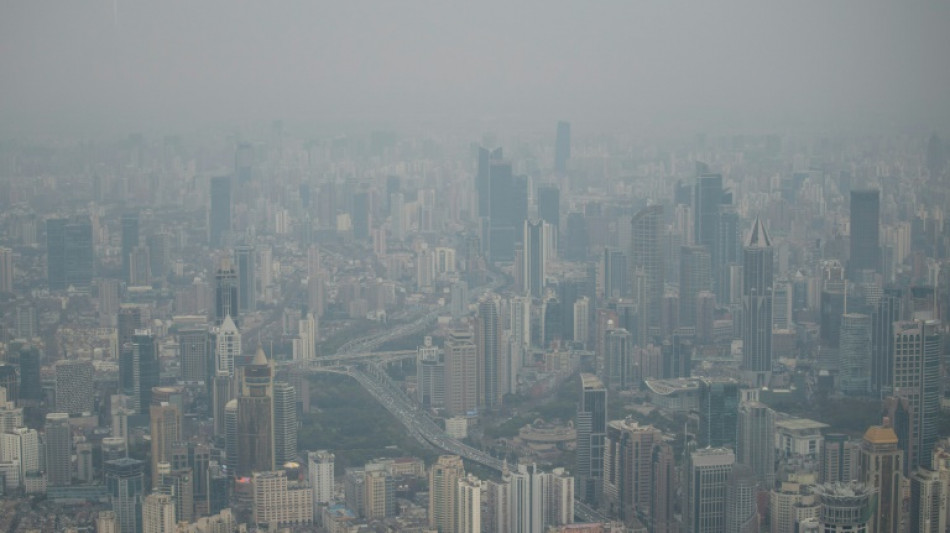
Ozone pollution linked to increased heart disease: study / Photo: Johannes EISELE - AFP/File

Ozone pollution linked to increased heart disease: study

Ozone air pollution is linked to a higher rate of hospitalisations for heart diseases, according to a large study released Friday, the latest warning of the health dangers posed by greenhouse gases.

Text size:

While a layer of ozone in the upper atmosphere helps block harmful ultraviolet (UV) radiation from reaching Earth, at ground level it is a major component of the smog polluting most big cities.

Scientists have warned that a different kind of air pollution, fine particulate matter known as PM2.5, causes 8.8 million premature deaths a year, but ozone's full impact on health is still becoming clear.

Ozone is created in the atmosphere by a chemical reaction when two pollutants, often emitted by cars or industry, combine in the presence of sunlight, and has been shown to interfere with plant photosynthesis and growth.

The new study said it was the first to evaluate the risk of hospitalisation for heart disease when ozone levels rise above the World Health Organization's daily guideline of 100 microgrammes per cubic metre of air.

For the study, published in the European Heart Journal, a team of China-led researchers looked at data on hospital admissions from 2015 to 2017 in 70 Chinese cities collected for health insurance purposes.

The data covered 258 million people across 70 cities, representing roughly 18 percent of China's population.

The researchers compared the hospitalisations to air quality data tracked in real-time across the cities.

It found that -- independent of other pollutants -- ozone was associated with more than three percent of hospitalisations for coronary heart disease, heart failure and stroke.

Also, each increase of 10 microgrammes of ozone per cubic metre of air was linked to a 0.75 percent rise in hospitalisations for heart attacks, and to a 0.40 percent increase for stroke.

"Although these increments look modest," the impact would be "amplified by more than 20 times" when ozone levels soar above 200 microgrammes in the summer, study author Shaowei Wu of Xi'an Jiaotong University and his colleagues told AFP.

In this extreme example, ozone exposure would be linked to 15 percent of heart attacks and eight percent of strokes, the researchers said.

- Key for health, climate -

The researchers called for more aggressive action to reduce the consumption of fossil fuels, as well as a warning system so people could limit their exposure on high ozone days.

Because the study was observational, it was not able to directly show that ozone pollution causes heart disease.

But Chris Malley, an air pollution researcher at York University n Britain, who was not involved in the study, said it added to a growing "weight of evidence that there is a causal relationship".

In 2017, research led by Malley that estimated that ozone pollution was linked to more than one million deaths a year from respiratory disease.

"If cardiovascular disease were added to this total, then the health burden would be substantially higher than we estimated," Malley told AFP.

"Ozone is not just a threat to human health, it also has a large part to play in climate change," he added.

"Taking action to reduce ozone is therefore a key way to improve public health and combat climate change at the same time."

D.Naveed--DT