
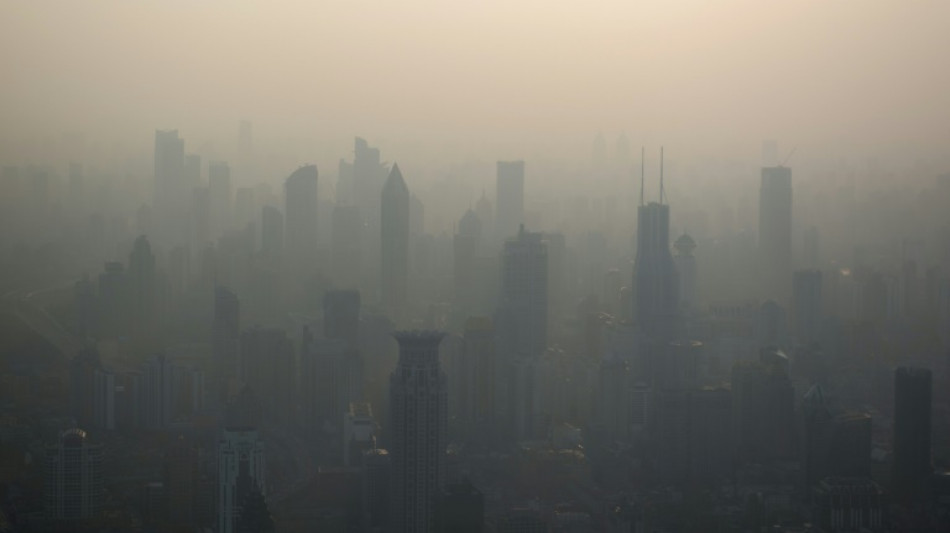
'Threat multiplier': How climate change affects health / Photo: JOHANNES EISELE - AFP/File
Deadlier than Covid, or even rivalling cancer? Researchers have been increasingly attempting to calculate the effect climate change will have on health if the world does not act quickly to reduce carbon emissions.
The World Health Organization, which says climate change is the single biggest health threat facing humanity, has called for the issue to be "front and centre" in negotiations at the COP27 summit being held in Egypt.
But quantifying the overall impact is an extremely complicated task, experts told AFP, because global warming affects health in many different ways, from the immediate dangers of rising heat and extreme weather to longer-term food and water shortages, air pollution and disease.
The WHO estimates that climate change will cause 250,000 extra deaths a year from malnutrition, malaria, diarrhoea and heat stress between 2030 and 2050.
That is widely thought to be a "massively conservative estimate" of the true toll, partly because it only comes from four sources, said Jess Beagley, policy lead at the NGO Global Climate and Health Alliance.
"Climate change is a threat multiplier," she told AFP.
"As climate change worsens, we're going to see the biggest threats to human health increase."
Nearly 70 percent of all deaths worldwide are from diseases that could be made worse by global warming, according to a report this year from the IPCC, the United Nations' panel of climate experts.
- 4.2 million more deaths? -
Another major health threat comes from food shortages. Nearly 100 million additional people faced severe food insecurity in 2020 compared to 1981-2010, according to a report last month from The Lancet Countdown, a leading effort to quantify climate change's impact on health.
Extreme drought has increased by nearly a third over the last 50 years, it added, putting hundreds of millions at risk of lacking access to fresh water.
And air pollution contributed to 3.3 million deaths in 2020, 1.2 million of which were directly related to fossil fuel emissions, the report found.
Researchers have also been sounding the alarm that warmer temperatures are pushing virus-carrying animals like mosquitoes into new areas, increasing the spread of existing diseases -- and raising the risk of new ones jumping across to humans.
The likelihood of dengue transmission rose by 12 percent over the last 50 years, while warming temperatures extended malaria season in parts of Africa by 14 percent, the Lancet Countdown report said.
Projecting into the future, a new platform launched last week by the United Nations Development Programme and the Climate Impact Lab warned that global warming could become deadlier than cancer in some parts of the world.
Under the modelling research's worst-case scenario in which fossil fuel emissions are not rapidly scaled back, climate change could cause death rates to increase by 53 deaths per 100,000 people worldwide by 2100 -- around double the current rate for lung cancer.
For the current global population, that would mean 4.2 million additional deaths a year, more than the official toll from Covid-19 in 2021.
- 'Exacerbate inequality' -
Climate Impact Lab's Hannah Hess told AFP that the projections were probably conservative because they compared previous data on mortality and weather with possible future temperatures, so did not include potential threats such as vector-borne diseases.
The platform also gave specific local projections for more than 24,000 regions worldwide. Under the worst-case scenario, it found that in Bangladesh's capital Dhaka, climate change-related deaths could double those from all cancers by 2100.
The study did project that death rates would fall in some northern, mostly wealthy nations, where fewer cold spells could lead to a net improvement in health.
This "speaks even more to the potential of climate change to exacerbate inequality", she added.
There have been calls to include such additional deaths into the "social cost of carbon", the price put on the harm attributable to a tonne of CO2.
Research published in September estimated that the current price of $51 per metric tonne was nearly four times too low, in part because it underestimated the effect of extra deaths.
The global charity Wellcome Trust is among those funding further research on global warming's impact on health, according to its climate and health director Alan Dangour.
Dangour told AFP that soon "climate change will influence every aspect of public health".
"If we don't embed climate change into our thinking, we've completely missed the point."
I.Mansoor--DT



