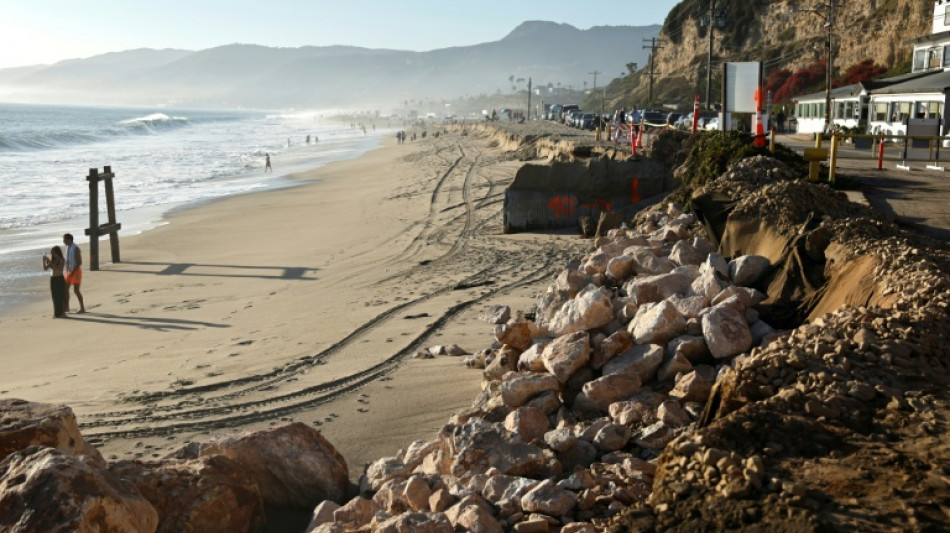
California declares state of emergency ahead of El Nino / Photo: MARIO TAMA - GETTY IMAGES NORTH AMERICA/AFP
California's governor on Monday declared a state of emergency as the US west coast readies for what is expected to be a damaging El Nino.
Forecasters say the coming months could bring powerful and damaging storms to the region because of this weather pattern, with the threat of higher-than-usual tides that could trigger coastal flooding.
Governor Gavin Newsom said the state needed to get ahead of problems instead of waiting for them to happen.
"This action is about giving communities the support they need, giving first responders the tools to do their jobs, and giving families the confidence that their state is ready," he said.
"We are preparing for this El Nino early because every Californian deserves to be safe in their home, connected to their community, and protected when severe weather comes."
Monday's declaration is procedural and intended to make it easier for state agencies to access resources, and to pre-position flood-fighting supplies like sandbags and pumps.
The proclamation also prepares the California National Guard to support flood response, search-and-rescue, engineering, and logistics missions when needed, officials said.
El Nino is the warming phase of a natural cycle in the tropical Pacific, known as the El Nino-Southern Oscillation (ENSO), and comes along every two to seven years.
It sets in when east-to-west trade winds ease, allowing warm water which normally collects in the western Pacific Ocean to slide back east and rise to the surface.
When those warmer-than-average surface temperatures last for a few months, they cause more storms and clouds over the region, which in turn cause ripple effects through the entire global atmosphere: hotter and drier conditions in some places, cooler and wetter in others.
Human-caused climate change increases El Nino's impacts. A warmer atmosphere holds more moisture, so El Nino-linked rains can turn more extreme. It also dries out soil, deepening drought where El Nino brings it.
This year's El Nino has a 69 percent chance of becoming the strongest on record, according to the National Oceanic and Atmospheric Administration, and is already unleashing extreme weather across the globe even though it is not expected to peak until October-December.
California's coastline has already been battered by storms that have damaged or destroyed homes.
Coastal erosion also forced the cancellation of a music festival in Santa Monica that had been set to feature The Killers, Olivia Dean and Jack White.
Y.Rahma--DT