Dubai Telegraph - Nepal glacier saw exceptional heat before collapse caused deadly floods: researcher

EUR -
AED 4.264249
AFN 76.055135
ALL 91.978014
AMD 422.534157
ANG 2.078171
AOA 1065.917253
ARS 1755.35055
AUD 1.610267
AWG 2.090034
AZN 1.968684
BAM 1.95321
BBD 2.338199
BDT 142.592116
BGN 1.969702
BHD 0.437719
BIF 3473.348614
BMD 1.16113
BND 1.469832
BOB 14.482792
BRL 5.956136
BSD 1.16096
BTN 109.628134
BWP 15.543386
BYN 3.570465
BYR 22758.149089
BZD 2.334803
CAD 1.602545
CDF 2647.376589
CHF 0.942553
CLF 0.027477
CLP 1084.94856
CNY 7.792697
CNH 7.792129
COP 3632.084482
CRC 526.901199
CUC 1.16113
CUP 30.769946
CVE 110.118955
CZK 24.198821
DJF 206.725831
DKK 7.474624
DOP 68.718862
DZD 154.68503
EGP 59.254087
ERN 17.416951
ETB 188.252431
FJD 2.550364
FKP 0.857551
GBP 0.858429
GEL 3.024711
GGP 0.857551
GHS 13.205486
GIP 0.857551
GMD 85.923227
GNF 10204.422481
GTQ 8.862208
GYD 242.877884
HKD 9.105036
HNL 31.14769
HRK 7.534686
HTG 151.819957
HUF 365.038974
IDR 20476.52853
ILS 3.511693
IMP 0.857551
INR 110.116696
IQD 1520.796147
IRR 1596089.374166
ISK 140.392143
JEP 0.857551
JMD 184.365486
JOD 0.82318
JPY 178.901688
KES 150.284756
KGS 101.541034
KHR 4700.806058
KMF 492.318921
KPW 1045.017391
KRW 1561.324824
KWD 0.35887
KYD 0.967425
KZT 527.325178
LAK 26015.720802
LBP 103960.418218
LKR 380.868155
LRD 203.159685
LSL 18.560644
LTL 3.428515
LVL 0.702356
LYD 7.379213
MAD 10.89535
MDL 20.054575
MGA 4971.40669
MKD 61.443511
MMK 2437.783111
MNT 4177.240266
MOP 9.375247
MRU 46.636149
MUR 54.410331
MVR 17.95084
MWK 2013.030226
MXN 19.707129
MYR 4.716044
MZN 74.196673
NAD 18.560644
NGN 1534.386849
NIO 42.723338
NOK 10.744221
NPR 175.405369
NZD 1.98696
OMR 0.446459
PAB 1.16086
PEN 3.894868
PGK 5.158159
PHP 72.792444
PKR 322.4138
PLN 4.315897
PYG 6915.827909
QAR 4.219903
RON 5.251209
RSD 117.351891
RUB 100.523092
RWF 1712.32903
SAR 4.361144
SBD 9.289635
SCR 16.036239
SDG 698.422839
SEK 11.163905
SGD 1.470327
SHP 0.860242
SLE 28.621827
SLL 24348.315802
SOS 663.420141
SRD 43.826274
STD 24033.047838
STN 24.467445
SVC 10.157616
SYP 15097.012873
SZL 18.557388
THB 38.24722
TJS 10.720935
TMT 4.063955
TND 3.388263
TOP 2.795723
TRY 56.267783
TTD 7.880616
TWD 36.615651
TZS 3072.965649
UAH 51.599766
UGX 4388.180192
USD 1.16113
UYU 46.727826
UZS 13686.965589
VES 936.308689
VND 30155.128108
VUV 137.031105
WST 3.156052
XAF 655.088192
XAG 0.017617
XAU 0.000264
XCD 3.138012
XCG 2.092243
XDR 0.820979
XOF 655.088192
XPF 119.331742
YER 275.187804
ZAR 18.652411
ZMK 10451.569019
ZMW 22.260477
ZWL 373.883404
  • RYCEF

    0.1400

    19.92

    +0.7%

  • VOD

    0.3200

    16.9

    +1.89%

  • BCC

    2.0900

    79.21

    +2.64%

  • RBGPF

    0.0000

    70

    0%

  • CMSC

    -0.1100

    20.81

    -0.53%

  • CMSD

    -0.0700

    20.69

    -0.34%

  • BCE

    -0.1400

    23.67

    -0.59%

  • JRI

    -0.0700

    12.14

    -0.58%

  • RIO

    0.4300

    103.27

    +0.42%

  • NGG

    -0.0500

    78.12

    -0.06%

  • GSK

    -0.9800

    49.89

    -1.96%

  • BTI

    -0.6200

    55.35

    -1.12%

  • RELX

    -1.1400

    35.51

    -3.21%

  • AZN

    -2.0700

    162.7

    -1.27%

  • BP

    0.2300

    43.81

    +0.52%

Nepal glacier saw exceptional heat before collapse caused deadly floods: researcher
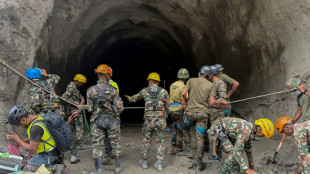
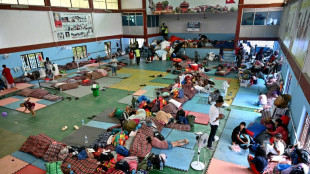
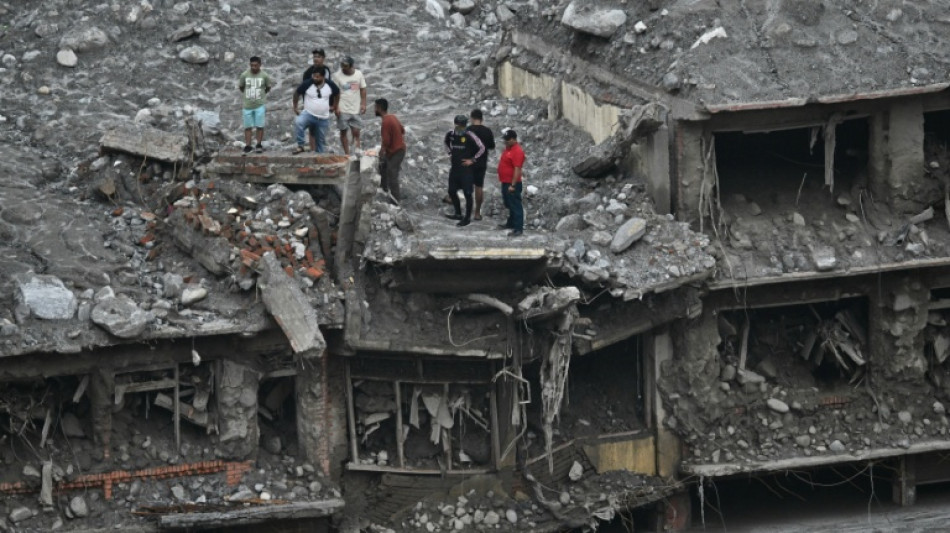
Nepal glacier saw exceptional heat before collapse caused deadly floods: researcher / Photo: Pedro PARDO - AFP

Nepal glacier saw exceptional heat before collapse caused deadly floods: researcher

The mountain section whose collapse triggered fatal floods in Nepal and China on August 26 had experienced unprecedented heat for the time of year, meteorological data analysed by a researcher shows.

Text size:

Average temperatures on the mountain glacier at an altitude of 5,200 metres (17,060 feet) were estimated at around five degrees Celsius between August 21 and 26.

This is exceptionally high.

They had not exceeded 4.0C over the same period in more than 55 years of data recording, although no direct link to the collapse has so far been established.

This series of highly localised temperatures was reconstructed by Robert Rohde, chief scientist at the independent Berkeley Earth organisation in California.

At the site of the collapse, the average temperature recorded over that six-day period has risen by about 1.8C since the mid-20th century.

Without the additional heat brought by climate change, a comparable temperature pattern "would probably occur only once in a few thousand years", Rohde calculated for AFP.

The collapse came during the Langtang region's fourth-hottest summer on record, according to AFP's analysis of data from Europe's Copernicus observatory dating back to 1970.

- Tipping point -

"These hot conditions can also explain permafrost thaw and combined slope and glacier collapse," said French climatologist Valerie Masson-Delmotte.

Permafrost acts as ice cement, holding rock faces together. Its degradation makes them more unstable.

Satellite images also showed significant snowmelt in the days before the disaster, providing "a substantial source of liquid water that can infiltrate fractures in the mountain and facilitate landslides", said Etienne Berthier, a glaciologist at France's CNRS research agency.

Experts remain cautious, however, about the precise role played by the heatwave.

"It's not as straightforward as 'high temperature equals collapse,'" Kristen Cook, a geomorphologist at the Grenoble Alpes University in France, told AFP.

"If the temperature acted as a trigger, it seems that it needed to wait until the rock was right at the tipping point of collapse," she added.

Researchers are now examining the small movements observed in the mountain in the years before the collapse and their interaction with changes in temperature.

"Proving the rock near the fracture plane was significantly weakened as a result of meltwater and/or permafrost thaw" would be a "smoking gun" of climate change, according to Rhode of Berkeley Earth.

His temperature analysis used data from the Copernicus programme's ERA5 climate model and a network of 14 high-altitude weather stations located between nine and 140 kilometres (six and 87 miles) from the collapsed glacier.

A.Krishnakumar--DT