Dubai Telegraph - Climate, collectors blamed for S.Africa's succulents decline

EUR -
AED 4.391885
AFN 77.73245
ALL 96.680737
AMD 453.362804
ANG 2.140727
AOA 1096.625236
ARS 1729.226144
AUD 1.698812
AWG 2.154085
AZN 2.028889
BAM 1.957435
BBD 2.408311
BDT 146.112017
BGN 2.008331
BHD 0.450835
BIF 3542.258106
BMD 1.195884
BND 1.512663
BOB 8.261899
BRL 6.222752
BSD 1.195699
BTN 110.012871
BWP 15.593022
BYN 3.377721
BYR 23439.31995
BZD 2.404808
CAD 1.616404
CDF 2678.779488
CHF 0.916645
CLF 0.02601
CLP 1027.371699
CNY 8.316952
CNH 8.30659
COP 4383.248501
CRC 591.594034
CUC 1.195884
CUP 31.690917
CVE 110.357158
CZK 24.337307
DJF 212.927814
DKK 7.465781
DOP 75.122734
DZD 154.53088
EGP 55.993597
ERN 17.938255
ETB 186.006132
FJD 2.620901
FKP 0.867735
GBP 0.86622
GEL 3.22287
GGP 0.867735
GHS 13.062909
GIP 0.867735
GMD 87.299208
GNF 10492.762405
GTQ 9.174662
GYD 250.158905
HKD 9.333932
HNL 31.555352
HRK 7.530596
HTG 156.730884
HUF 381.486376
IDR 20081.278602
ILS 3.694441
IMP 0.867735
INR 110.038016
IQD 1566.408092
IRR 50376.599827
ISK 145.000561
JEP 0.867735
JMD 187.616677
JOD 0.847875
JPY 183.172901
KES 154.269291
KGS 104.579962
KHR 4809.015963
KMF 492.703782
KPW 1076.375603
KRW 1714.681599
KWD 0.366466
KYD 0.996432
KZT 600.661607
LAK 25720.478924
LBP 107075.918068
LKR 369.948941
LRD 221.204726
LSL 18.865955
LTL 3.531133
LVL 0.723378
LYD 7.511273
MAD 10.828142
MDL 20.111795
MGA 5344.46311
MKD 61.626944
MMK 2511.849432
MNT 4265.588281
MOP 9.613128
MRU 47.696831
MUR 53.99394
MVR 18.48828
MWK 2073.331419
MXN 20.609949
MYR 4.696829
MZN 76.249441
NAD 18.865955
NGN 1660.173487
NIO 44.00675
NOK 11.406572
NPR 176.020993
NZD 1.972706
OMR 0.459806
PAB 1.195699
PEN 3.998739
PGK 5.196339
PHP 70.554756
PKR 334.470313
PLN 4.210192
PYG 8023.700515
QAR 4.35884
RON 5.096258
RSD 117.415452
RUB 89.975943
RWF 1744.556863
SAR 4.485257
SBD 9.659961
SCR 16.576912
SDG 719.323943
SEK 10.557477
SGD 1.512865
SHP 0.897222
SLE 29.059164
SLL 25077.081761
SOS 682.169673
SRD 45.447765
STD 24752.377509
STN 24.520477
SVC 10.462737
SYP 13225.965024
SZL 18.85975
THB 37.468206
TJS 11.167926
TMT 4.185593
TND 3.42426
TOP 2.879401
TRY 51.931491
TTD 8.115777
TWD 37.562108
TZS 3067.441821
UAH 51.173434
UGX 4253.5521
USD 1.195884
UYU 45.247786
UZS 14550.150691
VES 428.695774
VND 31092.975444
VUV 142.990644
WST 3.24899
XAF 656.505241
XAG 0.010167
XAU 0.00022
XCD 3.231936
XCG 2.155
XDR 0.815622
XOF 656.505241
XPF 119.331742
YER 285.109995
ZAR 18.86427
ZMK 10764.390235
ZMW 23.644745
ZWL 385.074054
  • SCS

    0.0200

    16.14

    +0.12%

  • CMSC

    0.0100

    23.71

    +0.04%

  • BCC

    -1.4300

    79.42

    -1.8%

  • GSK

    0.7400

    50.84

    +1.46%

  • JRI

    0.0150

    13.005

    +0.12%

  • BCE

    0.1850

    25.455

    +0.73%

  • NGG

    -0.2100

    84.47

    -0.25%

  • CMSD

    0.0292

    24.08

    +0.12%

  • RIO

    0.8200

    94.19

    +0.87%

  • AZN

    -0.3000

    92.92

    -0.32%

  • BTI

    0.0050

    60.165

    +0.01%

  • RYCEF

    -0.1700

    16.43

    -1.03%

  • RBGPF

    0.0000

    82.4

    0%

  • RELX

    -1.4930

    35.887

    -4.16%

  • VOD

    0.0150

    14.585

    +0.1%

  • BP

    0.2650

    37.965

    +0.7%

Climate, collectors blamed for S.Africa's succulents decline
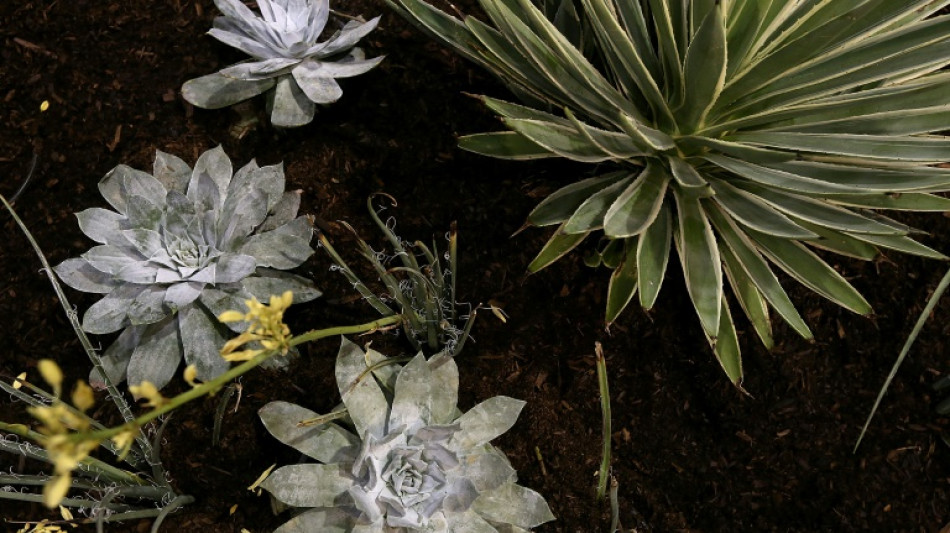
Climate, collectors blamed for S.Africa's succulents decline / Photo: JUSTIN SULLIVAN - GETTY IMAGES NORTH AMERICA/AFP/File

Climate, collectors blamed for S.Africa's succulents decline

Climate change and collectors of rare plants are decimating succulents in South Africa, government researchers said Wednesday, warning hundreds of these rugged species are at risk of extinction.

Text size:

Succulents growing in the country's semi-arid regions are experiencing unprecedented rates of decline following a rapid rise in global demand for collectable plants driven by Asia, according to the South African National Biodiversity Institute (SANBI), a government research body.

"Over the past three years plant material confiscated from plant traffickers by law enforcement agencies has increased annually by over 250 percent," the institute said in a statement.

SANBI said more than 200 succulents -- typically thick, fleshy plants that retain water to survive dry weather conditions -- have been added to an International Union for Conservation of Nature (IUCN) Red List of threatened species, which was updated last week.

Unique species growing in the Succulent Karoo -- a region shared between South Africa and Namibia which includes some of the world's most biodiverse desert and semi-desert areas -- are particularly sought after, it said.

The plants are often sold on social media, it added.

"People buying these plants, most of them don't realize that they're breaking the law," said Craig Hilton-Taylor, who heads the IUCN's Red List unit.

"They're completely ignorant or naive about illegal plant trade... they just think, 'Oh, that's a nice thing to buy for my house or my garden'," he said.

Global warming is also contributing to the decline, the institute said.

The region has suffered from a prolonged, severe drought over the past decade.

This has taken a toll on many species in the region, including the critically endangered giant quiver tree. Its population is set to decline 90 percent by 2080, SANBI said.

"A combination of illegal collection, long-term droughts related to climate change, and ongoing land degradation as a result of livestock overgrazing and mining are creating a devastating storm causing unprecedented loss of biodiversity in the world's richest desert ecosystem," it said.

A.Ansari--DT



