Dubai Telegraph - UK scientist James Lovelock, prophet of climate doom, dies aged 103

EUR -
AED 4.278489
AFN 76.301366
ALL 96.530556
AMD 444.389335
ANG 2.085119
AOA 1068.154458
ARS 1670.316609
AUD 1.75427
AWG 2.096704
AZN 1.984845
BAM 1.955415
BBD 2.345238
BDT 142.439297
BGN 1.957372
BHD 0.439074
BIF 3456.06653
BMD 1.164835
BND 1.508396
BOB 8.046379
BRL 6.313529
BSD 1.16437
BTN 104.690912
BWP 15.469884
BYN 3.34764
BYR 22830.773166
BZD 2.341828
CAD 1.611422
CDF 2599.912958
CHF 0.937162
CLF 0.02734
CLP 1072.545921
CNY 8.235507
CNH 8.234944
COP 4446.759008
CRC 568.78787
CUC 1.164835
CUP 30.868137
CVE 110.780379
CZK 24.198994
DJF 207.014999
DKK 7.469472
DOP 74.84113
DZD 151.385181
EGP 55.40272
ERN 17.47253
ETB 180.60972
FJD 2.630723
FKP 0.8723
GBP 0.873382
GEL 3.149553
GGP 0.8723
GHS 13.337819
GIP 0.8723
GMD 85.033396
GNF 10119.511721
GTQ 8.919242
GYD 243.610929
HKD 9.068302
HNL 30.667954
HRK 7.538703
HTG 152.42995
HUF 382.163892
IDR 19442.733022
ILS 3.76907
IMP 0.8723
INR 104.795933
IQD 1525.399284
IRR 49054.133779
ISK 149.006189
JEP 0.8723
JMD 186.373259
JOD 0.825914
JPY 180.836077
KES 150.617641
KGS 101.8653
KHR 4665.166047
KMF 491.560932
KPW 1048.343898
KRW 1715.709753
KWD 0.357232
KYD 0.970405
KZT 588.861385
LAK 25249.913875
LBP 104272.296288
LKR 359.159196
LRD 204.939598
LSL 19.73441
LTL 3.439456
LVL 0.704598
LYD 6.329752
MAD 10.752872
MDL 19.812009
MGA 5193.953775
MKD 61.627851
MMK 2446.083892
MNT 4131.091086
MOP 9.337359
MRU 46.433846
MUR 53.664406
MVR 17.950554
MWK 2019.093291
MXN 21.176696
MYR 4.788683
MZN 74.437324
NAD 19.73441
NGN 1689.139851
NIO 42.851552
NOK 11.767103
NPR 167.505978
NZD 2.016522
OMR 0.447885
PAB 1.164465
PEN 3.914028
PGK 4.940241
PHP 68.699705
PKR 326.441746
PLN 4.232667
PYG 8008.421228
QAR 4.244263
RON 5.093014
RSD 117.420109
RUB 89.113003
RWF 1694.158743
SAR 4.371861
SBD 9.5794
SCR 15.722146
SDG 700.652754
SEK 10.953705
SGD 1.509027
SHP 0.873928
SLE 26.791608
SLL 24426.013032
SOS 664.266196
SRD 44.99647
STD 24109.740275
STN 24.495171
SVC 10.187374
SYP 12881.033885
SZL 19.719113
THB 37.125677
TJS 10.683448
TMT 4.076924
TND 3.415727
TOP 2.804644
TRY 49.510866
TTD 7.893444
TWD 36.432793
TZS 2836.374505
UAH 48.875802
UGX 4119.187948
USD 1.164835
UYU 45.541022
UZS 13930.253805
VES 289.561652
VND 30705.060237
VUV 142.19158
WST 3.250066
XAF 655.824896
XAG 0.019865
XAU 0.000276
XCD 3.148026
XCG 2.098577
XDR 0.815408
XOF 655.723589
XPF 119.331742
YER 277.700931
ZAR 19.720255
ZMK 10484.920268
ZMW 26.920577
ZWL 375.076512
  • RBGPF

    0.0000

    78.35

    0%

  • RYCEF

    -0.1600

    14.49

    -1.1%

  • CMSC

    -0.0500

    23.43

    -0.21%

  • BCC

    -1.2100

    73.05

    -1.66%

  • NGG

    -0.5000

    75.41

    -0.66%

  • GSK

    -0.1600

    48.41

    -0.33%

  • BTI

    -1.0300

    57.01

    -1.81%

  • SCS

    -0.0900

    16.14

    -0.56%

  • RELX

    -0.2200

    40.32

    -0.55%

  • RIO

    -0.6700

    73.06

    -0.92%

  • BCE

    0.3300

    23.55

    +1.4%

  • JRI

    0.0400

    13.79

    +0.29%

  • VOD

    -0.1630

    12.47

    -1.31%

  • CMSD

    -0.0700

    23.25

    -0.3%

  • AZN

    0.1500

    90.18

    +0.17%

  • BP

    -1.4000

    35.83

    -3.91%

UK scientist James Lovelock, prophet of climate doom, dies aged 103
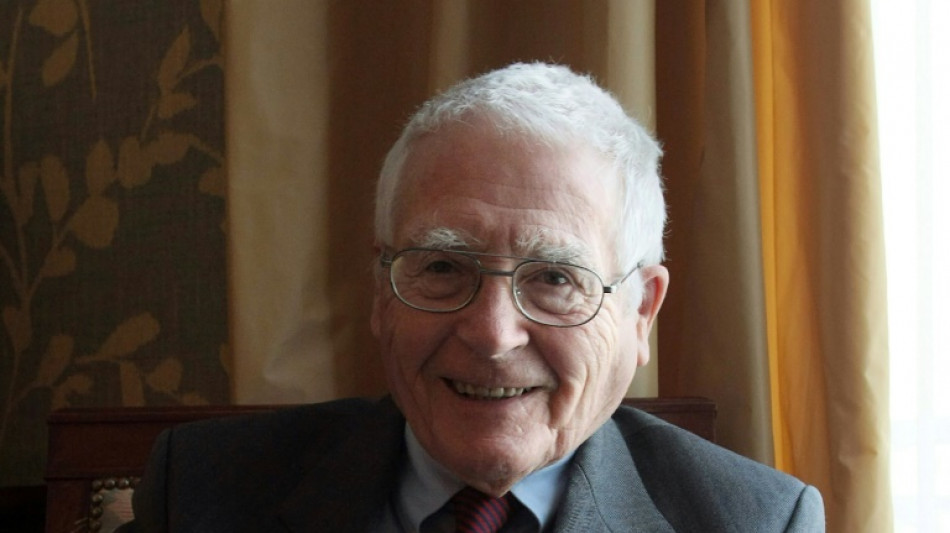
UK scientist James Lovelock, prophet of climate doom, dies aged 103 / Photo: JACQUES DEMARTHON - AFP/File

UK scientist James Lovelock, prophet of climate doom, dies aged 103

Influential British scientist James Lovelock, famed for his Gaia hypothesis and pioneering work on climate change, has died at the age of 103, his family announced Wednesday.

Text size:

The legendary scientist's family said in a statement that Lovelock died Tuesday on his 103rd birthday as the result of complications from a fall.

"To the world he was best known as a scientific pioneer, climate prophet and conceiver of the Gaia theory," it said, noting he was also a "loving husband and wonderful father with a boundless sense of curiosity".

Responding to the news Mary Archer, chair of the Science Museum Group's board of trustees, described him as "arguably the most important independent scientist of the last century".

"Jim Lovelock was decades ahead of his time in thinking about the Earth and climate and his unique approach was an inspiration for many," she added in a statement.

In the 1970s, Lovelock came up with the Gaia hypothesis that Earth is a single, self-regulating super-organism made up of all its life forms, which humans are destroying.

The notion was at first ridiculed by his peers but helped to redefine how science perceives the relationship between our inanimate planet and the life it hosts.

Lovelock became known as a prophet of climate doom.

With his 2006 book "The Revenge of Gaia", he issued a terrifying warning: if humankind failed to radically curtail greenhouse-gas emissions, there would, quite literally, be hell to pay.

"We have left it far, far too late to save the planet as we know it," Lovelock told AFP in 2009.

Pixie-like and unfailingly polite, Lovelock spent much of his career as a self-described "independent scientist", but the price for freedom was a lack of institutional backing.

Lovelock's ideas were often at odds with conventional wisdom, ahead of their time or, in the case of climate change, unbearably grim.

In a 2020 interview with AFP, he warned that the world had lost perspective in responding to the coronavirus, and should focus on a far more formidable foe: global warming.

"Climate change is more dangerous to life on Earth than almost any conceivable disease," he said.

"If we don't do something about it, we will find ourselves removed from the planet."

Born in 1919, Lovelock grew up in south London between the two World Wars, and studied chemistry, medicine and biophysics in the UK and the US.

As his brilliance emerged, he was quickly drafted by Britain's National Institute for Medical Research, where he worked for 20 years.

In the 1950s, he invented the machine used to detect the hole in the ozone layer.

In the early 1960s, NASA lured him to California to investigate possible life on Mars.

With another NASA scientist, he analysed the atmosphere on the planet, looking for a chemical imbalance and gases reacting with each other, which would hint at life.

They found nothing, putting a dampener on hopes of finding life on Mars.

Scientists now think that Earth's nearest neighbour may once have been warm and wet and possibly have supported microbial life.

S.Mohideen--DT



