Dubai Telegraph - Noisy humans harm birds and affect breeding success: study

EUR -
AED 4.294825
AFN 74.26706
ALL 95.235068
AMD 433.678625
ANG 2.09282
AOA 1073.370481
ARS 1639.321515
AUD 1.630671
AWG 2.10757
AZN 1.983767
BAM 1.954352
BBD 2.355281
BDT 143.513037
BGN 1.950426
BHD 0.441275
BIF 3478.514393
BMD 1.169249
BND 1.491795
BOB 8.110989
BRL 5.829169
BSD 1.169398
BTN 111.160625
BWP 15.874236
BYN 3.307749
BYR 22917.271297
BZD 2.352357
CAD 1.59109
CDF 2707.979679
CHF 0.9161
CLF 0.027111
CLP 1067.058417
CNY 7.98626
CNH 7.987499
COP 4355.789877
CRC 531.703711
CUC 1.169249
CUP 30.985086
CVE 110.669075
CZK 24.389764
DJF 207.79897
DKK 7.471206
DOP 69.684246
DZD 154.709155
EGP 62.596073
ERN 17.538728
ETB 183.572115
FJD 2.570418
FKP 0.860826
GBP 0.863975
GEL 3.13369
GGP 0.860826
GHS 13.089782
GIP 0.860826
GMD 85.893092
GNF 10263.082116
GTQ 8.937581
GYD 244.66869
HKD 9.159717
HNL 31.125034
HRK 7.533704
HTG 153.045827
HUF 364.875679
IDR 20356.383154
ILS 3.442262
IMP 0.860826
INR 111.417985
IQD 1531.715582
IRR 1537561.824436
ISK 143.384723
JEP 0.860826
JMD 184.233475
JOD 0.828938
JPY 183.840366
KES 151.043924
KGS 102.216292
KHR 4691.024848
KMF 491.706982
KPW 1052.32368
KRW 1726.734529
KWD 0.360158
KYD 0.974678
KZT 542.507978
LAK 25700.082866
LBP 104706.206972
LKR 373.699876
LRD 214.995535
LSL 19.479861
LTL 3.452487
LVL 0.707266
LYD 7.424954
MAD 10.817011
MDL 20.135079
MGA 4852.381592
MKD 61.647295
MMK 2455.12932
MNT 4182.022623
MOP 9.436707
MRU 46.735016
MUR 54.674246
MVR 18.070718
MWK 2036.248415
MXN 20.483305
MYR 4.622065
MZN 74.727051
NAD 19.479797
NGN 1608.090757
NIO 42.92346
NOK 10.840922
NPR 177.85492
NZD 1.990535
OMR 0.449576
PAB 1.169633
PEN 4.101138
PGK 5.073077
PHP 72.140349
PKR 325.957278
PLN 4.257696
PYG 7270.612157
QAR 4.260154
RON 5.194741
RSD 117.373328
RUB 88.256626
RWF 1708.856735
SAR 4.387249
SBD 9.403225
SCR 16.261884
SDG 702.132427
SEK 10.85612
SGD 1.493049
SHP 0.872962
SLE 28.761299
SLL 24518.552683
SOS 667.640738
SRD 43.795355
STD 24201.083982
STN 24.799761
SVC 10.234372
SYP 129.231176
SZL 19.479343
THB 38.292859
TJS 10.947887
TMT 4.098216
TND 3.403178
TOP 2.81527
TRY 52.847116
TTD 7.944113
TWD 37.041623
TZS 3034.19965
UAH 51.53521
UGX 4388.865567
USD 1.169249
UYU 47.105093
UZS 13972.520287
VES 571.6956
VND 30797.421802
VUV 138.881917
WST 3.17473
XAF 655.471267
XAG 0.016066
XAU 0.000259
XCD 3.159953
XCG 2.108038
XDR 0.813364
XOF 654.779359
XPF 119.331742
YER 278.980485
ZAR 19.663779
ZMK 10524.646391
ZMW 21.90177
ZWL 376.497551
  • RBGPF

    0.5000

    63.1

    +0.79%

  • CMSC

    0.0310

    22.901

    +0.14%

  • RIO

    -1.8000

    98.78

    -1.82%

  • NGG

    -1.1200

    87.36

    -1.28%

  • RYCEF

    -0.3000

    16

    -1.88%

  • CMSD

    0.0000

    23.28

    0%

  • GSK

    -0.7450

    50.865

    -1.46%

  • VOD

    -0.0900

    16.06

    -0.56%

  • BCE

    -0.0700

    23.89

    -0.29%

  • RELX

    -0.0200

    36.33

    -0.06%

  • AZN

    -1.5900

    183.15

    -0.87%

  • JRI

    -0.0550

    12.925

    -0.43%

  • BP

    0.4950

    46.905

    +1.06%

  • BTI

    -0.5650

    58.145

    -0.97%

  • BCC

    -4.2200

    73.91

    -5.71%

Noisy humans harm birds and affect breeding success: study
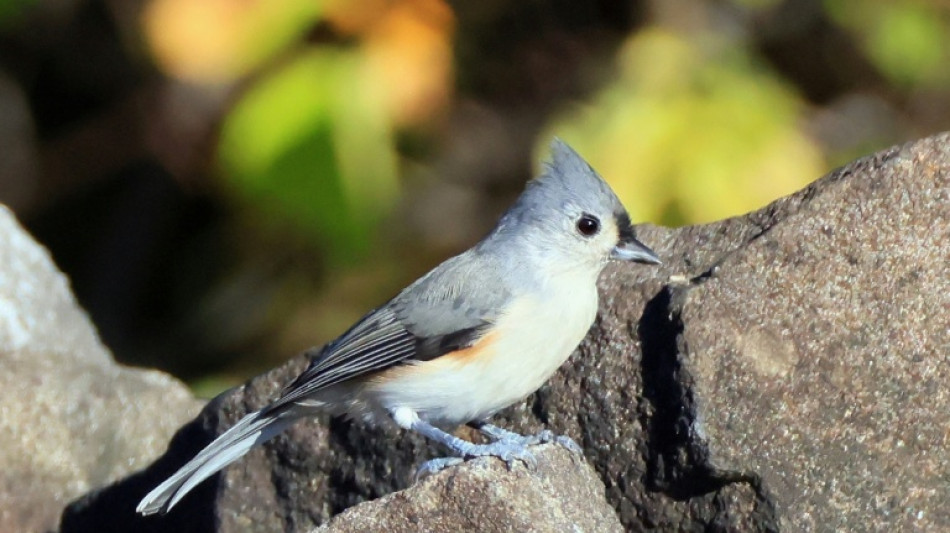
Noisy humans harm birds and affect breeding success: study / Photo: BRUCE BENNETT - GETTY IMAGES NORTH AMERICA/AFP

Noisy humans harm birds and affect breeding success: study

Noise pollution is affecting bird behaviour across the globe, disrupting everything from courtship songs to the ability to find food and avoid predators, a large-scale new analysis showed on Wednesday.

Text size:

Researchers reviewed nearly four decades of scientific work and found that noises made by humans were interfering with the lives of birds on six continents and having "strong negative effects" on reproduction success.

Previous research on individual species has shown that single sources of anthropogenic noise -- such as planes, traffic and construction -- can impact birds as it does other wildlife.

But for this study, the team performed a wider analysis by pooling data published since 1990 across 160 bird species to see if any broader trends could be established.

The study, published in the journal Proceedings of the Royal Society B, found clear evidence of a "pervasive" impact of noise pollution on birds worldwide.

"We found that noise significantly impacts communication risk behaviours, foraging, aggression and physiology and had a strong effect on habitat use and a negative impact on reproduction," it said.

This is because birds rely on acoustic information to survive, making them particularly vulnerable to the modern din produced by cars, machinery and urban life.

"They use song to find mates, calls to warn of predators, and chicks make begging calls to let their parents know they're hungry," Natalie Madden, who led the research while at the University of Michigan, said in a statement.

"So if there's loud noise in the environment, can they still hear signals from their own species?"

In some cases, noise pollution interrupted mating displays, caused males to change their courtship songs, or masked messages between chicks and parents.

- Underappreciated consequence -

The response varied between species, with birds that nest close to the ground suffering greater reproductive harm, while those using open nests experienced stronger effects on growth.

Birds living in urban areas, meanwhile, tended to have higher levels of stress hormones than those outside of cities.

The authors said that noise pollution was an "underappreciated consequence" of humanity's impact on nature, especially compared to the twin drivers of biodiversity loss and climate change.

Some 61 percent of the world's bird species have declining populations, the International Union for Conservation of Nature said in October.

But many solutions to combat noise pollution already existed, said the study's senior author Neil Carter, from the University of Michigan.

For example, buildings are constructed to improve visibility and minimise bird collisions and in much the same way, could be adapted to stifle sound.

"So many of the things we're facing with biodiversity loss just feel inexorable and massive in scale, but we know how to use different materials and how to put things up in different ways to block sound," he said.

"We know what to use and how to use it, we just have to get enough awareness and interest in doing it."

F.El-Yamahy--DT



