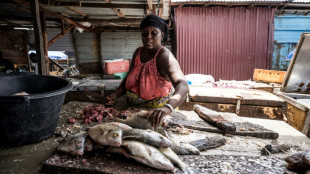
Rhino horn sales, shark protection on wildlife talks agenda / Photo: Andrea BERNARDI - AFP/File
Global wildlife talks open Monday, with debates set to take on questions ranging from protection of sharks, a bid to allow limited rhino horn sales and a push to restrict the trade in eels.
More than 180 nations are to join conservation experts in Uzbekistan's Samarkand to discuss dozens of wildlife trade and protection proposals.
The meeting brings together signatories to the Convention on International Trade in Endangered Species of Wild Fauna and Flora (CITES).
The 50-year-old agreement is considered a key framework for protecting the world's most endangered animals and plants, and regulates trade in some 36,000 species.
The proposals on the table attempt to strengthen protections for several shark species, weaken restrictions on trade in giraffes and open the way to limited sales of rhino horn and elephant ivory.
Among the most contested proposals is a call to increase protections for eels, a popular food in parts of Asia.
CITES regulates trade by listing animals and plants under different appendices, with varying levels of trade restrictions.
Trade in Appendix I species, considered the world's most endangered, is almost entirely banned.
Appendix II species face additional scrutiny and certification before they can be traded.
One eel species, Anguilla anguilla, or the European eel, is considered critically endangered and was added to Appendix II in 2009.
But now several countries want to add other eel species to Appendix II.
Proponents argue that eel species are effectively indistinguishable when young -- the point at which they are generally traded -- meaning the critically endangered Anguilla anguilla is often being passed off as other species.
But the proposal is fiercely opposed by Japan, which consumes large quantities of eel and has launched a concerted lobbying effort to ensure the amendment fails.
In a submission running over 100 pages, Japanese officials warned listing all eel species would "undermine the credibility of this institution".
They also warned that the measure risks spiking eel prices and leading to "increased malicious poaching and smuggling".
- 'Disastrous' -
Other controversial proposals include efforts to allow governments to sell stockpiles of elephant ivory and rhino horn.
Advocates argue governments should be able to sell stocks off to help fund conservation, but many animal protection groups warn reopening sales will only help drive illegal trade.
"As soon as you open up that legal trade it just provides avenues for illegal ivory and illegal rhino horn to be laundered into those markets in Asia where it has caused so much problems," said Matt Collis, senior director for policy at the International Fund for Animal Welfare.
"CITES tried this twice in the past, the last time was particularly disastrous... The last thing we want to do is to go back to that," he told AFP.
But Namibia, which is championing the proposal, insists funds are needed to avoid "progressive removal of rhinos from the landscape, shrinking habitat, and weakening national metapopulations".
A similar proposal was rejected the last time CITES members met in 2022.
Greater protections for seven species of shark will also be discussed, including a total trade ban under Appendix I for the critically endangered oceanic whitetip.
Experts believe the measure is likely to win the two-thirds support necessary, but other amendments, including a bid to put trade limits on whale sharks and gulper sharks targeted for their liver oil, may face more scrutiny.
CITES members in 2022 approved Appendix II protections for dozens of shark species, despite opposition from countries including Japan.
The meeting in Samarkand runs until December 5.
Z.W.Varughese--DT