Dubai Telegraph - Canada wildlife decline 'most severe' in decades: WWF

EUR -
AED 4.214693
AFN 72.868714
ALL 93.691117
AMD 422.440321
ANG 2.054428
AOA 1053.374834
ARS 1679.324882
AUD 1.636596
AWG 2.068309
AZN 1.955249
BAM 1.957244
BBD 2.310405
BDT 140.803895
BGN 1.940229
BHD 0.432618
BIF 3425.188041
BMD 1.147467
BND 1.480993
BOB 7.926884
BRL 5.898787
BSD 1.147146
BTN 108.136964
BWP 15.589095
BYN 3.187352
BYR 22490.346937
BZD 2.307012
CAD 1.626443
CDF 2616.224447
CHF 0.926052
CLF 0.026299
CLP 1035.072773
CNY 7.767895
CNH 7.783531
COP 3967.882408
CRC 520.383975
CUC 1.147467
CUP 30.407867
CVE 109.439681
CZK 24.205064
DJF 203.92823
DKK 7.475304
DOP 67.246004
DZD 152.983747
EGP 57.279476
ERN 17.212
ETB 181.730082
FJD 2.565166
FKP 0.867384
GBP 0.867084
GEL 3.035095
GGP 0.867384
GHS 12.970798
GIP 0.867384
GMD 83.765476
GNF 10071.893203
GTQ 8.750457
GYD 239.958103
HKD 8.992295
HNL 30.641765
HRK 7.534156
HTG 149.840563
HUF 351.762841
IDR 20415.727178
ILS 3.392605
IMP 0.867384
INR 108.341628
IQD 1503.181351
IRR 1577766.686004
ISK 144.011444
JEP 0.867384
JMD 181.253742
JOD 0.813599
JPY 185.050849
KES 148.601297
KGS 100.346402
KHR 4604.214411
KMF 487.673741
KPW 1032.720414
KRW 1756.661089
KWD 0.353432
KYD 0.95588
KZT 559.798422
LAK 25278.69137
LBP 102755.641633
LKR 382.842488
LRD 209.011494
LSL 18.593286
LTL 3.388171
LVL 0.694092
LYD 7.315145
MAD 10.608374
MDL 20.257418
MGA 4819.360456
MKD 61.64321
MMK 2409.132921
MNT 4107.441134
MOP 9.261134
MRU 45.990899
MUR 54.585424
MVR 17.740269
MWK 1992.002553
MXN 19.883113
MYR 4.748107
MZN 73.3274
NAD 18.593237
NGN 1562.850013
NIO 42.009187
NOK 11.114345
NPR 173.023669
NZD 1.999266
OMR 0.441206
PAB 1.147151
PEN 3.883071
PGK 5.034797
PHP 69.590456
PKR 319.344224
PLN 4.260005
PYG 7044.259132
QAR 4.177357
RON 5.238764
RSD 117.350314
RUB 83.762898
RWF 1679.89122
SAR 4.294502
SBD 9.250216
SCR 15.701228
SDG 689.05796
SEK 10.990345
SGD 1.482187
SHP 0.8567
SLE 28.400226
SLL 24061.80676
SOS 655.78141
SRD 42.918127
STD 23750.243559
STN 24.555787
SVC 10.037406
SYP 126.831899
SZL 18.593147
THB 37.770057
TJS 10.639397
TMT 4.027608
TND 3.341137
TOP 2.762825
TRY 53.285029
TTD 7.778774
TWD 36.307342
TZS 3018.982585
UAH 51.532424
UGX 4175.080664
USD 1.147467
UYU 45.863842
UZS 13775.337882
VES 683.931914
VND 30201.323029
VUV 136.141535
WST 3.157603
XAF 656.441368
XAG 0.017686
XAU 0.000276
XCD 3.101087
XCG 2.067325
XDR 0.807469
XOF 648.319055
XPF 119.331742
YER 273.814279
ZAR 18.872848
ZMK 10328.581197
ZMW 20.562262
ZWL 369.483803
  • CMSC

    0.0500

    22.37

    +0.22%

  • JRI

    0.0500

    12.67

    +0.39%

  • CMSD

    0.0000

    22.29

    0%

  • RBGPF

    -0.5300

    60.61

    -0.87%

  • BCC

    3.8500

    74.66

    +5.16%

  • NGG

    -1.2400

    79.44

    -1.56%

  • RYCEF

    -0.0300

    18.4

    -0.16%

  • BCE

    0.0000

    23.28

    0%

  • GSK

    -1.4800

    50.67

    -2.92%

  • RIO

    -2.5900

    100.08

    -2.59%

  • RELX

    -0.8300

    31.18

    -2.66%

  • VOD

    -0.2300

    14.3

    -1.61%

  • AZN

    -2.9600

    174.93

    -1.69%

  • BTI

    -0.5800

    58.91

    -0.98%

  • BP

    -1.0400

    39.1

    -2.66%

Canada wildlife decline 'most severe' in decades: WWF
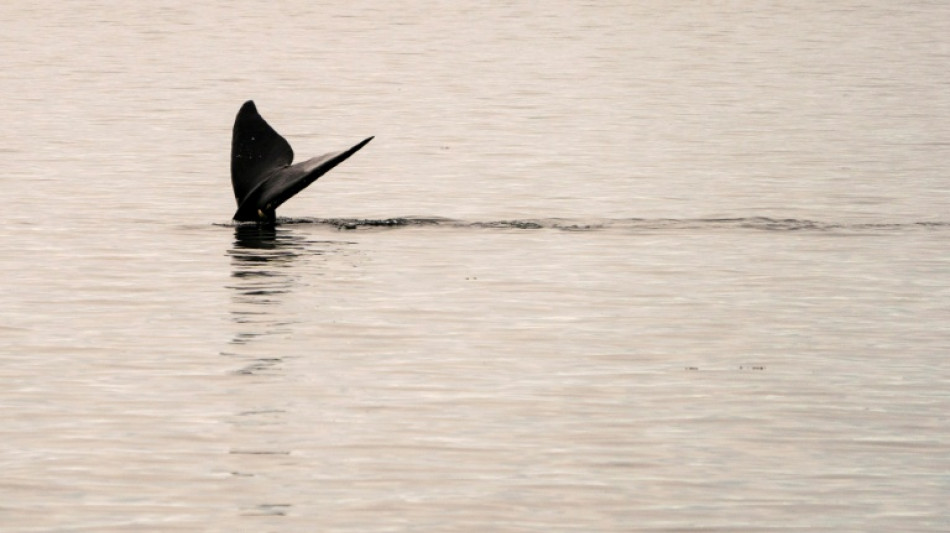
Canada wildlife decline 'most severe' in decades: WWF / Photo: Don EMMERT - AFP/File

Canada wildlife decline 'most severe' in decades: WWF

Biodiversity in Canada has plunged 10 percent over the last half century, with hundreds of species facing extinction, the World Wildlife Fund (WWF) said in a report Monday.

Text size:

"On average, every species group included — birds, fish, mammals, and reptiles and amphibians — is trending in the wrong direction," the WWF said in a statement as it released the 2025 Living Planet report for Canada.

While certain populations, like sea otters, are improving, the conservation group said 52 percent of all species studied for this year's Canada report are declining, including the rare snow owl.

"This is the most severe decline we've observed since reporting started," WWF Vice President for Canada, James Snider, wrote.

WWF said that between 1970 and 2022, biodiversity in Canada had decreased by 10 percent.

Species globally assessed as at-risk of extinction in Canada, such as the North Atlantic right whale and leatherback sea turtle, declined by 43 percent, according to the report.

Regions such as the boreal forest with lower levels of human presence saw smaller decreases, while habitats in Canada's grasslands declined 62 percent.

Last year, WWF reported a global wildlife population decline of 73 percent since 1970.

Conservation expert Jessica Curie, who worked on the report, told AFP that habitat reduction -- largely because of agricultural expansion -- "is one of the main drivers of biodiversity loss."

The report notes Canada's economic reliance on its vast natural resources, but says conservation needs to be front-of-mind in management of industrial or infrastructure projects.

One successful example she pointed to was projects reducing shipping noise to protect whale populations off Canada's west coast.

WWF noted that actions to reverse population loss were already laid out in Global Biodiversity Framework (GBF) agreement signed in 2022 at COP 15 in Montreal.

Canada aims to meet those targets by protecting 30 percent of its lands and oceans and restoring 30 percent of degraded lands by 2030.

H.El-Din--DT



