
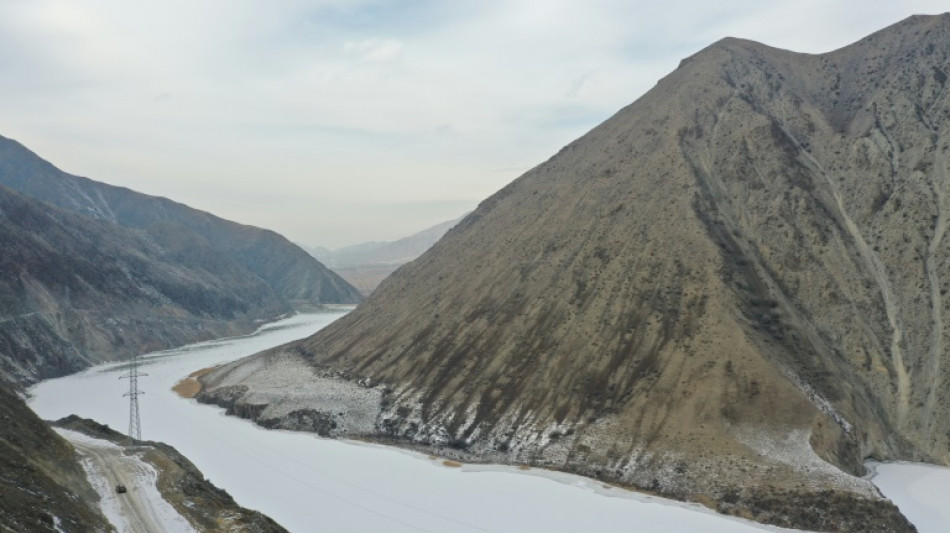
Climate crisis revives Soviet hydro plan in Central Asia / Photo: VYACHESLAV OSELEDKO - AFP
Central Asian countries are setting rivalries aside to build a giant hydroelectric plant originally planned in Soviet times, a bid to strengthen energy and food security and mitigate the effects of climate change.
The Kambar-Ata-1 project on the Naryn River in Kyrgyzstan is a rare example of collaboration in the region that does not involve the two neighbouring superpowers Russia and China.
The plant is "very important for Central Asia", Kyrgyz Energy Minister Taalaibek Ibrayev said on a visit to the future site attended by AFP.
At a trilateral meeting with Kyrgyzstan a few days later, the Kazakh and Uzbek governments said the project would "bring great advantages for the region" and "ensure the long-term stability and development of Central Asia".
The warm words, which would have been unthinkable until recently, underscore how water and energy shortages are pushing rivals together.
But before the plant can start functioning, backers need to find investors willing to put in at least $3.5 billion.
- 'Wealth of potential' -
The post-Soviet economic collapse, corruption and regional conflicts put an end to colossal energy projects in Central Asia including Kambar-Ata, which had been planned in 1986.
"The collapse of the Soviet Union destroyed water and energy ties," said Rasul Umbetaliyev, a Kyrgyz energy expert.
Since Soviet times, Kyrgyzstan and Tajikistan are supposed to receive some electricity from their regional neighbours Kazakhstan, Turkmenistan and Uzbekistan in exchange for a share of their plentiful water supplies.
The different countries have accused one another of failing to respect the arrangement.
Umbetaliyev said that Kambar-Ata-1 was "very important" for Kazakhstan and Uzbekistan, which need the water stored by the plant in large quantities during the summer season.
The plant would allow Kyrgyzstan to export electricity to its neighbours, and even to Afghanistan and Pakistan under project known as CASA-1000.
The World Bank says Kyrgyzstan's mountainous terrain "provides it with a wealth of hydropower potential, less than one-fifth of which has been utilised".
Kambar-Ata is expected to produce 5.6 billion kilowatt-hours (kWh), which would more than make up for Kyrgyzstan's current electricity deficit of around 3.9 billion kWh.
The deficit is growing because of water shortages that mean the hydroelectric stations that Kyrgyzstan depends on are running low.
The Eurasian Development Bank said that "building new hydroelectric power stations while renovating existing ones will mitigate the impact of climate change".
- Costly subsidies -
The Kyrgyz government is also expecting Kambar-Ata-1 to have a positive effect on power stations further downstream.
The main one is Toktogul, which supplies 40 percent of Kyrgyzstan's electricity.
Pride of place inside the Toktogul power station is a large frieze showing Soviet leader Vladimir Lenin and his quote: "Communism is Soviet power and the electrification of the whole country".
A century later, the sector is still largely subsidised by the state, as it was in Soviet times, to avoid social tensions in a fragile economy.
"Today the tariff we sell at is not justified by the costs of production of electricity. If we continue like this, in five or 10 years, we will have no more electricity. We therefore have to build a plant," Ibrayev said.
aj-bk/dt/js
Z.W.Varughese--DT



