Dubai Telegraph - Birds, beetles, bugs could help replace pesticides: study

EUR -
AED 4.236804
AFN 75.565453
ALL 93.388548
AMD 421.288328
AOA 1057.902509
ARS 1726.373447
AUD 1.636403
AWG 2.07658
AZN 1.929993
BAM 1.956675
BBD 2.320017
BDT 142.593744
BHD 0.43439
BIF 3442.338825
BMD 1.153656
BND 1.478061
BOB 13.990254
BRL 5.916414
BSD 1.151905
BTN 109.932143
BWP 15.663866
BYN 3.394988
BYR 22611.652061
BZD 2.316716
CAD 1.623626
CDF 2607.261754
CHF 0.932382
CLF 0.02674
CLP 1055.860049
CNY 7.791271
CNH 7.784009
COP 3702.715708
CRC 522.328969
CUC 1.153656
CUP 30.571877
CVE 110.314314
CZK 24.170009
DJF 205.119917
DKK 7.474605
DOP 67.179449
DZD 153.319736
EGP 58.008
ERN 17.304836
ETB 184.729097
FJD 2.552406
FKP 0.857424
GBP 0.857241
GEL 3.011194
GGP 0.857424
GHS 13.495033
GIP 0.857424
GMD 85.370902
GNF 10116.522377
GTQ 8.785928
GYD 241.157804
HKD 9.048485
HNL 30.975855
HRK 7.534758
HTG 150.607326
HUF 360.533526
IDR 20676.971423
ILS 3.459816
IMP 0.857424
INR 109.726384
IQD 1511.865818
IRR 1586420.818241
ISK 141.795588
JEP 0.857424
JMD 182.129839
JOD 0.817945
JPY 181.879019
KES 149.259773
KGS 100.886901
KHR 4663.023877
KMF 493.764206
KRW 1642.817678
KWD 0.356803
KYD 0.959929
KZT 542.652581
LAK 26053.646732
LBP 103152.017797
LKR 386.75289
LRD 207.922948
LSL 18.671935
LTL 3.406445
LVL 0.697835
LYD 7.343
MAD 10.732898
MDL 20.164014
MGA 4972.256159
MKD 61.552516
MMK 2421.872149
MNT 4151.081368
MOP 9.306381
MRU 46.250363
MUR 53.610003
MVR 17.835912
MWK 1997.375571
MXN 19.891736
MYR 4.719588
MZN 73.71562
NAD 18.989689
NGN 1572.386296
NIO 42.388949
NOK 10.997915
NPR 175.890103
NZD 1.964289
OMR 0.443578
PAB 1.151915
PEN 3.904552
PGK 5.102042
PHP 69.977874
PKR 320.543311
PLN 4.295078
PYG 6868.010666
QAR 4.199077
RON 5.251558
RSD 117.361461
RUB 93.01268
RWF 1692.412937
SAR 4.329127
SBD 9.311791
SCR 16.981454
SDG 692.768632
SEK 10.970285
SGD 1.478237
SLE 27.572429
SOS 658.288568
SRD 43.713191
STD 23878.344129
STN 24.510745
SVC 10.079506
SZL 18.971825
THB 38.255804
TJS 10.632053
TMT 4.049332
TND 3.383913
TRY 54.884455
TTD 7.820496
TWD 37.245796
TZS 3054.301208
UAH 51.506879
UGX 4313.928451
USD 1.153656
UYU 46.410948
UZS 13780.417548
VES 870.100121
VND 30303.651557
VUV 137.935702
WST 3.15727
XAF 656.244672
XAG 0.018789
XAU 0.000277
XCD 3.117812
XCG 2.076055
XDR 0.816158
XOF 656.244672
XPF 119.331742
YER 274.973512
ZAR 18.864197
ZMK 10384.289787
ZMW 21.799556
ZWL 371.47667
  • RBGPF

    -1.2500

    69.74

    -1.79%

  • CMSC

    0.0300

    21.79

    +0.14%

  • BTI

    -0.4400

    59.12

    -0.74%

  • CMSD

    0.0000

    22.02

    0%

  • AZN

    -2.3500

    155.62

    -1.51%

  • RIO

    3.1100

    99.01

    +3.14%

  • BCC

    3.4600

    86.49

    +4%

  • GSK

    0.0200

    51.53

    +0.04%

  • NGG

    0.5600

    80.42

    +0.7%

  • BCE

    0.2100

    22

    +0.95%

  • RELX

    0.6400

    36.8

    +1.74%

  • RYCEF

    0.2000

    20.4

    +0.98%

  • JRI

    -0.1000

    12.72

    -0.79%

  • VOD

    0.0800

    15.69

    +0.51%

  • BP

    -1.8200

    42.44

    -4.29%

Birds, beetles, bugs could help replace pesticides: study
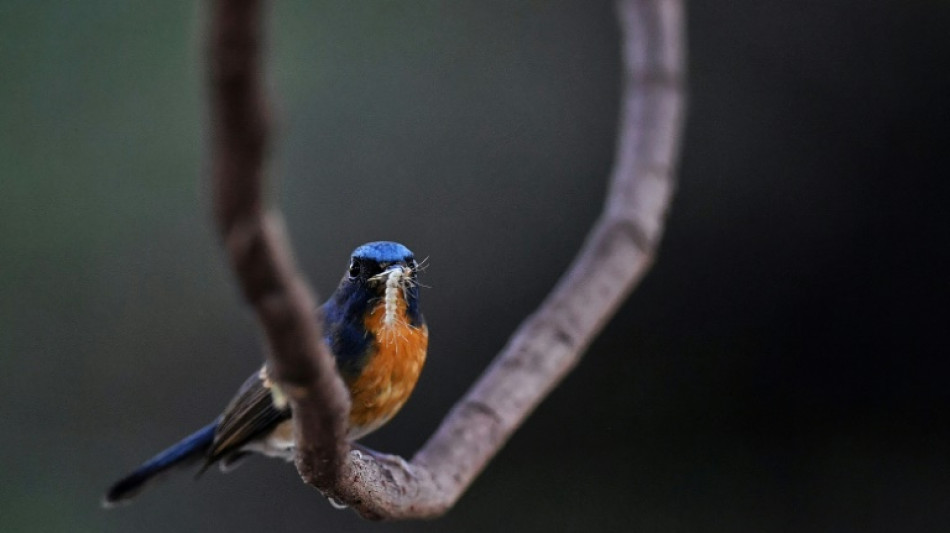
Birds, beetles, bugs could help replace pesticides: study / Photo: Lillian SUWANRUMPHA - AFP

Birds, beetles, bugs could help replace pesticides: study

Natural predators like birds, beetles and bugs might be an effective alternative to pesticides, keeping crop-devouring pests populations down while boosting crop yields, researchers said Wednesday.

Text size:

Pests are responsible for around 10 percent -- or 21 million tonnes -- of crop losses every year, but controlling them has led to the widespread use of chemical pesticides.

Could birds, spiders and beetles among other invertebrate predators do the job as well?

Researchers in Brazil, the United States and the Czech Republic analysed past research on predator pest control and found that they helped reduce pest populations by more than 70 percent, while increasing crop yields by 25 percent.

"Natural predators are good pest control agents, and their maintenance is fundamental to guaranteeing pest control in a future with imminent climate change," lead author Gabriel Boldorini, a PhD student at the Federal Rural University of Pernambuco in Brazil, told AFP.

Although the researchers did not directly compare the effectiveness of invertebrates versus pesticides, he said, the damage that pesticides cause to ecosystems and biological control was well documented, from biodiversity loss and water and soil pollution to human health risks.

The researchers found that predators were more effective at pest control in regions with greater rain variability -- which is expected to increase because of climate change.

The researchers were also surprised to find that having a single species of natural predator was as effective as having multiple species, Boldorini said.

"Generally speaking, the more species there are, the better ecosystems function. But there are exceptions," he said, adding that a single species could do the job just as well.

Climate change and rising carbon dioxide levels affect both crop yield and pest dynamics by expanding the distribution of pests and increasing their survival rates.

Meanwhile, other studies have shown that invertebrates vital for ecosystem health are suffering a rapid decline globally.

Boldorini said the conservation of invertebrates "guarantees pest control and increased productivity, without damaging ecosystems".

F.Damodaran--DT



