Six bn tonnes of sand extracted from world's oceans each year: UN / Photo: Philip FONG - AFP
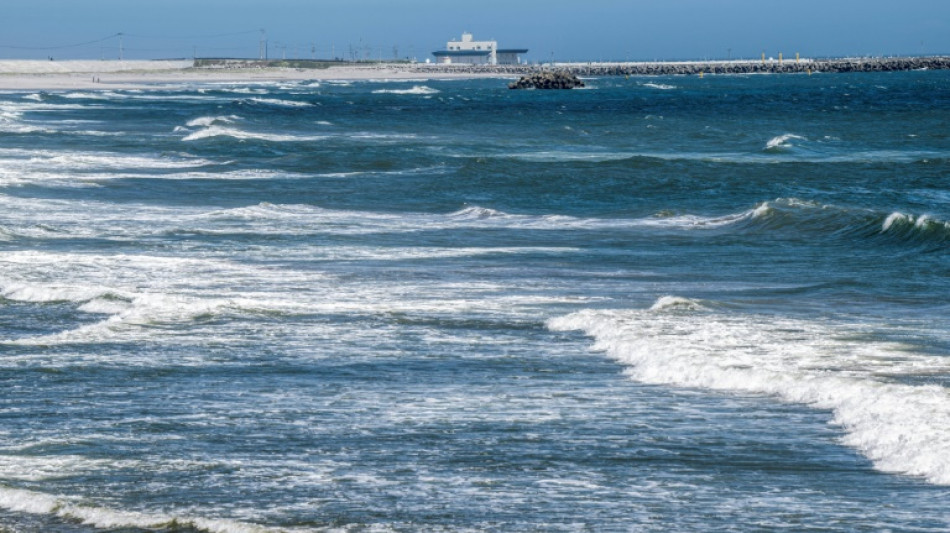
Some six billion tonnes of sand and other sediment is extracted from the world's seas and oceans every year, the UN said Tuesday, warning of the devastating toll on biodiversity and coastal communities.
Launching the first ever global data platform on sediment extraction in marine environments, the United Nations Environment Programme (UNEP), warned that the scale of dredging was growing, with dire consequences.
"The scale of environmental impacts of shallow sea mining activities and dredging is alarming," said Pascal Peduzzi, who heads UNEP's analytics centre GRID-Geneva.
He pointed to the effects on biodiversity, as well as on water turbidity, and noise impacts on marine mammals.
The new data platform, Marine Sand Watch, uses artificial intelligence to track and monitor dredging activities of sand, clay, silt, gravel and rock in the world's marine environment.
It uses so-called Automatic Identification System (AIS) signals for ships combined with AI to identify the operations of dredging vessels, including in hotspots like the North Sea and the east coast of the United States.
The signals emitted by the vessels allow "access to the movements of every ship on the planet," Peduzzi told AFP, adding that AI makes it possible to analyse the mountains of data gathered.
That process is still in the early stages, and so far, only around 50 percent of vessels are being monitored.
- 'Gigantic proportions' -
But the platform estimates that out of some 50 billion tonnes of sand and gravel used by humanity each year, between four and eight billion tonnes come from the world's oceans and seas.
"This represents six billion tonnes on average every year, or the equivalent of more than one million dump trucks every day," Peduzzi said.
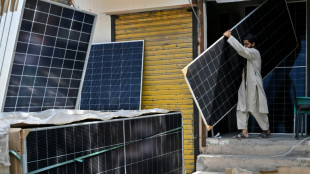
He pointed out that "our entire society depends on sand as a construction material", to make everything from schools, hospitals and roads to hydroelectric damns, solar panels and glass.
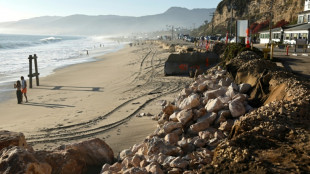
At the same time, sand plays a vital environmental role, including to protect coastal communities from rising sea levels.
The UN is aiming to publish the 2020-23 figures by the end of this year.
But it is already clear that these activities are not slowing down, but rather are "taking on gigantic proportions", Peduzzi said.
He warned that the world is approaching the natural replenishment rate of 10-16 billion tonnes of sediment washed into the world's oceans each year.
- 'Not sustainable' -
While the tipping point has not been reached at a global level, he cautioned during a press conference that in some localities, "we are extracting it faster than it can replenish itself".
"This is not sustainable."
The North Sea, Southeast Asia and the East Coast of the United States are among the areas with the most intense marine dredging.
China, followed by the Netherlands, the United States and Belgium meanwhile have the biggest dredging fleets, Arnaud Vander Velpen, a GRID-Geneva sand industry expert, told reporters.
Peduzzi described extraction vessels as giant vacuums, cleaning seabeds, and "sterilising" them, warning that this leads to the disappearance of oceanic micro-organisms and threatens biodiversity.
Beyond presenting its figures, the UN said it hoped the new platform could lead to discussions with the sector, pushing businesses to move in a more environmentally friendly direction and improve their extraction practices.
UNEP said there was an urgent need for better management of marine sand resources and to reduce the impacts of shallow sea mining.
It pointed to dramatically varying practices and regulations, urging international rules for dredging techniques.
It also recommends banning sand extraction from beaches due to the important role such beaches play for coastal resilience, the environment and economies.
I.Mansoor--DT