Dubai Telegraph - Bangladesh bans plastics in world's largest mangrove forest

EUR -
AED 4.236516
AFN 72.660513
ALL 96.076566
AMD 435.018833
ANG 2.064579
AOA 1057.614991
ARS 1608.357353
AUD 1.634275
AWG 2.0789
AZN 1.960958
BAM 1.965724
BBD 2.323923
BDT 141.578444
BGN 1.971419
BHD 0.435654
BIF 3425.427746
BMD 1.153343
BND 1.480344
BOB 7.973635
BRL 6.046286
BSD 1.153845
BTN 107.498905
BWP 15.745241
BYN 3.567914
BYR 22605.516438
BZD 2.320626
CAD 1.582305
CDF 2618.087925
CHF 0.912098
CLF 0.026705
CLP 1054.443846
CNY 7.926982
CNH 7.953001
COP 4272.661742
CRC 539.855899
CUC 1.153343
CUP 30.563581
CVE 111.932173
CZK 24.471391
DJF 205.468201
DKK 7.470858
DOP 67.98988
DZD 152.246963
EGP 60.250043
ERN 17.30014
ETB 181.07503
FJD 2.572242
FKP 0.865783
GBP 0.861697
GEL 3.13133
GGP 0.865783
GHS 12.577179
GIP 0.865783
GMD 85.347878
GNF 10126.348898
GTQ 8.826446
GYD 241.401278
HKD 9.033972
HNL 30.644463
HRK 7.545511
HTG 151.350658
HUF 391.100229
IDR 19545.69832
ILS 3.600041
IMP 0.865783
INR 107.460742
IQD 1510.878905
IRR 1516645.617921
ISK 143.78754
JEP 0.865783
JMD 181.269643
JOD 0.817726
JPY 182.486467
KES 149.415527
KGS 100.857395
KHR 4624.904034
KMF 493.630678
KPW 1037.994543
KRW 1723.751138
KWD 0.353557
KYD 0.961601
KZT 554.897876
LAK 24739.200343
LBP 103281.837076
LKR 359.666052
LRD 211.465763
LSL 19.399179
LTL 3.405521
LVL 0.697646
LYD 7.358471
MAD 10.811145
MDL 20.221051
MGA 4809.439469
MKD 61.751423
MMK 2421.719114
MNT 4135.704941
MOP 9.309885
MRU 46.271835
MUR 53.6416
MVR 17.831118
MWK 2002.202766
MXN 20.548703
MYR 4.543598
MZN 73.698163
NAD 19.399519
NGN 1564.51317
NIO 42.351136
NOK 10.965238
NPR 171.992801
NZD 1.972192
OMR 0.443447
PAB 1.153885
PEN 3.953085
PGK 4.962545
PHP 69.163653
PKR 322.090373
PLN 4.270978
PYG 7497.624391
QAR 4.202794
RON 5.103658
RSD 117.405646
RUB 99.211165
RWF 1682.726963
SAR 4.330321
SBD 9.278918
SCR 16.396484
SDG 693.159201
SEK 10.762706
SGD 1.476025
SHP 0.865306
SLE 28.429804
SLL 24185.031717
SOS 659.140589
SRD 43.106152
STD 23871.864791
STN 24.796868
SVC 10.096278
SYP 127.477541
SZL 19.399309
THB 37.77255
TJS 11.048348
TMT 4.036699
TND 3.364881
TOP 2.776972
TRY 51.114069
TTD 7.820857
TWD 36.70632
TZS 2995.810114
UAH 50.740886
UGX 4361.206714
USD 1.153343
UYU 46.737373
UZS 14041.947004
VES 520.091621
VND 30321.378937
VUV 137.718825
WST 3.151186
XAF 659.31989
XAG 0.016348
XAU 0.00025
XCD 3.116966
XCG 2.079516
XDR 0.819979
XOF 653.366781
XPF 119.331742
YER 275.15868
ZAR 19.430709
ZMK 10381.470639
ZMW 22.587207
ZWL 371.375871
  • RBGPF

    -13.5000

    69

    -19.57%

  • RYCEF

    -0.5900

    16.01

    -3.69%

  • BCC

    -2.4900

    69.35

    -3.59%

  • NGG

    -2.0750

    85.325

    -2.43%

  • CMSD

    0.0600

    22.95

    +0.26%

  • GSK

    0.1000

    52.16

    +0.19%

  • RIO

    -3.0500

    84.67

    -3.6%

  • CMSC

    0.0000

    22.83

    -0%

  • BCE

    -0.1000

    25.65

    -0.39%

  • VOD

    -0.0350

    14.335

    -0.24%

  • BTI

    0.3710

    58.461

    +0.63%

  • JRI

    -0.1530

    12.17

    -1.26%

  • RELX

    -0.1900

    33.67

    -0.56%

  • BP

    1.5550

    46.165

    +3.37%

  • AZN

    -0.1730

    188.247

    -0.09%

Bangladesh bans plastics in world's largest mangrove forest
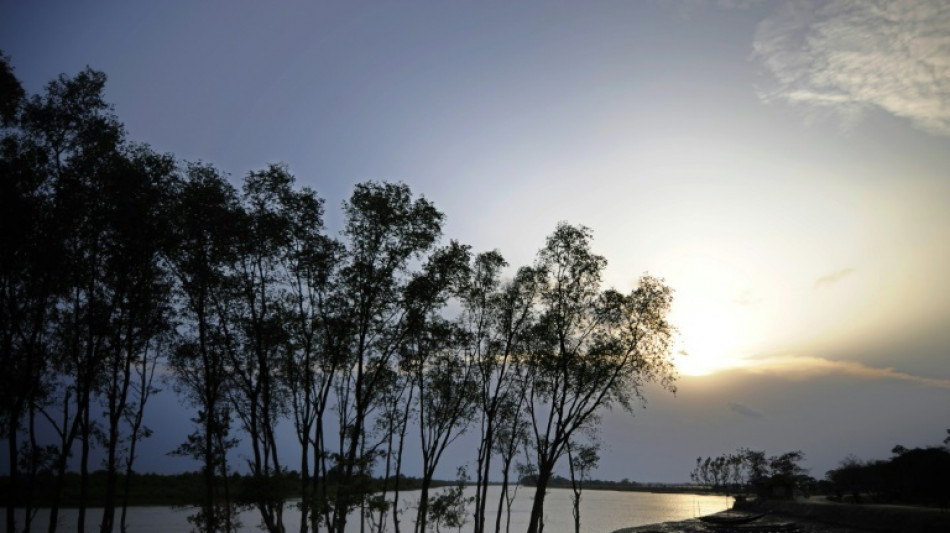
Bangladesh bans plastics in world's largest mangrove forest / Photo: MUNIR UZ ZAMAN - AFP/File

Bangladesh bans plastics in world's largest mangrove forest

Conservationists in Bangladesh said Tuesday that tourists dropping rubbish in the world's largest mangrove forest had seriously damaged the ecosystem, forcing the imposition of a single-use plastic ban in the World Heritage site.

Text size:

The Sundarbans forest straddles the Bangladeshi coastline and is home to some of the world's rarest creatures, including the Bengal tiger and the Irrawaddy dolphin.

Some 200,000 tourists visit each year, according to government figures, on top of seasonal visits by fishermen and harvesters of wild honey who depend on the ecosystem's bounties.

"When they visit the forest, they bring in disposable water bottles, one-time use plastic food plates, soft-drink bottles and cans," Abu Naser Mohsin Hossain, a government forest conservator, told AFP.

"It is tough to clean up," he added.

Bangladesh environment minister Md. Shahab Uddin announced a single-use plastic ban covering 6,500 square kilometres (2,500 square miles) of the forest late Monday.

"Single-use plastics have severely damaged the environment and biodiversity of the Sundarbans," the minister said.

His decision was immediately hailed by environmentalists.

"The environment and biodiversity are at stake in the Sundarbans," Monirul Khan, a zoology professor at Bangladesh's state-run Jahangirnagar University, told AFP.

"The gravity of pollution caused by plastics is more than meets the eye. Wild animals often end up eating these plastics."

Part of the Sundarbans was designated a World Heritage site by UNESCO in 1997.

Mangroves protect coastlines from erosion and extreme weather events, improve water quality by filtering pollutants and serve as nurseries for many marine creatures.

They can help fight climate change by sequestering millions of tons of carbon each year in their trees' leaves, trunks, roots and the soil.

The Sundarbans, located on the delta of the Ganges, Brahmaputra and Meghna rivers on the Bay of Bengal, also help buffer coastal communities in Bangladesh from the cyclones that frequently strike the country during its annual monsoon.

Conservationists regularly sound the alarm over environmental threats to the Sundarbans, including the construction at its northern edge of a coal-fired power station that began operations last year.

Bangladesh Environment Movement general secretary Sharif Jamil said the plant remained a considerable threat to the ecosystem.

"The government should stop coal transportation and discharging through the forest's rivers," he told AFP.

"Uncovered vessels that carry coal for the power plant through the forest also cause a great deal of pollution."

W.Zhang--DT