Dubai Telegraph - Costa Rica crocodiles survive in 'most polluted' river

EUR -
AED 4.382198
AFN 78.754674
ALL 96.774708
AMD 453.149301
ANG 2.136006
AOA 1094.207135
ARS 1723.102862
AUD 1.703562
AWG 2.147844
AZN 2.027442
BAM 1.958133
BBD 2.409352
BDT 146.164116
BGN 2.003902
BHD 0.44984
BIF 3543.996936
BMD 1.193246
BND 1.513406
BOB 8.265053
BRL 6.196645
BSD 1.1962
BTN 110.054406
BWP 15.599563
BYN 3.379194
BYR 23387.630134
BZD 2.405847
CAD 1.612422
CDF 2693.762547
CHF 0.916294
CLF 0.025959
CLP 1024.998187
CNY 8.291151
CNH 8.289429
COP 4358.929228
CRC 591.891888
CUC 1.193246
CUP 31.621031
CVE 110.398824
CZK 24.32057
DJF 213.014461
DKK 7.467264
DOP 75.160557
DZD 154.348858
EGP 55.874598
ERN 17.898697
ETB 185.131832
FJD 2.622039
FKP 0.865821
GBP 0.867049
GEL 3.215789
GGP 0.865821
GHS 13.067895
GIP 0.865821
GMD 87.70765
GNF 10498.001207
GTQ 9.178126
GYD 250.254403
HKD 9.315604
HNL 31.597639
HRK 7.540838
HTG 156.807821
HUF 381.264314
IDR 20023.868432
ILS 3.681565
IMP 0.865821
INR 109.70767
IQD 1563.749454
IRR 50265.506279
ISK 145.027398
JEP 0.865821
JMD 187.696961
JOD 0.846036
JPY 183.553496
KES 154.250804
KGS 104.349672
KHR 4801.014384
KMF 491.617467
KPW 1074.001913
KRW 1714.128315
KWD 0.365981
KYD 0.996775
KZT 600.868221
LAK 25678.663363
LBP 107122.636637
LKR 370.091721
LRD 221.344446
LSL 18.781995
LTL 3.523347
LVL 0.721783
LYD 7.487624
MAD 10.8345
MDL 20.12057
MGA 5321.878904
MKD 61.653933
MMK 2506.310149
MNT 4256.181546
MOP 9.616435
MRU 47.574622
MUR 54.20887
MVR 18.435607
MWK 2072.668697
MXN 20.600147
MYR 4.698762
MZN 76.069502
NAD 18.865481
NGN 1659.806193
NIO 43.189568
NOK 11.43188
NPR 176.109616
NZD 1.971279
OMR 0.458799
PAB 1.196155
PEN 3.989617
PGK 5.083822
PHP 70.236878
PKR 333.900229
PLN 4.209046
PYG 8027.167678
QAR 4.344732
RON 5.098262
RSD 117.403788
RUB 89.791784
RWF 1733.190447
SAR 4.47538
SBD 9.615301
SCR 17.094249
SDG 717.748765
SEK 10.549557
SGD 1.511223
SHP 0.895244
SLE 29.085359
SLL 25021.780252
SOS 681.970209
SRD 45.34754
STD 24697.792058
STN 24.610708
SVC 10.466336
SYP 13196.79832
SZL 18.849358
THB 37.471506
TJS 11.172143
TMT 4.188295
TND 3.373606
TOP 2.873051
TRY 51.903114
TTD 8.118705
TWD 37.455406
TZS 3036.811959
UAH 51.195332
UGX 4255.17589
USD 1.193246
UYU 45.264869
UZS 14555.155623
VES 437.738577
VND 30910.452286
VUV 142.675312
WST 3.241825
XAF 656.725554
XAG 0.010797
XAU 0.00023
XCD 3.224808
XCG 2.155741
XDR 0.816831
XOF 653.262056
XPF 119.331742
YER 284.471219
ZAR 18.895594
ZMK 10740.668787
ZMW 23.654963
ZWL 384.224865
  • RBGPF

    1.3800

    83.78

    +1.65%

  • SCS

    0.0200

    16.14

    +0.12%

  • CMSC

    0.0100

    23.71

    +0.04%

  • BCC

    -0.5500

    80.3

    -0.68%

  • GSK

    0.5600

    50.66

    +1.11%

  • NGG

    0.3900

    85.07

    +0.46%

  • CMSD

    0.0392

    24.09

    +0.16%

  • AZN

    -0.6300

    92.59

    -0.68%

  • RELX

    -1.2100

    36.17

    -3.35%

  • RIO

    1.7600

    95.13

    +1.85%

  • BCE

    0.2200

    25.49

    +0.86%

  • BTI

    0.0600

    60.22

    +0.1%

  • RYCEF

    -0.0700

    16.88

    -0.41%

  • JRI

    -0.0500

    12.94

    -0.39%

  • VOD

    0.1400

    14.71

    +0.95%

  • BP

    0.3400

    38.04

    +0.89%

Costa Rica crocodiles survive in 'most polluted' river
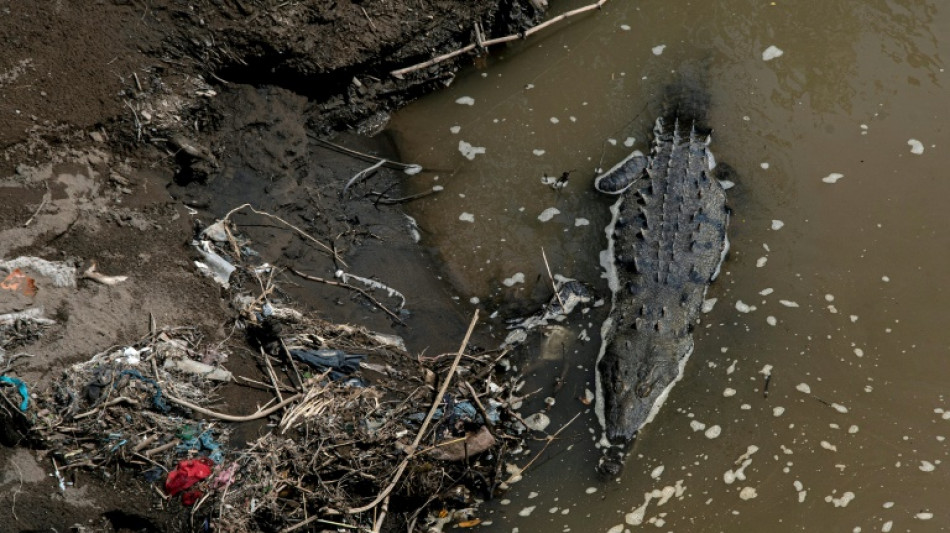
Costa Rica crocodiles survive in 'most polluted' river / Photo: Ezequiel BECERRA - AFP

Costa Rica crocodiles survive in 'most polluted' river

In one of the most polluted rivers in Central America, a vulnerable crocodile species is thriving despite living in waters that have become a sewer for Costa Rica's capital, experts say.

Text size:

Every day, trash and wastewater from San Jose households and factories flood into the Tarcoles River, which vomits tires and plastic into the surrounding mangroves.

Nevertheless, some 2,000 American Crocodiles have adapted to life in the toxic river that bears witness to the country's decades-long battle with waste management.

"It is a super-contaminated area, but this has not affected the crocodile population," said Ivan Sandoval, a biologist with the National University of Costa Rica.

"The Tarcoles River is the most polluted river in Costa Rica, and one of the most contaminated in Central America. Heavy metals, nitrites, nitrates, and a large amount of human waste can be found," added the crocodile expert.

According to the International Union for Conservation of Nature (IUCN), there are only about 5,000 of the crocodile species -- found in 18 countries -- left in the world after decades of hunting and habitat loss.

The organization lists the Crocodylus acutus as "vulnerable," but says its numbers have increased in recent years. The Costa Rica population is "healthy and robust."

Indeed, the large reptiles -- basking in the sun and occasionally feeding on fish that come up the channel from the sea -- appear unphased by some 150 types of bacteria that Sandoval says have been detected in the river.

He describes the carnivores as "living fossils" with the capacity to survive very tough conditions.

"They haven't had to change anything in millions of years, they are perfectly designed."

- Laws not applied -

Sandoval said that since 1980, Costa Rica's population of the crocodiles "are recovering," and warns of the threat of tourist activities.

The river's crocodiles are a major draw for foreign visitors, who take boat tours to see the creatures up close.

Some feed the animals, which is prohibited, and Sandoval worries about them getting too used to being close to people.

Juan Carlos Buitrago, 48, who captains one of the tour boats, says he and other locals regularly pull hundreds of tires and plastic waste from the water.

He delights in the fauna of the river, with macaws flying over ahead at sunset, but wishes his countrymen would stop polluting his "office."

"We cannot hide the pollution," he tells AFP.

Costa Rica has impressive environmental credentials, with a third of its territory marked for protection, 98 percent renewable energy, and 53 percent forest cover, according to the UN's environmental agency.

However, the law is not always strictly applied, as in the case of the Tarcoles River.

Lawyer and environmentalist Walter Brenes, 34, said that all of Costa Rica's rules and regulations "do not solve the problem."

He said the country needs "real public policy that is completely aimed at protecting wildlife."

H.El-Hassany--DT