Dubai Telegraph - Dangerous livestock pest case confirmed in Texas

EUR -
AED 4.264879
AFN 73.736309
ALL 95.137593
AMD 428.003744
ANG 2.079265
AOA 1066.075742
ARS 1668.79783
AUD 1.629235
AWG 2.090344
AZN 1.971982
BAM 1.951418
BBD 2.337201
BDT 142.440145
BGN 1.939282
BHD 0.437927
BIF 3463.583952
BMD 1.161302
BND 1.489362
BOB 8.035886
BRL 5.878745
BSD 1.160469
BTN 111.217341
BWP 15.600171
BYN 3.283241
BYR 22761.524045
BZD 2.333819
CAD 1.615058
CDF 2688.414759
CHF 0.916297
CLF 0.026442
CLP 1040.677384
CNY 7.866487
CNH 7.870116
COP 4156.78849
CRC 533.794447
CUC 1.161302
CUP 30.77451
CVE 110.730203
CZK 24.196022
DJF 206.387118
DKK 7.474101
DOP 67.706229
DZD 154.874967
EGP 60.175893
ERN 17.419534
ETB 187.086379
FJD 2.559104
FKP 0.864424
GBP 0.865246
GEL 3.089302
GGP 0.864424
GHS 13.71531
GIP 0.864424
GMD 84.19373
GNF 10190.427536
GTQ 8.848131
GYD 242.75012
HKD 9.097752
HNL 30.889233
HRK 7.535924
HTG 151.729286
HUF 354.16115
IDR 20974.918602
ILS 3.358666
IMP 0.864424
INR 111.241781
IQD 1520.160236
IRR 1596790.590046
ISK 143.594474
JEP 0.864424
JMD 183.59378
JOD 0.823402
JPY 185.791525
KES 150.225829
KGS 101.555938
KHR 4656.821823
KMF 492.39212
KPW 1045.003923
KRW 1780.42152
KWD 0.358715
KYD 0.96702
KZT 563.654583
LAK 25490.583666
LBP 103994.616061
LKR 391.35782
LRD 211.927221
LSL 18.940712
LTL 3.429024
LVL 0.70246
LYD 7.385764
MAD 10.675436
MDL 20.098694
MGA 4882.951035
MKD 61.637158
MMK 2438.322941
MNT 4154.804138
MOP 9.364073
MRU 46.45788
MUR 55.231809
MVR 17.953473
MWK 2016.020553
MXN 20.074213
MYR 4.665011
MZN 74.212994
NAD 18.940704
NGN 1580.532308
NIO 42.703739
NOK 10.852248
NPR 177.952698
NZD 1.978992
OMR 0.446534
PAB 1.160374
PEN 3.950595
PGK 5.072566
PHP 71.422386
PKR 323.093897
PLN 4.237704
PYG 7069.125982
QAR 4.241875
RON 5.256519
RSD 117.356497
RUB 85.242868
RWF 1698.870486
SAR 4.361001
SBD 9.328331
SCR 15.413039
SDG 697.364815
SEK 10.896563
SGD 1.491884
SHP 0.867029
SLE 28.56869
SLL 24351.929917
SOS 663.21928
SRD 43.336898
STD 24036.611856
STN 24.444582
SVC 10.15398
SYP 128.361173
SZL 18.941353
THB 37.949613
TJS 10.792398
TMT 4.064558
TND 3.399267
TOP 2.796137
TRY 53.483194
TTD 7.861212
TWD 36.601921
TZS 3025.195871
UAH 51.505755
UGX 4369.414049
USD 1.161302
UYU 46.744229
UZS 13928.483131
VES 648.059255
VND 30582.894679
VUV 137.448718
WST 3.144489
XAF 654.50138
XAG 0.015758
XAU 0.00026
XCD 3.138477
XCG 2.091386
XDR 0.816283
XOF 654.476075
XPF 119.331742
YER 277.086847
ZAR 18.968647
ZMK 10453.115359
ZMW 20.336159
ZWL 373.93885
  • RBGPF

    0.0000

    60.01

    0%

  • BCC

    -0.2000

    68.48

    -0.29%

  • GSK

    1.5500

    51.27

    +3.02%

  • AZN

    5.5200

    181.8

    +3.04%

  • NGG

    1.1500

    81.38

    +1.41%

  • BCE

    -0.4300

    24.08

    -1.79%

  • BTI

    -0.7700

    57.85

    -1.33%

  • CMSC

    0.0080

    22.608

    +0.04%

  • BP

    0.3600

    44.04

    +0.82%

  • RIO

    -2.4600

    105.4

    -2.33%

  • JRI

    0.0600

    12.81

    +0.47%

  • RELX

    1.5600

    34.46

    +4.53%

  • RYCEF

    0.1400

    17.34

    +0.81%

  • CMSD

    0.0500

    22.65

    +0.22%

  • VOD

    0.0500

    15.1

    +0.33%

Dangerous livestock pest case confirmed in Texas
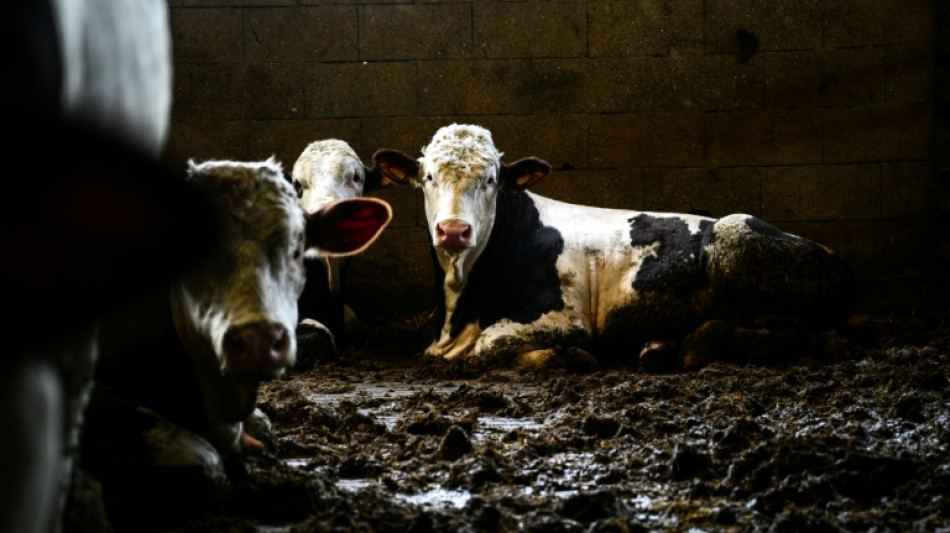
Dangerous livestock pest case confirmed in Texas / Photo: OLIVIER CHASSIGNOLE - AFP

Dangerous livestock pest case confirmed in Texas

The United States said on Thursday that the New World screwworm (NWS) fly, a dangerous livestock pest whose flesh-eating larvae can kill cattle, has been detected in a calf in south Texas.

Text size:

"We have a confirmed positive detection of New World screwworm in a three-week-old calf," US Agriculture Secretary Brooke Rollins said in a briefing.

She said "immediate action" to contain and eradicate the parasite that has raised fears over the beef supply was underway.

The NWS fly was eradicated in the United States in 1966.

But Florida experienced an outbreak in 2016 that primarily impacted deer, and was eliminated the following year, according to the US Department of Agriculture.

It has remained present in South America, and in recent years has moved northward, triggering alarm.

The impacted calf this time around had larvae in its umbilical area, the USDA said.

Michael Schmoyer -- the associate administrator for the country's Animal and Plant Health Inspection Service and head of the NWS Directorate -- said the infested beef calf "is not a danger to the food supply."

"The screw worm can be detected easily, and it can be treated," he told journalists.

Officials added that the calf was undergoing treatment and improving, and emphasized that the worms do not infest food sources like meat, fruit or vegetables.

The flies lay their eggs in open wounds or mucous membranes of warm-blooded animals, where they hatch into larvae and feed on flesh. Left untreated, the infestation can be deadly, and the parasites can quickly spread.

Texas has established a 12-mile (20-kilometer) quarantine zone, meaning all warm-blooded animals including pets must be inspected before leaving the zone.

- Sterilization by ground and sky -

The fly had been eradicated in the US thanks in large part by dropping millions of sterile flies to mate with wild females.

US officials said some four million sterile flies were already being released weekly from the sky, and that some four million more in the pupae stage were being deployed in ground release chambers.

Infections in humans are not common, the USDA said, but added that individuals who detect signs like suspicious lesions should immediately seek medical attention.

Jennifer Bloodgood, an assistant professor of practice and wildlife veterinarian at Cornell University, said to AFP in a statement that the detection in Texas "underscores the need for continued vigilance and collaboration among livestock, wildlife, and public health communities."

"The good news is that we have successfully eradicated New World screwworm from the United States before," Bloodgood said. "This detection should not cause panic, but it should reinforce the importance of awareness."

Feeder cattle futures at the Chicago Mercantile Exchange rose Thursday as the market feared an eventual decline in available supply.

A USDA study last year estimated a screwworm resurgence in Texas could cost the state's economy $1.8 billion.

Y.El-Kaaby--DT