Dubai Telegraph - EU's Russian oil ban unlikely to affect OPEC+ decision

EUR -
AED 4.317791
AFN 77.005164
ALL 96.202449
AMD 448.772549
ANG 2.104994
AOA 1078.125037
ARS 1690.956857
AUD 1.77062
AWG 2.119216
AZN 2.012494
BAM 1.956581
BBD 2.367245
BDT 143.637346
BGN 1.956721
BHD 0.443179
BIF 3487.154045
BMD 1.175709
BND 1.515305
BOB 8.151254
BRL 6.366001
BSD 1.175369
BTN 106.599559
BWP 15.523065
BYN 3.437272
BYR 23043.904009
BZD 2.363844
CAD 1.618781
CDF 2645.345799
CHF 0.935547
CLF 0.027402
CLP 1074.98592
CNY 8.285518
CNH 8.279157
COP 4490.998235
CRC 587.934726
CUC 1.175709
CUP 31.156299
CVE 110.740688
CZK 24.319725
DJF 208.947381
DKK 7.469558
DOP 74.481007
DZD 152.330677
EGP 55.758492
ERN 17.635641
ETB 182.293807
FJD 2.680026
FKP 0.879723
GBP 0.878508
GEL 3.168536
GGP 0.879723
GHS 13.526575
GIP 0.879723
GMD 86.417538
GNF 10216.91415
GTQ 9.003595
GYD 245.900264
HKD 9.149664
HNL 30.814999
HRK 7.533994
HTG 154.001483
HUF 384.613371
IDR 19578.265445
ILS 3.777378
IMP 0.879723
INR 106.727547
IQD 1540.179299
IRR 49509.122688
ISK 148.186181
JEP 0.879723
JMD 187.834991
JOD 0.833569
JPY 182.082704
KES 151.56071
KGS 102.815773
KHR 4707.540683
KMF 493.798125
KPW 1058.138081
KRW 1726.893581
KWD 0.360696
KYD 0.979483
KZT 606.222027
LAK 25471.743824
LBP 104460.550011
LKR 363.425093
LRD 208.39452
LSL 19.763274
LTL 3.471564
LVL 0.711175
LYD 6.372759
MAD 10.795951
MDL 19.839752
MGA 5302.448984
MKD 61.562247
MMK 2468.126608
MNT 4168.907096
MOP 9.422042
MRU 46.734885
MUR 54.023346
MVR 18.105958
MWK 2042.206891
MXN 21.140372
MYR 4.815115
MZN 75.096806
NAD 19.763664
NGN 1707.249917
NIO 43.151482
NOK 11.923439
NPR 170.559094
NZD 2.032008
OMR 0.452067
PAB 1.175369
PEN 3.963909
PGK 5.000585
PHP 69.175805
PKR 329.492369
PLN 4.218075
PYG 7894.151648
QAR 4.280727
RON 5.092467
RSD 117.387541
RUB 93.451775
RWF 1707.130032
SAR 4.411311
SBD 9.593841
SCR 16.471615
SDG 707.180049
SEK 10.913599
SGD 1.515913
SHP 0.882087
SLE 28.275401
SLL 24654.042324
SOS 671.917518
SRD 45.394351
STD 24334.810588
STN 24.925039
SVC 10.284106
SYP 12999.444626
SZL 19.764075
THB 36.999234
TJS 10.807507
TMT 4.114983
TND 3.423079
TOP 2.830826
TRY 50.201733
TTD 7.977185
TWD 36.850726
TZS 2918.68742
UAH 49.680534
UGX 4186.67148
USD 1.175709
UYU 46.058388
UZS 14255.4766
VES 314.431424
VND 30944.671097
VUV 142.410896
WST 3.263161
XAF 656.218988
XAG 0.018381
XAU 0.000273
XCD 3.177413
XCG 2.118246
XDR 0.81758
XOF 656.637422
XPF 119.331742
YER 280.347792
ZAR 19.732136
ZMK 10582.788909
ZMW 27.238875
ZWL 378.577943
  • SCS

    0.0200

    16.14

    +0.12%

  • RBGPF

    0.4300

    81.6

    +0.53%

  • CMSD

    0.1150

    23.365

    +0.49%

  • NGG

    1.1000

    76.03

    +1.45%

  • RYCEF

    0.0100

    14.65

    +0.07%

  • CMSC

    0.0000

    23.3

    0%

  • AZN

    1.7300

    91.56

    +1.89%

  • GSK

    0.4300

    49.24

    +0.87%

  • BTI

    0.6400

    57.74

    +1.11%

  • RELX

    0.7000

    41.08

    +1.7%

  • RIO

    0.1600

    75.82

    +0.21%

  • BCE

    0.2161

    23.61

    +0.92%

  • JRI

    -0.0065

    13.56

    -0.05%

  • BCC

    -1.1800

    75.33

    -1.57%

  • VOD

    0.1100

    12.7

    +0.87%

  • BP

    -0.0100

    35.25

    -0.03%

EU's Russian oil ban unlikely to affect OPEC+ decision
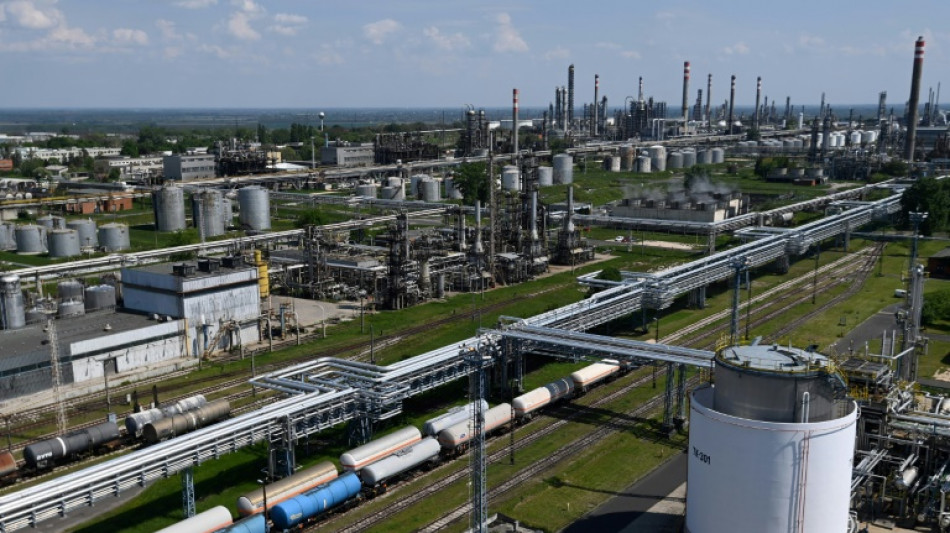
EU's Russian oil ban unlikely to affect OPEC+ decision / Photo: ATTILA KISBENEDEK - AFP/File

EU's Russian oil ban unlikely to affect OPEC+ decision

Saudia Arabia, Russia and their allies are likely to stick to their policy of modest oil output increases when they meet Thursday after the EU banned most imports from Moscow.

Text size:

European Union leaders agreed on Monday to ban more than two-thirds of Russian oil imports, tightening economic screws on the country over its invasion of its neighbour Ukraine.

This has caused oil prices, which have already hit record highs so far this year, to soar further amid pressure on the 23-member OPEC+ to open tabs more widely and relieve the market.

Brent, the international benchmark, hit a two-month high above $124 per barrel while the US contract, WTI, topped $119.

But analysts say OPEC+ will stick to its strategy of only slightly increasing output when it holds its monthly videoconference on Thursday as it remains united with Moscow.

"With Russia being one of the two most important members of the alliance (alongside Saudi Arabia), any decision on increasing output has become highly political," Craig Erlam, analyst at trading platform OANDA, told AFP.

"Both because (Russia) cannot sell what it's already producing as a result of sanctions and perhaps even because it wants prices to be uncomfortably high and maintain pressure on countries it considers 'unfriendly'," he said.

The 13 members of the Organization of the Petroleum Exporting Countries chaired by Saudi Arabia and their 10 partners led by Russia drastically slashed output in 2020 as demand slumped because of the coronavirus pandemic and worldwide lockdowns.

They have been increasing output modestly to the tune of around 400,000 barrels per day each month since last year and have resisted pressure by top consumers, including the US, to open the tabs wider.

Ipek Ozkardeskaya, an analyst with Swissquote bank, said Thursday's meeting "looks like a formality".

"There is little hope to see OPEC countries announcing anything that would give a relief to the market," she said.

- Unable to meet quotas -

Analysts have also noted even if the group was willing to increase its output, several of its members have fallen short of the quotas, resulting in a lower supply to the market.

"Ultimately, the group is missing its already modest targets by increasingly large margins every month so you have to question just how impactful any increase would be if countries simply don't have the capacity to increase further," Erlam said.

In a statement Friday, the Group of Seven wealthy countries noted OPEC's "key role" and once again called on "oil and gas producing countries to act in a responsible manner and to respond to tightening international markets".

OPEC was set up in 1960 and joined by the 10 partners through a 2016 declaration. Its mission is to "ensure the stabilisation of oil markets".

But OPEC+ is "expected to push back against calls by the West to speed up its oil output increases, sticking to its existing plans instead," said Victoria Scholar, an analyst at Interactive Investor.

S.Mohideen--DT