Dubai Telegraph - WHO agency says talc is 'probably' cancer-causing

EUR -
AED 4.224055
AFN 73.034746
ALL 93.912556
AMD 423.509494
ANG 2.059295
AOA 1055.298283
ARS 1652.513696
AUD 1.637006
AWG 2.070333
AZN 1.954332
BAM 1.938266
BBD 2.317733
BDT 141.263308
BGN 1.944825
BHD 0.433739
BIF 3440.203335
BMD 1.150185
BND 1.474263
BOB 7.980803
BRL 5.855363
BSD 1.15079
BTN 108.762098
BWP 15.419509
BYN 3.185978
BYR 22543.626
BZD 2.314463
CAD 1.623049
CDF 2668.429339
CHF 0.921954
CLF 0.025886
CLP 1018.787718
CNY 7.772318
CNH 7.779921
COP 3950.885475
CRC 524.15827
CUC 1.150185
CUP 30.479903
CVE 109.670229
CZK 23.926206
DJF 204.410724
DKK 7.402752
DOP 67.400776
DZD 152.835402
EGP 57.40366
ERN 17.252775
ETB 182.160574
FJD 2.569169
FKP 0.858573
GBP 0.866384
GEL 3.042238
GGP 0.858573
GHS 12.994445
GIP 0.858573
GMD 83.963142
GNF 10095.747706
GTQ 8.771724
GYD 240.722336
HKD 9.014132
HNL 30.706716
HRK 7.532445
HTG 150.290417
HUF 345.802709
IDR 20414.173491
ILS 3.38297
IMP 0.858573
INR 108.47337
IQD 1506.74235
IRR 1581504.374934
ISK 143.002537
JEP 0.858573
JMD 182.003529
JOD 0.815503
JPY 184.332097
KES 148.972166
KGS 100.583404
KHR 4615.109336
KMF 488.828408
KPW 1035.166903
KRW 1738.924442
KWD 0.35437
KYD 0.959024
KZT 561.198313
LAK 25338.575324
LBP 102999.066812
LKR 385.525743
LRD 209.506002
LSL 18.627083
LTL 3.396197
LVL 0.695736
LYD 7.332452
MAD 10.63348
MDL 20.081337
MGA 4830.776941
MKD 61.059454
MMK 2415.32615
MNT 4116.951662
MOP 9.284806
MRU 46.099467
MUR 54.208496
MVR 17.782141
MWK 1996.721456
MXN 19.882477
MYR 4.675277
MZN 73.499243
NAD 18.635202
NGN 1563.239036
NIO 42.108388
NOK 11.060296
NPR 174.018253
NZD 1.990508
OMR 0.442244
PAB 1.15079
PEN 3.925018
PGK 5.046724
PHP 69.44013
PKR 320.0944
PLN 4.195495
PYG 7022.472113
QAR 4.187251
RON 5.183926
RSD 116.25041
RUB 83.930778
RWF 1711.47528
SAR 4.315372
SBD 9.272129
SCR 16.235003
SDG 690.685314
SEK 10.948358
SGD 1.474571
SHP 0.858729
SLE 28.467414
SLL 24118.808572
SOS 657.339385
SRD 42.938737
STD 23806.507286
STN 24.613959
SVC 10.069
SYP 127.132361
SZL 18.629409
THB 37.420695
TJS 10.667696
TMT 4.037149
TND 3.349052
TOP 2.76937
TRY 53.420578
TTD 7.817282
TWD 36.298116
TZS 3019.239041
UAH 51.538512
UGX 4257.48521
USD 1.150185
UYU 46.460109
UZS 13807.970761
VES 685.552123
VND 30279.77031
VUV 136.859249
WST 3.151221
XAF 650.07617
XAG 0.016846
XAU 0.000268
XCD 3.108433
XCG 2.07402
XDR 0.809382
XOF 649.854731
XPF 119.331742
YER 274.462925
ZAR 18.840732
ZMK 10353.037051
ZMW 20.339997
ZWL 370.359101
  • CMSC

    -0.0450

    22.32

    -0.2%

  • RYCEF

    -0.1600

    18.43

    -0.87%

  • RELX

    -0.7900

    32.01

    -2.47%

  • AZN

    -0.8200

    177.89

    -0.46%

  • RBGPF

    -1.7300

    61.14

    -2.83%

  • BP

    -1.0100

    40.14

    -2.52%

  • GSK

    -0.0700

    52.15

    -0.13%

  • BTI

    -1.8900

    59.49

    -3.18%

  • NGG

    -1.6000

    80.68

    -1.98%

  • RIO

    -3.0700

    102.67

    -2.99%

  • VOD

    -0.3600

    14.53

    -2.48%

  • CMSD

    0.0300

    22.29

    +0.13%

  • JRI

    -0.1900

    12.62

    -1.51%

  • BCC

    -0.7500

    70.81

    -1.06%

  • BCE

    -0.5400

    23.28

    -2.32%

WHO agency says talc is 'probably' cancer-causing
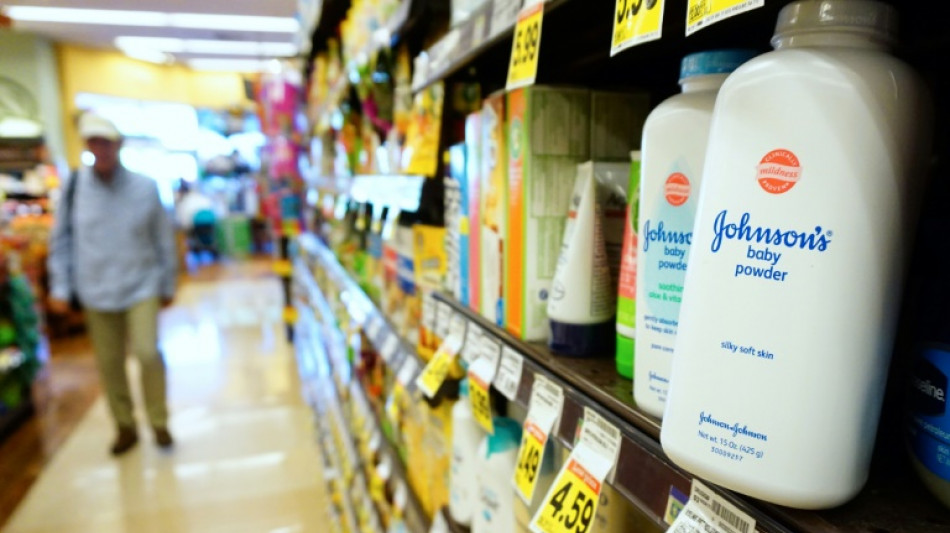
WHO agency says talc is 'probably' cancer-causing / Photo: FREDERIC J. BROWN - AFP/File

WHO agency says talc is 'probably' cancer-causing

The World Health Organization's cancer agency on Friday classified talc as "probably carcinogenic" for humans, however an outside expert warned against misinterpreting the announcement as a "smoking gun".

Text size:

The decision was based on "limited evidence" talc could cause ovarian cancer in humans, "sufficient evidence" it was linked to cancer in rats and "strong mechanistic evidence" that it shows carcinogenic signs in human cells, the WHO's International Agency for Research on Cancer (IARC) said.

Talc is a naturally occurring mineral which is mined in many parts of the world and is often used to make talcum baby powder.

Most people are exposed to talc in the form of baby powder or cosmetics, according to the Lyon-based IARC.

But the most significant exposure to talc occurs when talc is being mined, processed or used to make products, it added.

The agency said there were numerous studies which consistently showed an increase in the rate of ovarian cancer in women who use talc on their genitals.

But it could not rule out that the talc in some studies was contaminated with cancer-causing asbestos.

"A causal role for talc could not be fully established," according the agency's findings published in The Lancet Oncology.

Kevin McConway, a statistician at the UK's Open University not involved the research, warned that for the IARC's evaluation, the "most obvious interpretation is actually misleading".

The agency is only aiming "to answer the question of whether the substance has the potential to cause cancer, under some conditions that IARC do not specify," he said.

Because the studies were observational and so could not prove causation, "there isn’t a smoking gun that the talc use causes any increased cancer risk," he added.

The announcement comes just weeks after US pharmaceutical and cosmetics giant Johnson & Johnson agreed to pay $700 million to settle allegations it misled customers about the safety of its talcum-based powder products.

Johnson & Johnson did not admit wrongdoing in its settlement, even though it withdrew the product from the North American market in 2020.

A summary of studies published in 2020 covering 250,000 women in the United States did not find a statistical link between the use of talc on the genitals and the risk of ovarian cancer.

Also on Friday, the IARC classified acrylonitrile, a chemical compound used to make polymers, as "carcinogenic to humans", its highest warning level.

It cited "sufficient evidence" linking acrylonitrile to lung cancer.

The polymers made with acrylonitrile are used in everything from fibres in clothes to carpets, plastics and other consumer products.

H.El-Qemzy--DT