Dubai Telegraph - Lab-grown human 'embryos' offer new research hope

EUR -
AED 4.319214
AFN 77.799029
ALL 96.523646
AMD 448.842461
ANG 2.105688
AOA 1078.481367
ARS 1691.514836
AUD 1.772953
AWG 2.119915
AZN 2.00288
BAM 1.957293
BBD 2.368107
BDT 143.689633
BGN 1.956561
BHD 0.443356
BIF 3473.235269
BMD 1.176097
BND 1.51585
BOB 8.154222
BRL 6.383854
BSD 1.175797
BTN 106.651977
BWP 15.528848
BYN 3.438524
BYR 23051.508013
BZD 2.364704
CAD 1.619863
CDF 2646.219254
CHF 0.93565
CLF 0.027369
CLP 1073.527932
CNY 8.288252
CNH 8.27635
COP 4490.339673
CRC 588.14875
CUC 1.176097
CUP 31.16658
CVE 110.349195
CZK 24.335395
DJF 209.379754
DKK 7.470864
DOP 74.686985
DZD 152.502174
EGP 55.782766
ERN 17.64146
ETB 183.000527
FJD 2.710022
FKP 0.879009
GBP 0.875863
GEL 3.169611
GGP 0.879009
GHS 13.521317
GIP 0.879009
GMD 86.448195
GNF 10224.757894
GTQ 9.006872
GYD 245.987686
HKD 9.148855
HNL 30.97063
HRK 7.536317
HTG 154.056889
HUF 384.687917
IDR 19602.014492
ILS 3.786928
IMP 0.879009
INR 106.92001
IQD 1540.281764
IRR 49525.45964
ISK 148.000426
JEP 0.879009
JMD 187.903368
JOD 0.833856
JPY 182.114562
KES 151.657567
KGS 102.850176
KHR 4704.569527
KMF 493.960824
KPW 1058.487907
KRW 1732.827118
KWD 0.360579
KYD 0.979852
KZT 606.445288
LAK 25478.439731
LBP 105310.206806
LKR 363.55739
LRD 207.554833
LSL 19.727452
LTL 3.472709
LVL 0.71141
LYD 6.373863
MAD 10.792434
MDL 19.847143
MGA 5240.998817
MKD 61.579942
MMK 2469.529268
MNT 4171.43145
MOP 9.425432
MRU 46.771686
MUR 54.006679
MVR 18.102881
MWK 2038.855621
MXN 21.114944
MYR 4.804948
MZN 75.148017
NAD 19.727536
NGN 1708.411073
NIO 43.272833
NOK 11.981104
NPR 170.621182
NZD 2.034231
OMR 0.452213
PAB 1.175797
PEN 3.959438
PGK 4.996791
PHP 68.829952
PKR 329.513615
PLN 4.220784
PYG 7897.025332
QAR 4.28527
RON 5.094503
RSD 117.408617
RUB 93.384889
RWF 1711.906163
SAR 4.411565
SBD 9.597007
SCR 15.888991
SDG 707.418576
SEK 10.946826
SGD 1.516583
SHP 0.882378
SLE 28.28482
SLL 24662.17764
SOS 670.811821
SRD 45.408987
STD 24342.840564
STN 24.518603
SVC 10.287893
SYP 13005.838403
SZL 19.731055
THB 37.058717
TJS 10.812729
TMT 4.116341
TND 3.438624
TOP 2.831761
TRY 50.236407
TTD 7.980089
TWD 36.962975
TZS 2904.9602
UAH 49.698619
UGX 4188.195541
USD 1.176097
UYU 46.081036
UZS 14224.913907
VES 314.53518
VND 30984.284622
VUV 142.850922
WST 3.268742
XAF 656.457869
XAG 0.018673
XAU 0.000275
XCD 3.178462
XCG 2.119026
XDR 0.816423
XOF 656.457869
XPF 119.331742
YER 280.440092
ZAR 19.739739
ZMK 10586.283589
ZMW 27.24879
ZWL 378.702866
  • SCS

    0.0200

    16.14

    +0.12%

  • RBGPF

    0.4300

    81.6

    +0.53%

  • RYCEF

    0.3100

    14.95

    +2.07%

  • CMSC

    0.0000

    23.3

    0%

  • CMSD

    0.1150

    23.365

    +0.49%

  • NGG

    1.1000

    76.03

    +1.45%

  • RELX

    0.7000

    41.08

    +1.7%

  • GSK

    0.4300

    49.24

    +0.87%

  • RIO

    0.1600

    75.82

    +0.21%

  • AZN

    1.7300

    91.56

    +1.89%

  • BCE

    0.2161

    23.61

    +0.92%

  • VOD

    0.1100

    12.7

    +0.87%

  • BTI

    0.6400

    57.74

    +1.11%

  • BCC

    -1.1800

    75.33

    -1.57%

  • JRI

    -0.0065

    13.56

    -0.05%

  • BP

    -0.0100

    35.25

    -0.03%

Lab-grown human 'embryos' offer new research hope
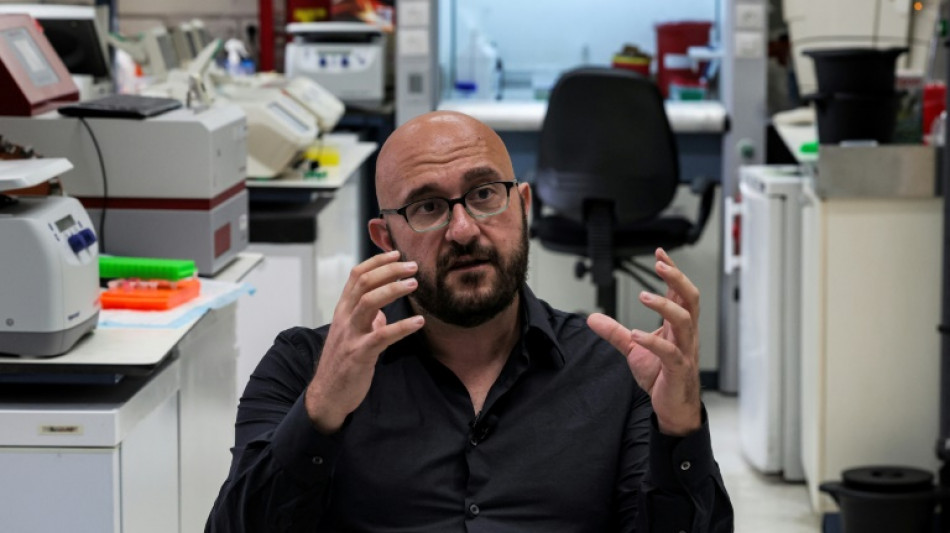
Lab-grown human 'embryos' offer new research hope / Photo: AHMAD GHARABLI - AFP

Lab-grown human 'embryos' offer new research hope

Scientists have developed human embryo-like structures without using sperm, an egg or fertilisation, offering hope for research on miscarriage and birth defects but also raising fresh ethical concerns.

Text size:

Earlier this year, several labs around the world released pre-print studies describing their development of early human embryo-like structures.

That work has not yet been peer-reviewed, but now one group's research has been published in the journal Nature, describing how they coaxed human embryonic stem cells to self-organise into a model resembling an early embryo.

The research was welcomed by some scientists as an "impressive" advance that could help unlock secrets about the precarious early stages of pregnancies, when failure is most common.

The work will however renew debate on the need for clearer ethical rules on development of lab-grown human embryo models.

The researchers, led by Palestinian scientist Jacob Hanna at the Weizmann Institute in Israel, harnesses the power of embryonic stem cells, which can become any kind of cell.

They produced embryo models up to 14 days old, which is the legal limit for such research in many countries, and the point at which organs like the brain begin to develop.

The researchers say their work differs from those of other teams because it uses chemically rather than genetically modified embryonic stem cells and produces models more like real human embryos, complete with yolk sac and amniotic cavity.

These similarities could make the models more useful for research into conditions like miscarriage, birth defects and infertility, said James Briscoe of Britain's Francis Crick Institute.

The model "seems to produce all of the different types of cells that form tissues at this early stage of development," said Briscoe, principal group leader and associate research director at the biomedical research charity.

The research "is a step towards opening a window on the period of human development where many pregnancies fail and which has been really difficult to study up until now."

Both the researchers and scientists not involved in the work emphasised that the models should not be considered human embryos.

The structure "highly resembles, but (is) not identical, to the in utero situation", the research notes.

The success rate on generating the models was also low, with the stem cells organising correctly just a small percentage of the time.

Still, the research and other recent work shows "that models of human embryos are getting more sophisticated and closer to events that occur during normal development," said Darius Widera, an expert in stem cell biology at the UK's University of Reading.

The work highlights "that a robust regulatory framework is more needed than ever before", he added.

In Britain, Cambridge University has begun developing the first governance framework for stem cell-based human embryo models.

The Weizmann Institute research does not involve transferring the models into a human or animal womb, or developing the structures beyond 14 days.

T.Jamil--DT