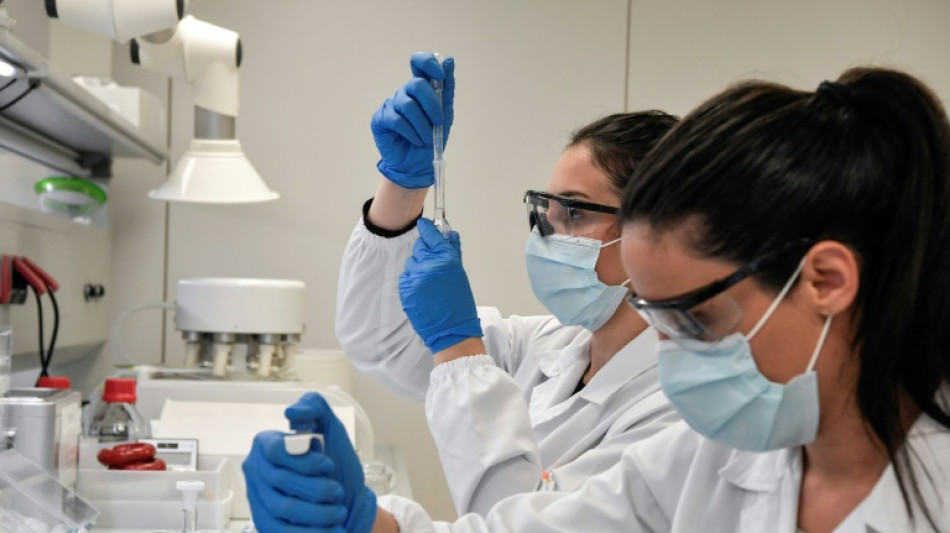
EU to unveil reforms for cheaper drugs / Photo: Louisa GOULIAMAKI - AFP/File
The EU on Wednesday is to unveil a long-awaited proposed reform of legislation governing pharmaceutical drugs to make them cheaper, prevent shortages and speed up delivery of new compounds.
The overhaul aims to bring "timely and equitable access for patients to affordable drugs" in the bloc, EU health commissioner Stella Kyriakides tweeted.
The reform is the biggest in two decades, and has in part been informed by Brussels' swift, concerted action during the Covid pandemic that underscored the benefits of less-burdensome procedures, greater transparency and joint measures.
The pharmaceutical industry has been intensively lobbying ahead of the presentation of the proposals.
A leak in February of a draft version of them sparked criticism from companies worried that the exclusive period they had over selling new drugs could be shortened from 10 years to eight.
The European Federation of Pharmaceutical Industries and Associations warned against steps that could constrain innovation.
While the European Commission aims to bring down the cost of medicines, it doesn't have the power to set prices in the European Union.
That is the prerogative of national governments who negotiate with pharmaceutical groups.
The EU executive is also intent on tackling shortages of drugs for rare diseases, and unequal access to medicines across the 27-nation bloc, especially in eastern member states.
Another challenge to be tackled is increasing microbial resistance to existing antibiotics, which each year leads to 35,000 deaths in the European Union.
Because antibiotics are meant to be taken in moderate, defined doses they are less lucrative to pharmaceutical companies than blockbuster drugs.
- Voucher system -
To address that problem, the commission is looking at introducing transferable vouchers that would allow a company coming up with a new, effective antibiotic to apply a lengthened period of exclusivity to another more profitable drug, or to sell that right to another company.
Around half the EU member states, including France, Belgium and the Netherlands, are wary of that idea though, worried it would weigh on national health systems.
The European Consumer Organisation has also come out against that proposal.
"But so far, no one has proposed a better system," said one EU lawmaker, Peter Liese, who is also a medical doctor.
He said that virtually no new antibiotic had been produced in 20 years. On this issue and the others the commission is proposing, "innovation-friendly regulation is indispensable," he said.
The commission also wants a faster approval process to get new drugs to market faster, as happened with Covid vaccines.
And it is suggesting a measure to force companies to be more transparent about the stocks of drugs they have, so that any looming shortfalls can be tackled earlier on.
For Pauline Londeix, co-founder of OTMeds, a French group monitoring levels of transparency on drugs policies, "a centralised system of alerts on shortages goes in the right direction but is not enough in itself".
She argues that the EU should consider "coordinated action at the European level for the part-public production of essential medicines".
S.Al-Balushi--DT