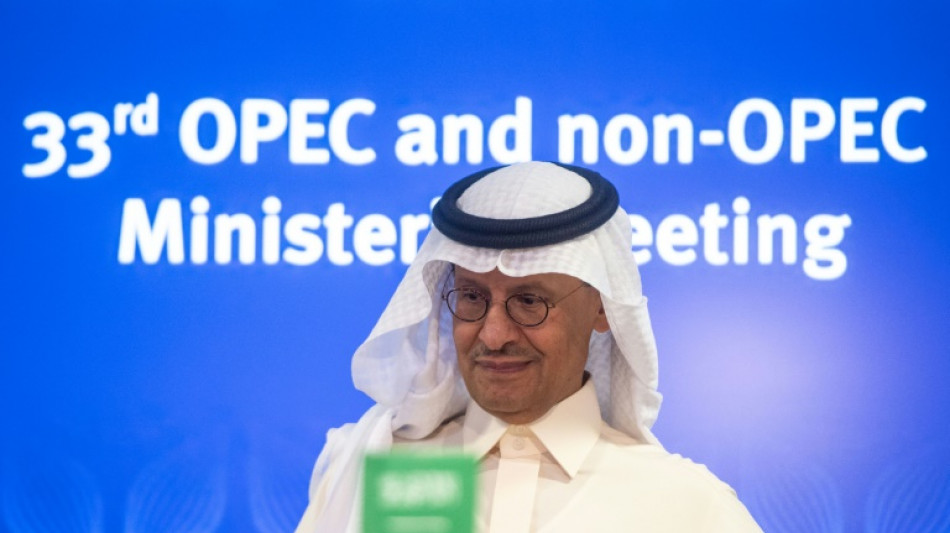
OPEC+ agrees major oil output cut, Biden 'disappointed' / Photo: VLADIMIR SIMICEK - AFP
OPEC and its Russia-led allies agreed on a major cut in oil production to boost crude prices on Wednesday, irking the United States which warned that it would hurt countries struggling with soaring energy prices.
The 13-nation OPEC cartel and its 10 Russian-led allies agreed to reduce two million barrels per day from November at a meeting in Vienna, the group said in a statement.
It is the biggest cut since the height of the Covid pandemic in 2020, raising fears that it will turbocharge oil prices at a time when countries are already facing soaring energy-fuelled inflation.
Saudi Arabia's energy minister, Prince Abdulaziz bin Salman, said the cartel's priority was "to maintain a sustainable oil market" following its first in-person meeting since March 2020.
But the move drew a swift rebuke from US President Joe Biden, who had made a controversial trip to Saudi Arabia in July in part to lobby for a boost in oil production as Americans faced rising prices at fuel stations.
The timing is also bad for Biden's political agendas it comes ahead of US midterm elections next month.
"The president is disappointed by the shortsighted decision by OPEC+," National Security Advisor Jake Sullivan and top economic advisor Brian Deese said in a statement.
The supply cut will hit countries "already reeling" from high prices while "the global economy is dealing with the continued negative impact" of Russia's attack on Ukraine, the statement said.
- Oil prices rise -
OPEC+ decided to slash its output as oil prices fell below $90 per barrel in recent months over concerns about the global economy, after soaring to $140 in the wake of Russia's invasion of Ukraine earlier this year.
The international benchmark, Brent North Sea crude, was up almost two percent at $93.41 following Wednesday's announcement.
The oil production cut could give sanctions-hit Russia a boost ahead of a European Union ban on most of its crude exports later this year and as the Group of Seven wealthy democracies mull a cap on the country's oil prices.
Russian deputy prime minister Alexander Novak, who is under US sanctions and attended the OPEC+ meeting, said a price cap would have a "detrimental effect" on the global oil sector.
He warned that Russian companies would "not supply oil to those countries" that introduce such a cap.
Collectively known as OPEC+, the alliance drastically slashed output by almost 10 million barrels per day (bpd) in April 2020 to reverse a massive drop in crude prices caused by Covid lockdowns.
OPEC+ began to raise production last year after the market improved. Output returned to pre-pandemic levels this year, but only on paper as some members have struggled to meet their quotas.
The group agreed last month on a small, symbolic cut of 100,000 bpd from October, the first in more than a year.
Consumer countries had pushed for months for OPEC+ to open taps more widely to bring down prices, but the group ignored them again.
"Knowing that Russia is willing to cut output, the move could also be perceived as another escalation of the geopolitical tensions" between Moscow and the West, said Ipek Ozkardeskaya, a Swissquote bank analyst, ahead of the meeting.
While the cut was not welcomed by the United States, several OPEC+ nations have struggled to meet their quotas in the first place.
The next ministerial OPEC meeting will be on December 4. In recent months, the cartel and its partners met online each month.
burs-jza/lth
A.Padmanabhan--DT