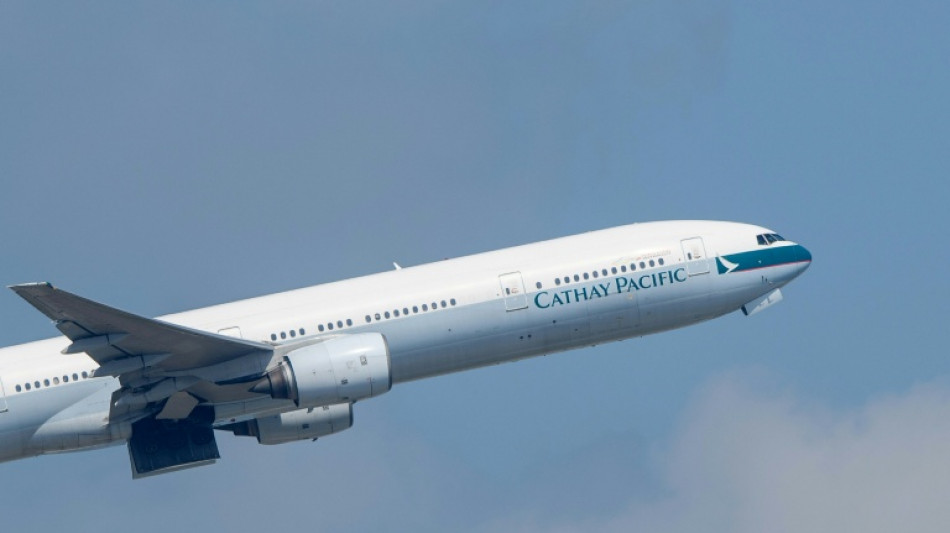
Cathay Pacific's profit soars 71% despite Iran war driving up fuel costs / Photo: Anthony WALLACE - AFP/File
Hong Kong carrier Cathay Pacific said Wednesday that net profit surged 71 percent in the first half of the year, as demand from passengers avoiding the Middle East offset a near doubling of fuel costs caused by the Iran war.
"Our result was positively impacted by ongoing underlying demand for Cathay Pacific and Cathay Cargo, improved performance from HK Express, and stronger contributions from associates," the chair Guy Bradley said in its earnings report.
The airline reported net profit of HK$6.2 billion ($795 million) in the first six months of the year, while revenue increased 25.3 percent on-year to HK$68 billion.
Passenger revenue increased 26.3 percent to HK$43.2 billion, driven by strong travel demand and "amplified by increased transit traffic through Hong Kong as travellers looked to other hubs due to the Middle East situation in the second quarter", the carrier said.
"Having got off to a strong start in the first quarter, we faced a more challenging second quarter due to the situation in the Middle East and the resulting significant increase in jet fuel prices," Bradley said, adding that fuel costs nearly doubled from the first quarter to the second.
The airline has adjusted fuel surcharges multiple times since the war broke out in February.
Its fuel costs increased by 59.1 percent compared to the same period in 2025, the company said.
Cathay Pacific carried 17.5 percent more passengers, while its low-cost subsidiary HK Express carried 9.8 percent more passengers compared to the same period in 2025.
Its European performance was boosted by changes in traffic flows due to the Middle East situation, particularly for passengers travelling between Europe and Oceania through Hong Kong.
The airline had launched additional flights to Europe in March and April "to cater for an upsurge in market demand as passengers prioritised alternative routings".
The company said it remains "cautiously optimistic" for the rest of the year, adding that it is on track to reach its passenger capacity growth target of around 10 percent for the group as a whole.
"We expect the impact of elevated fuel prices will continue for the rest of the year and we remain alert to the changing geopolitical and market situation."
It said it aims to add 150 new aircraft to its fleet, currently numbering 235, in the next 10 years, if market conditions are favourable.
X.Wong--DT