Dubai Telegraph - US-China 'Board of Trade' may help ties but experts flag market worries

EUR -
AED 4.179607
AFN 72.258895
ALL 94.205288
AMD 419.32538
ANG 2.037333
AOA 1043.471931
ARS 1673.878652
AUD 1.646164
AWG 2.049676
AZN 1.931828
BAM 1.955918
BBD 2.296329
BDT 140.068478
BGN 1.924085
BHD 0.43002
BIF 3405.606125
BMD 1.137919
BND 1.476989
BOB 7.895478
BRL 5.920364
BSD 1.140164
BTN 107.948534
BWP 15.503938
BYN 3.202194
BYR 22303.209908
BZD 2.293039
CAD 1.616971
CDF 2577.385877
CHF 0.922079
CLF 0.026365
CLP 1037.657169
CNY 7.709175
CNH 7.735322
COP 3899.04488
CRC 517.224487
CUC 1.137919
CUP 30.15485
CVE 110.271674
CZK 24.228625
DJF 202.230987
DKK 7.475001
DOP 66.733159
DZD 152.068092
EGP 56.580855
ERN 17.068783
ETB 183.814318
FJD 2.561791
FKP 0.85899
GBP 0.86289
GEL 3.009787
GGP 0.85899
GHS 12.797775
GIP 0.85899
GMD 83.067764
GNF 9990.121794
GTQ 8.698526
GYD 238.534437
HKD 8.922706
HNL 30.504712
HRK 7.534161
HTG 149.069022
HUF 355.706046
IDR 20399.24405
ILS 3.40957
IMP 0.85899
INR 107.8111
IQD 1493.5904
IRR 1564638.450732
ISK 144.003725
JEP 0.85899
JMD 179.470074
JOD 0.806818
JPY 183.853426
KES 147.258242
KGS 99.511194
KHR 4575.854724
KMF 490.443242
KPW 1024.127384
KRW 1745.914618
KWD 0.351594
KYD 0.950158
KZT 554.603568
LAK 25248.528174
LBP 102099.879625
LKR 381.463088
LRD 207.502559
LSL 18.801338
LTL 3.359979
LVL 0.688316
LYD 7.316411
MAD 10.671146
MDL 20.072215
MGA 4763.288299
MKD 61.63521
MMK 2388.932514
MNT 4072.611663
MOP 9.207457
MRU 45.285348
MUR 54.57472
MVR 17.592561
MWK 1977.010972
MXN 20.012811
MYR 4.711558
MZN 72.710706
NAD 18.801338
NGN 1558.857449
NIO 41.952539
NOK 11.148254
NPR 172.716695
NZD 2.008275
OMR 0.437534
PAB 1.140169
PEN 3.859434
PGK 5.000325
PHP 69.924546
PKR 317.102593
PLN 4.285607
PYG 6950.390134
QAR 4.156252
RON 5.247057
RSD 117.351293
RUB 84.774961
RWF 1671.993851
SAR 4.273217
SBD 9.177362
SCR 15.231046
SDG 683.318583
SEK 11.088575
SGD 1.476194
SHP 0.849571
SLE 28.163574
SLL 23861.593974
SOS 651.636577
SRD 42.652585
STD 23552.623219
STN 24.500299
SVC 9.976604
SYP 125.77656
SZL 18.795138
THB 37.854581
TJS 10.57484
TMT 3.994095
TND 3.374904
TOP 2.739836
TRY 52.886538
TTD 7.741469
TWD 36.036527
TZS 2987.455785
UAH 51.179898
UGX 4173.252587
USD 1.137919
UYU 45.732768
UZS 13698.829126
VES 701.942638
VND 29955.714328
VUV 135.137568
WST 3.136474
XAF 655.993822
XAG 0.018439
XAU 0.000276
XCD 3.075283
XCG 2.054824
XDR 0.815849
XOF 655.993822
XPF 119.331742
YER 271.564061
ZAR 18.840509
ZMK 10242.636979
ZMW 20.453238
ZWL 366.409413
  • RBGPF

    -0.2700

    60.34

    -0.45%

  • CMSC

    -0.0500

    22.11

    -0.23%

  • RYCEF

    0.2300

    18.63

    +1.23%

  • RELX

    0.3800

    31.21

    +1.22%

  • CMSD

    -0.1200

    21.96

    -0.55%

  • BCE

    0.3900

    23.04

    +1.69%

  • NGG

    0.6000

    81.57

    +0.74%

  • VOD

    -0.0700

    14.05

    -0.5%

  • BCC

    -0.7400

    71.8

    -1.03%

  • RIO

    -3.7800

    95.58

    -3.95%

  • GSK

    1.3300

    52.07

    +2.55%

  • BTI

    1.8400

    60.74

    +3.03%

  • BP

    -0.4500

    39.33

    -1.14%

  • JRI

    -0.0200

    12.63

    -0.16%

  • AZN

    4.5900

    181.02

    +2.54%

US-China 'Board of Trade' may help ties but experts flag market worries
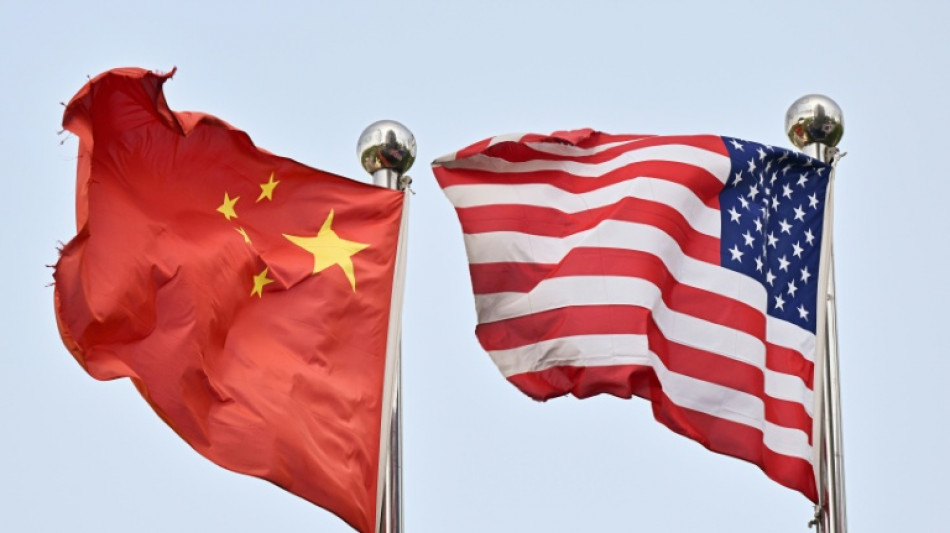
US-China 'Board of Trade' may help ties but experts flag market worries / Photo: Pedro Pardo - AFP/File

US-China 'Board of Trade' may help ties but experts flag market worries

As Washington and Beijing mull a new mechanism to adjust trade between the world's two largest economies, some analysts warn that it could interfere with market forces, while others consider it a path to smoother coexistence.

Text size:

What is the managed approach to trade that Donald Trump's administration is seeking with China, as both sides work towards the US president's potential meeting with Chinese leader Xi Jinping in the coming weeks?

- What is a 'Board of Trade'? -

After top US economic officials held talks with their Chinese counterparts in Paris last weekend, US trade envoy Jamieson Greer said both sides discussed creating a "US-China Board of Trade."

The mechanism would help to formalize and identify what kinds of goods the United States should be exporting to and importing from China, he said.

The board could look into opportunities for expanding trade in non-sensitive products, or discuss mutual tariff reduction in non-strategic sectors, said Wendy Cutler of the Asia Society Policy Institute.

For now, officials appear to have made progress towards Chinese purchase commitments for agriculture, energy and planes from the United States, added Cutler, a former US trade official.

- Is this new to US-China ties? -

The talks come as Washington looks towards "managed trade," which Chad Bown of the Peterson Institute for International Economics said focuses on outcomes rather than policies.

This could mean import commitments or voluntary export restraints, as in the case of Japan in the 1980s to manage the flow of autos into the United States, he said.

A more recent example is the "Phase One" deal that Washington signed with Beijing during Trump's first presidency, marking a truce in their trade war, Bown added.

The agreement saw China agree to import an added $200 billion in US products over two years -- although China did not meet the commitment.

- Why has this sparked worry? -

"Instead of taking regulations out, tariffs down, and making it easier for customers and companies to decide what they sell at what prices, it (would be) more mechanized," said Joerg Wuttke, a partner at advisory firm DGA-Albright Stonebridge Group.

"That's not a good sign," he told AFP. "Where are the market forces?"

Such an approach is also not good for competitiveness, and could fuel concern among other trading partners, Wuttke warned.

A US-based business leader, speaking on condition of anonymity, said that managing trade raises concerns over how Washington will decide which industries to prioritize, and which sectors will benefit.

- Does it help the relationship? -

Bown of PIIE believes a managed trade agreement between the United States and China could be more successful than previous attempts to solve economic conflicts.

The question is whether this leads to "a more sustainable, longer-term relationship" that is better than a "constant back and forth of conflict," he said.

"It's clear the old system didn't work. Could we try a new system that might work?"

But any trade agreement would have to be realistic and acceptable to both parties.

"You'd have to have a sincere commitment by both sides to make this work," he added. "Even then, it's going to be really, really hard."

Y.I.Hashem--DT