Dubai Telegraph - Ships in Gulf risk shortages on board, industry warns

EUR -
AED 4.307361
AFN 75.063795
ALL 95.53007
AMD 434.876114
ANG 2.099301
AOA 1076.694146
ARS 1633.63202
AUD 1.626162
AWG 2.111165
AZN 2.066885
BAM 1.958337
BBD 2.362792
BDT 143.940577
BGN 1.956466
BHD 0.442934
BIF 3490.459203
BMD 1.172869
BND 1.49646
BOB 8.106088
BRL 5.816956
BSD 1.173135
BTN 111.283968
BWP 15.942808
BYN 3.310457
BYR 22988.239372
BZD 2.359378
CAD 1.593056
CDF 2721.056657
CHF 0.916111
CLF 0.026813
CLP 1055.289597
CNY 8.008645
CNH 8.009988
COP 4289.535095
CRC 533.345473
CUC 1.172869
CUP 31.081038
CVE 110.777586
CZK 24.363957
DJF 208.442272
DKK 7.472122
DOP 69.78868
DZD 155.409815
EGP 62.908723
ERN 17.59304
ETB 184.140682
FJD 2.571047
FKP 0.863957
GBP 0.863378
GEL 3.142967
GGP 0.863957
GHS 13.155579
GIP 0.863957
GMD 85.61901
GNF 10291.928671
GTQ 8.962489
GYD 245.425715
HKD 9.189343
HNL 31.221407
HRK 7.535338
HTG 153.674796
HUF 362.682282
IDR 20330.927916
ILS 3.452728
IMP 0.863957
INR 111.317619
IQD 1536.458856
IRR 1541150.333205
ISK 143.805533
JEP 0.863957
JMD 183.818121
JOD 0.831577
JPY 183.987426
KES 151.476373
KGS 102.532828
KHR 4706.137263
KMF 492.604693
KPW 1055.582391
KRW 1725.11506
KWD 0.360411
KYD 0.977637
KZT 543.376443
LAK 25779.668401
LBP 105030.45096
LKR 374.932456
LRD 215.661377
LSL 19.539898
LTL 3.463178
LVL 0.709457
LYD 7.447525
MAD 10.850507
MDL 20.212649
MGA 4867.407882
MKD 61.651274
MMK 2462.427637
MNT 4196.351252
MOP 9.466049
MRU 46.87896
MUR 55.160312
MVR 18.126721
MWK 2042.550462
MXN 20.458714
MYR 4.641629
MZN 74.945338
NAD 19.540266
NGN 1613.845165
NIO 43.055834
NOK 10.892995
NPR 178.045788
NZD 1.985474
OMR 0.451256
PAB 1.173105
PEN 4.113838
PGK 5.088787
PHP 71.867622
PKR 326.966677
PLN 4.244092
PYG 7215.053945
QAR 4.273352
RON 5.197804
RSD 117.411948
RUB 87.926676
RWF 1714.148563
SAR 4.398236
SBD 9.432344
SCR 16.122641
SDG 704.311222
SEK 10.807012
SGD 1.492717
SHP 0.875665
SLE 28.820051
SLL 24594.479457
SOS 669.708053
SRD 43.933385
STD 24276.027649
STN 24.876559
SVC 10.265304
SYP 129.631364
SZL 19.539884
THB 38.106997
TJS 11.003652
TMT 4.110907
TND 3.379916
TOP 2.823988
TRY 53.002903
TTD 7.963062
TWD 37.097275
TZS 3055.325098
UAH 51.546829
UGX 4411.146791
USD 1.172869
UYU 46.785194
UZS 14015.788564
VES 573.465974
VND 30912.144739
VUV 137.989709
WST 3.184562
XAF 656.855506
XAG 0.015475
XAU 0.000254
XCD 3.169738
XCG 2.114273
XDR 0.815883
XOF 656.806871
XPF 119.331742
YER 279.844213
ZAR 19.453035
ZMK 10557.229877
ZMW 21.907968
ZWL 377.663454
  • JRI

    -0.0100

    12.98

    -0.08%

  • BCC

    -1.1400

    78.13

    -1.46%

  • BCE

    0.1800

    23.96

    +0.75%

  • GSK

    -0.7000

    51.61

    -1.36%

  • RBGPF

    0.5000

    63.1

    +0.79%

  • AZN

    -2.6300

    184.74

    -1.42%

  • BP

    -0.9700

    46.41

    -2.09%

  • CMSC

    0.0600

    22.88

    +0.26%

  • NGG

    -1.0600

    88.48

    -1.2%

  • RIO

    0.1000

    100.58

    +0.1%

  • BTI

    -0.0900

    58.71

    -0.15%

  • CMSD

    0.1500

    23.28

    +0.64%

  • VOD

    0.3500

    16.15

    +2.17%

  • RELX

    -0.2400

    36.35

    -0.66%

  • RYCEF

    0.5500

    16.35

    +3.36%

Ships in Gulf risk shortages on board, industry warns
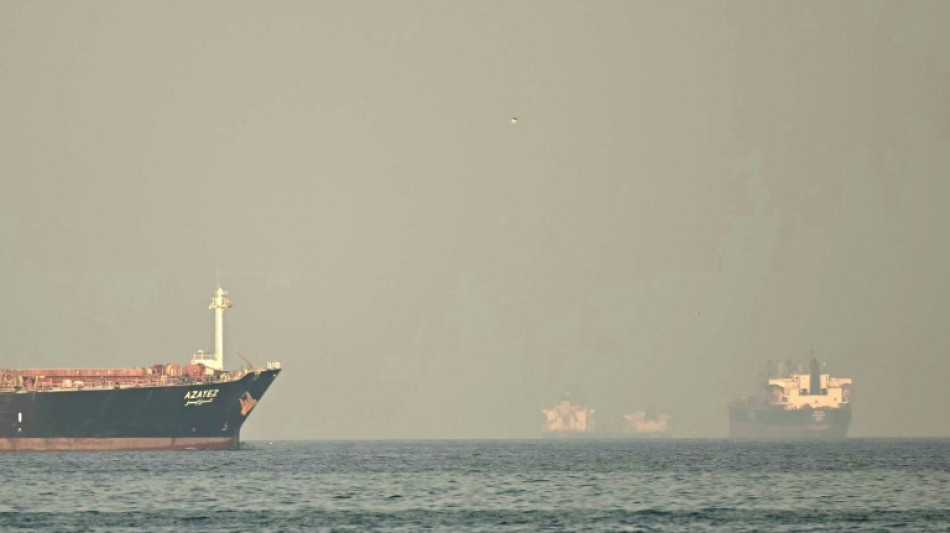
Ships in Gulf risk shortages on board, industry warns / Photo: Giuseppe CACACE - AFP

Ships in Gulf risk shortages on board, industry warns

Thousands of seafarers face dwindling supplies of fuel and water as they wait on board, stranded by the Middle East war, a key shipping body warned Tuesday as it urged governments to help get maritime traffic flowing again.

Text size:

John Stawpert is marine director of the London-based International Chamber of Shipping (ICS), which represents the world's national shipowner associations and over 80 percent of the world merchant fleet.

Here is an edited version of his interview with AFP ahead of an emergency meeting of the UN's International Maritime Organisation in London on Wednesday and Thursday.

- What is the impact on crews? -

"There are 20,000 seafarers on board 3,000 vessels of different types trapped in the Persian Gulf.

"Our biggest concern at the moment is the impact of an ongoing war on the stores on board the ships. We're already seeing some issues reported about fuel oil supplies. We've also got concerns about the ability of some of those ships to produce potable water.

"It's obvious things like food and water, in the first instance, and then seeing if there is a way to supply them with fuel, notwithstanding that if you can't move things by ship, it makes that incredibly difficult.

"We need to work with flag-states... but we also need to work with the regional states to come up with a solution that ensures these ships can be resupplied."

- Are military escorts welcome? -

"Potentially, yes, but it depends on the terms of the support that's being provided.

"It's not just thinking in terms of hardware on the water. It's also the information and intelligence... (available) to ships, which can help with that threat assessment that is ultimately what will decide whether ships move or not.

"The issue we have at the moment, and this is one of the reasons why we haven't seen very many ships at all move, is that it's not clear what the targeting criteria are for vessels going through those waters."

Escorts "would depend on what is being provided by whom and to whom. Really I think what we need is a solution that meets the needs of all ships, rather than just say, individual flags."

- What must governments do? -

"If we can persuade states, through some mechanism, to provide a channel effectively for those ships to get out of the region, then that would be hugely beneficial.

"Hopefully some states will step up and say they will provide some guarantee of safety to shipping that would give us the confidence that we could move through the Strait again.

"We would like to see serious consideration of some means to facilitate the movement of vessels out of the affected region as a priority. We'll be raising this at the International Maritime Organization tomorrow (Wednesday)."

U.Siddiqui--DT