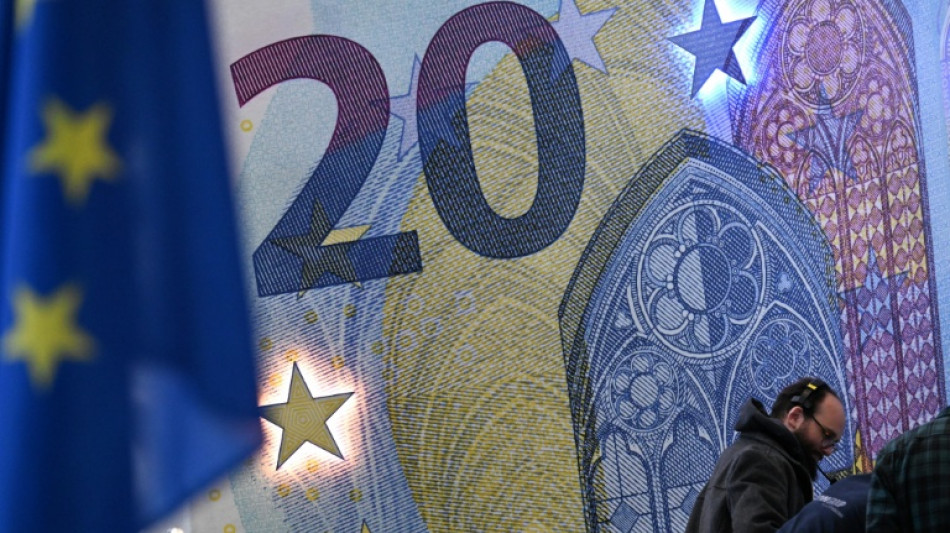
Surging euro presents new headache for ECB / Photo: Kirill KUDRYAVTSEV - AFP
A surge in the euro will be in focus at the European Central Bank's meeting this week, as fears grow it could hit the eurozone's export-driven economies and weigh on inflation.
The central bank for the 21-nation single currency area is widely expected to keep interest rates on hold for its fifth straight meeting, with consumer price rises currently a touch below the ECB's two-percent target.
But the euro's recent gains have complicated the picture and may fuel debate about if and when the ECB should start cutting its key deposit rate from its current level of two percent.
Berenberg bank economist Felix Schmidt told AFP that the "big topic" at Thursday's meeting in Frankfurt "will obviously be the euro's strength against the dollar, and what officials will have to say about it".
The dollar has been weakening -- and the euro strengthening -- for some time, in particular due to worries about US President Donald Trump's erratic stewardship of the world's biggest economy.
But it extended gains sharply last week due to various factors, briefly hitting a four-and-a-half year high above 1.20 against the dollar when Trump appeared to welcome the US currency's weakening.
- Jitters in Frankfurt -
The moves are causing jitters at the ECB -- a stronger euro makes imports cheaper, potentially adding to downward pressure on inflation, at a time officials were already worried about too sharp a slowdown.
While stressing recent gains were "modest", Austrian central bank governor Martin Kocher warned that the ECB might have to consider rate cuts if there were further increases in the euro.
Lowering borrowing costs tends to support inflation while weakening currencies.
"If the euro appreciates further and further, at some stage this might create of course a certain necessity to react in terms of monetary policy," Kocher, who sits on the ECB's rate-setting Governing Council, told the Financial Times.
The ECB does not target any particular exchange rate, but officials do monitor currency movements as they could impact inflation.
A stronger euro is also problematic for the region's export-driven economies, particularly Germany, as it makes the cost of companies' goods pricier overseas.
It could thus hit the eurozone economy at a time growth was starting to get back on track, potentially undermining efforts to close the gap with China and the United States.
Chancellor Friedrich Merz said last week he understood concerns about the rising euro, calling it "a considerable additional burden for the German export industry".
- 'Global euro' -
A stronger euro is not all bad news -- it boosts household spending power, at home and on holidays overseas.
The rise of the single currency also points to the growing appeal of Europe at a time of investor worries about the United States due to Trump's policies, from his tariff blitz to attacks on the Federal Reserve's independence.
Trump on Friday nominated Kevin Warsh as the US central bank's next chief. A former Fed official, Warsh was long an inflation foe but has aligned his views with those of Trump officials seeking aggressive rate cuts.
ECB President Christine Lagarde has previously sought to talk up the euro as a potential new global reserve currency, arguing the economic order backed by the dollar was "fracturing".
Still, ING economist Carsten Breski said the jitters over the stronger euro show that it is "hard to reconcile the ambition of a global euro with an export‑orientated economy".
Analysts expect the currency movements to have no impact on the ECB's rate call this week, and Lagarde will likely stay tight-lipped on the path ahead.
But Brzeski said that, if the euro strengthens further, the chances of a cut at the central bank's next meeting in March "would clearly increase".
D.Farook--DT