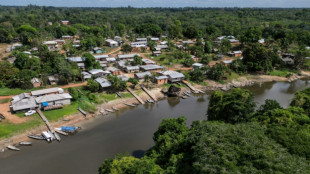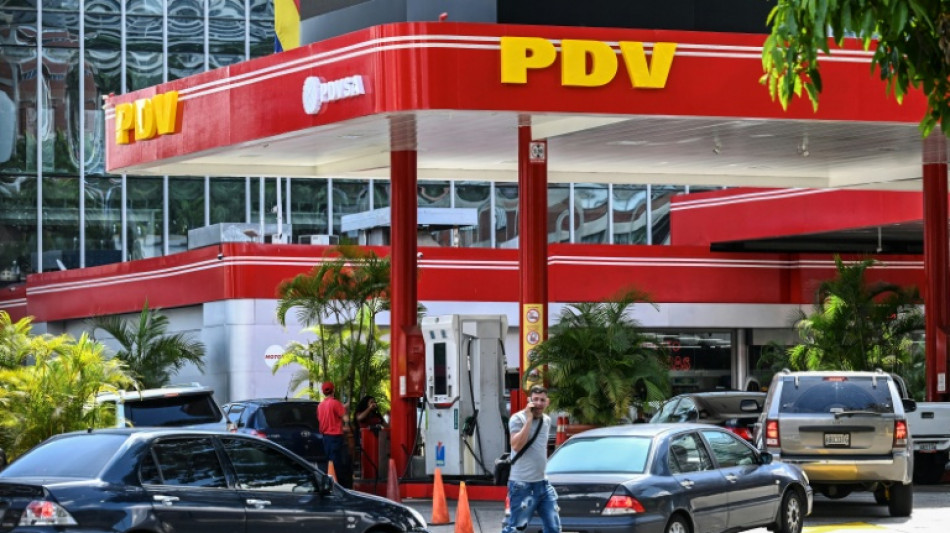
Venezuela looks to petrodollars to bring down prices / Photo: Ronaldo SCHEMIDT - AFP
The United States' grab for Venezuela's oil, while shocking, may yet provide a short-term boost for the South American nation's haggard economy.
This week, interim President Delcy Rodriguez said her country had received $300 million from Washington's sale of Venezuelan crude -- money used to prop up the ailing local currency, the bolivar.
The dollars were injected into the domestic foreign exchange market to narrow a growing gap between the formal and informal rates, blamed for fast-rising inflation.
The mere anticipation of the injection reduced the gap.
Analysts believe the injection was a good step toward stabilizing the economy but long-term improvement will require a reliable supply of dollars.
Without it, Venezuela will soon "end up with another significant depreciation of its currency," said Alejandro Grisanti of the consulting firm Ecoanalitica.
In the longer term, he added, responsible fiscal policy, not exchange rate intervention, is the only solution to high inflation.
Venezuela's parliament on Thursday started debating plans, proposed by Rodriguez, to throw open the lucrative but nationalized oil sector to private investment after the US military ouster of longtime socialist leader Nicolas Maduro.
- Who's in control? -
Venezuela decriminalized the use of the dollar and lifted controls to combat a hyperinflationary cycle that lasted from 2017 to 2022.
Since then, the government, under the economic leadership of Maduro's then–Vice President Rodriguez, began injecting petrodollars into the market whenever they were available.
This became more difficult under a blockade of Venezuelan oil by the United States, which in recent months seized several tankers transporting crude from the South American nation.
After Maduro's January 3 toppling, President Donald Trump said Washington was "in charge" of Venezuela, adding Rodriguez would be "turning over" millions of barrels of oil to be sold at market price.
"That money will be controlled by me," Trump added.
Now Rodriguez, acting as president with a government made up of Maduro cronies, is once again looking at the dollar to try and stabilize the Venezuelan economy, which shrunk by 80 percent in a decade.
On Tuesday, she said revenues from the US sale of Venezuelan crude will be used to "protect against the negative impact of swings in the foreign exchange market."
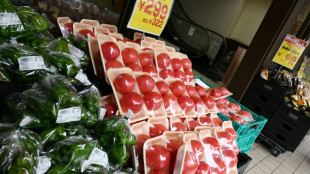
Prices in Venezuela are set in dollars, but many people pay with the weak bolivar -- taking advantage of the difference between the official and black-market exchange rate to pay less in real dollar value.
The dollar rose on the black market to over 900 bolivars shortly after the January 3 bombing raid that saw Maduro whisked away, blindfolded and cuffed, to stand trial in New York.
By Tuesday, it was half that, and the head of Venezuela's parliament -- Rodriguez's brother Jorge Rodriguez -- urged businesses to adjust their prices.
- Hunger or illness -
For ordinary Venezuelans, change cannot come soon enough.
The minimum wage is not even $0.40 per month -- that is 40 US cents -- the same as the state pension.
The government hands out discretionary bonuses as a supplement, but it is not enough.
"Every month pensioners have to decide whether to die from hunger or from illness," union leader Josefina Guerra told AFP of the economic situation, with medicine also hard to come by.
Labor organizations demanded on Monday that oil revenues be used to improve Venezuelans’ incomes and boost pensions.
"Prices have entered a terrible inflationary process. You can see it especially in meat," said Rafael Labrador, a 73-year-old lawyer.
V.Munir--DT