Dubai Telegraph - Germany brings back electric car subsidies to boost market

EUR -
AED 4.297278
AFN 74.292236
ALL 95.716382
AMD 433.389865
ANG 2.094044
AOA 1073.998061
ARS 1629.423594
AUD 1.62737
AWG 2.105879
AZN 1.99192
BAM 1.958189
BBD 2.357236
BDT 143.602767
BGN 1.951567
BHD 0.442118
BIF 3481.134249
BMD 1.169933
BND 1.494517
BOB 8.086833
BRL 5.769526
BSD 1.170408
BTN 111.457522
BWP 15.905339
BYN 3.313286
BYR 22930.677624
BZD 2.353832
CAD 1.593372
CDF 2708.393681
CHF 0.915671
CLF 0.026913
CLP 1059.209921
CNY 7.991048
CNH 7.988188
COP 4347.78517
CRC 532.440573
CUC 1.169933
CUP 31.003212
CVE 110.704868
CZK 24.388881
DJF 207.92036
DKK 7.47254
DOP 69.720855
DZD 154.93529
EGP 62.729868
ERN 17.548988
ETB 184.029563
FJD 2.567943
FKP 0.864414
GBP 0.863322
GEL 3.141309
GGP 0.864414
GHS 13.115101
GIP 0.864414
GMD 85.40504
GNF 10266.158158
GTQ 8.933748
GYD 244.857725
HKD 9.168352
HNL 31.110961
HRK 7.534715
HTG 153.174282
HUF 361.607371
IDR 20348.92901
ILS 3.439136
IMP 0.864414
INR 111.226541
IQD 1533.144508
IRR 1539631.212056
ISK 143.201928
JEP 0.864414
JMD 184.173151
JOD 0.829464
JPY 184.682625
KES 151.096115
KGS 102.276087
KHR 4694.391883
KMF 492.016789
KPW 1052.943015
KRW 1716.419906
KWD 0.360386
KYD 0.975286
KZT 543.841262
LAK 25709.267542
LBP 104767.458106
LKR 374.520581
LRD 214.740973
LSL 19.586364
LTL 3.454506
LVL 0.70768
LYD 7.424996
MAD 10.817099
MDL 20.200562
MGA 4874.92747
MKD 61.625915
MMK 2456.515107
MNT 4186.728804
MOP 9.447087
MRU 46.732223
MUR 54.928184
MVR 18.08129
MWK 2029.467649
MXN 20.321027
MYR 4.635855
MZN 74.770466
NAD 19.586699
NGN 1600.583006
NIO 43.071819
NOK 10.823022
NPR 178.332598
NZD 1.985475
OMR 0.44984
PAB 1.170423
PEN 4.103136
PGK 5.08921
PHP 71.856096
PKR 326.149487
PLN 4.247967
PYG 7091.62277
QAR 4.277801
RON 5.237322
RSD 117.389838
RUB 88.331824
RWF 1711.280762
SAR 4.390082
SBD 9.389724
SCR 16.35231
SDG 702.546521
SEK 10.83447
SGD 1.492016
SHP 0.873473
SLE 28.838674
SLL 24532.895741
SOS 668.913338
SRD 43.84558
STD 24215.241325
STN 24.529511
SVC 10.24032
SYP 129.313491
SZL 19.582895
THB 38.089479
TJS 10.943006
TMT 4.100614
TND 3.412163
TOP 2.816917
TRY 52.902483
TTD 7.933545
TWD 36.934186
TZS 3044.752832
UAH 51.434039
UGX 4418.315623
USD 1.169933
UYU 47.127504
UZS 14084.94543
VES 572.030029
VND 30796.134036
VUV 138.665702
WST 3.177456
XAF 656.755555
XAG 0.015995
XAU 0.000256
XCD 3.161801
XCG 2.109265
XDR 0.816185
XOF 656.755555
XPF 119.331742
YER 279.17512
ZAR 19.494294
ZMK 10530.825202
ZMW 22.09086
ZWL 376.717798
  • AZN

    -2.2200

    181.24

    -1.22%

  • RELX

    -0.1900

    36.17

    -0.53%

  • CMSC

    -0.0001

    22.87

    -0%

  • RBGPF

    1.6000

    64.7

    +2.47%

  • BCE

    0.1550

    24.085

    +0.64%

  • NGG

    0.1300

    87.63

    +0.15%

  • GSK

    -0.5300

    50.37

    -1.05%

  • RIO

    1.8800

    100.51

    +1.87%

  • RYCEF

    -0.0200

    16.33

    -0.12%

  • BTI

    1.0500

    59.4

    +1.77%

  • VOD

    -0.3100

    15.74

    -1.97%

  • CMSD

    0.0400

    23.29

    +0.17%

  • BP

    -0.4400

    46.5

    -0.95%

  • JRI

    0.0950

    13.025

    +0.73%

  • BCC

    -2.1880

    72.142

    -3.03%

Germany brings back electric car subsidies to boost market
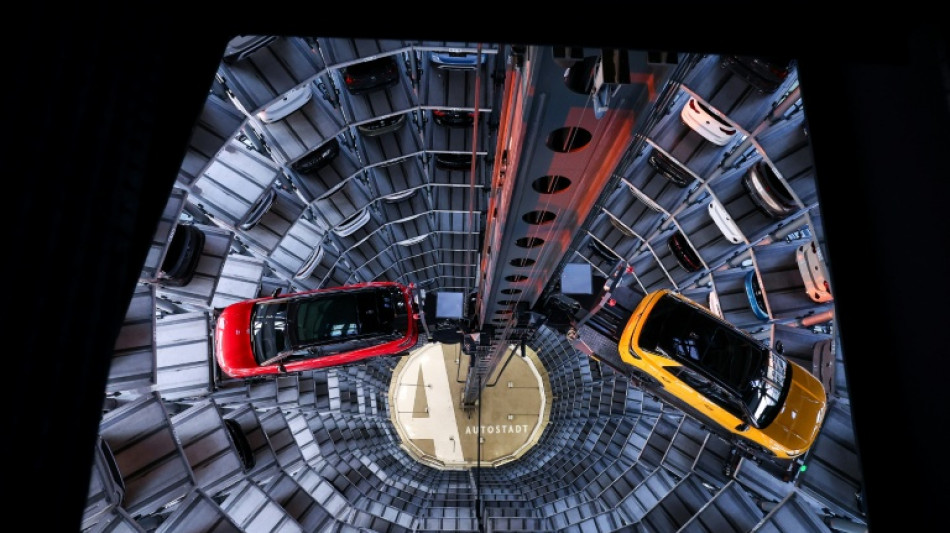
Germany brings back electric car subsidies to boost market / Photo: Ronny HARTMANN - AFP

Germany brings back electric car subsidies to boost market

Germany on Monday reintroduced electric car subsidies as it seeks to accelerate the transition to less polluting vehicles, drawing praise from industry groups but criticism from environmentalists who demanded greater efforts.

Text size:

Sales of electric vehicles (EVs) in Europe's biggest auto market are growing but progress has been patchy, and the government and the struggling auto sector are keen to speed up the shift.

The previous government scrapped an earlier subsidy scheme in 2023 due to a budget crisis, prompting a collapse in EV sales, although they have been recovering in recent times.

The new programme "helps the environment, the automotive industry, and in particular families who otherwise couldn't afford a new, environmentally friendly car," said Environment Minister Carsten Schneider.

Private households with a taxable income of no more than 80,000 euros ($93,000) will be eligible for subsidies, Schneider announced.

Car buyers can apply for the support from May, which will apply to EVs registered from the start of 2026, he said.

Fully electric cars are eligible for a subsidy of at least 3,000 euros. Plug-in hybrids and cars with range extenders -- in which a small combustion engine can charge the battery -- are covered by a basic subsidy of 1,500 euros.

There are extra subsidies for families with children as well as households on lower incomes.

The IG Metall union, which represents many auto sector workers, welcomed the scheme as an "an important step in the right direction".

The VDA auto industry group said the programme will "support the success of e-mobility in Germany" although it urged other steps, such as improving charging infrastructure.

But the group Environmental Action Germany voiced criticism, especially of subsidies for plug-in hybrids, which it said "offer hardly any climate benefits" over combustion engine cars.

"The government is still failing to implement effective climate protection policies in the transport sector," said the group's chief Juergen Resch.

German carmakers -- already struggling with slowing sales and fierce competition -- desperately need electric sales to rise as they invested hugely in the EV shift and also face strict new European environmental rules.

Though the European Union in December proposed scrapping a planned 2035 ban on new combustion-engine vehicles, carmakers would still face having to cut emissions by 90 percent from 2021 levels under its latest plan.

After plunging in 2024 following the end of the last subsidy programme, German EV sales rebounded in 2025 and represented almost a fifth of all new cars sold.

Y.Al-Shehhi--DT