Dubai Telegraph - Wildlife trade body rejects new eel protections

EUR -
AED 4.381992
AFN 78.750894
ALL 96.772834
AMD 453.127673
ANG 2.135904
AOA 1094.155023
ARS 1723.006224
AUD 1.703048
AWG 2.147741
AZN 2.027312
BAM 1.958039
BBD 2.409237
BDT 146.15714
BGN 2.003807
BHD 0.449939
BIF 3543.827792
BMD 1.193189
BND 1.513334
BOB 8.264659
BRL 6.197065
BSD 1.196143
BTN 110.049154
BWP 15.598819
BYN 3.379033
BYR 23386.513916
BZD 2.405733
CAD 1.613288
CDF 2693.62495
CHF 0.916376
CLF 0.025958
CLP 1024.95004
CNY 8.290757
CNH 8.289248
COP 4358.721191
CRC 591.863639
CUC 1.193189
CUP 31.619521
CVE 110.393555
CZK 24.34441
DJF 213.004295
DKK 7.467153
DOP 75.15697
DZD 154.308073
EGP 56.001272
ERN 17.897842
ETB 185.122907
FJD 2.620781
FKP 0.864978
GBP 0.867162
GEL 3.215635
GGP 0.864978
GHS 13.067272
GIP 0.864978
GMD 87.697079
GNF 10497.500171
GTQ 9.177688
GYD 250.242459
HKD 9.315768
HNL 31.595737
HRK 7.533438
HTG 156.800337
HUF 381.275947
IDR 20028.222449
ILS 3.690338
IMP 0.864978
INR 109.703873
IQD 1563.674821
IRR 50263.107265
ISK 144.99605
JEP 0.864978
JMD 187.688003
JOD 0.845975
JPY 183.732053
KES 154.243589
KGS 104.344067
KHR 4800.801608
KMF 491.594467
KPW 1073.96939
KRW 1718.932363
KWD 0.365955
KYD 0.996727
KZT 600.839544
LAK 25677.437566
LBP 107117.524012
LKR 370.074058
LRD 221.3444
LSL 18.780413
LTL 3.523179
LVL 0.721749
LYD 7.487269
MAD 10.834074
MDL 20.11961
MGA 5321.625216
MKD 61.62671
MMK 2505.752956
MNT 4256.95142
MOP 9.615976
MRU 47.572579
MUR 54.20683
MVR 18.434798
MWK 2072.570214
MXN 20.625111
MYR 4.698727
MZN 76.065949
NAD 18.864464
NGN 1658.366152
NIO 43.187477
NOK 11.432366
NPR 176.101211
NZD 1.969586
OMR 0.458787
PAB 1.196098
PEN 3.989425
PGK 5.083586
PHP 70.333154
PKR 333.88428
PLN 4.210294
PYG 8026.784566
QAR 4.344522
RON 5.097187
RSD 117.389486
RUB 90.086234
RWF 1733.107728
SAR 4.475517
SBD 9.614842
SCR 16.593195
SDG 717.661496
SEK 10.535953
SGD 1.512051
SHP 0.895201
SLE 29.08404
SLL 25020.586042
SOS 681.867426
SRD 45.34538
STD 24696.61331
STN 24.609533
SVC 10.465837
SYP 13196.168479
SZL 18.855865
THB 37.48407
TJS 11.171609
TMT 4.188095
TND 3.373445
TOP 2.872914
TRY 51.903862
TTD 8.118318
TWD 37.534758
TZS 3072.463155
UAH 51.192889
UGX 4254.972804
USD 1.193189
UYU 45.262709
UZS 14550.945781
VES 437.717685
VND 30924.48849
VUV 142.715687
WST 3.23879
XAF 656.694211
XAG 0.011511
XAU 0.000235
XCD 3.224654
XCG 2.155638
XDR 0.816792
XOF 653.27021
XPF 119.331742
YER 284.461217
ZAR 19.03704
ZMK 10740.145808
ZMW 23.653834
ZWL 384.206528
  • VOD

    -0.0250

    14.685

    -0.17%

  • RYCEF

    -0.4300

    16

    -2.69%

  • RELX

    -0.2900

    35.875

    -0.81%

  • CMSC

    -0.0500

    23.645

    -0.21%

  • BTI

    -0.0800

    60.13

    -0.13%

  • NGG

    -0.0850

    84.965

    -0.1%

  • RIO

    -2.4500

    92.68

    -2.64%

  • AZN

    0.3600

    92.95

    +0.39%

  • GSK

    0.6200

    51.275

    +1.21%

  • RBGPF

    1.3800

    83.78

    +1.65%

  • CMSD

    0.0400

    24.1

    +0.17%

  • JRI

    0.0350

    12.99

    +0.27%

  • BP

    0.1600

    38.2

    +0.42%

  • SCS

    0.0200

    16.14

    +0.12%

  • BCC

    -1.2400

    78.93

    -1.57%

  • BCE

    0.0350

    25.52

    +0.14%

Wildlife trade body rejects new eel protections
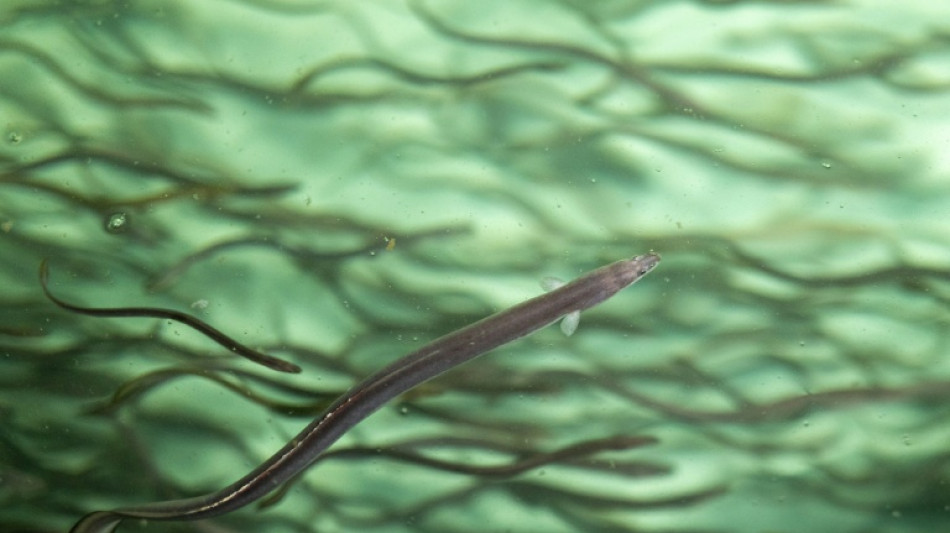
Wildlife trade body rejects new eel protections / Photo: Philip FONG - AFP/File

Wildlife trade body rejects new eel protections

The world's top wildlife trade body rejected new protections for eels on Thursday in a secret ballot at talks in Uzbekistan.

Text size:

The proposal had been fiercely opposed by top eel consumers, particularly Japan, but also failed to win backing from countries worried about new trade regulations.

The vote came at a meeting of signatories to the Convention of International Trade in Endangered Species of Wild Fauna and Flora (CITES), a 50-year agreement protecting the world's most endangered animals and plants, and regulating trade in 36,000 species.

Eel populations are falling worldwide, scientists say, largely due to factors linked to human activity such as the pollution of waterways, destruction of wetlands, hydroelectric dams, and fishing.

European eels are considered critically endangered and their trade has been restricted by CITES since 2009.

But because eels cannot be bred in captivity, much of the trade is in wild-caught baby eels, with one species virtually indistinguishable from another.

The European Union and Panama sought to bring all 17 eel species under CITES Appendix II, placing new restrictions on trade.

"Every eel we eat comes from the wild, making them vulnerable to overfishing and illegal trade," the EU's representative warned.

The "harvest for international trade is a major cause of international decline."

The proposal was rejected out of hand by Japan, which called it unscientific and "excessive," backed by multiple countries including African nations who warned it would place undue administrative burdens on their authorities.

In a sign of the pressures around the issue, the proposal was voted on by secret ballot, a relatively uncommon procedure at the gathering, with nearly 75 percent of votes against.

The result was "not very surprising," said Oliver Tallowin, senior programme officer for wildlife use and trade at the International Union for the Conservation of Nature.

Japan's opposition had been made clear early on in a submission running over 100 pages.

There are also differing views on the pressures other eel species face, said Tallowin.

"International trade has to be a threat to the species and... that was something we couldn't say with any sense of certainty," he told AFP.

For Andrew Kerr of the Sustainable Eel Group, "the short-term commercial and financial side won the debate massively."

Kerr, who has called eel trafficking the "greatest wildlife crime" on the planet, said the vote was a "real pity," but there were some silver linings.

A separate resolution proposing measures including more data gathering on eels and conservation capacity-building will be debated later Thursday at the talks in Samarkand.

"We've had a missed opportunity this morning, but then the fact that everyone's talking about eel, that's a huge victory too," Kerr said.

The resolution could gather data that would allow more protection of all eel species in the future, added Tallowin.

"Once something has been rejected... that doesn't mean its going to go away."

Votes are finalised later in the meeting, though it is unusual for them to be revised.

Y.Chaudhry--DT