Dubai Telegraph - Key OPEC+ members boost oil production

EUR -
AED 4.181136
AFN 72.289455
ALL 94.02056
AMD 418.946025
ANG 2.03837
AOA 1044.575935
ARS 1689.481599
AUD 1.651944
AWG 2.052143
AZN 1.93708
BAM 1.954183
BBD 2.293762
BDT 140.311448
BGN 1.925064
BHD 0.429437
BIF 3388.137306
BMD 1.138498
BND 1.476353
BOB 7.898327
BRL 5.90607
BSD 1.138838
BTN 108.539293
BWP 16.258263
BYN 3.317897
BYR 22314.562051
BZD 2.290465
CAD 1.619206
CDF 2578.69819
CHF 0.923202
CLF 0.026716
CLP 1051.380574
CNY 7.734899
CNH 7.741035
COP 3891.374997
CRC 518.362027
CUC 1.138498
CUP 30.170199
CVE 110.171914
CZK 24.25405
DJF 202.798652
DKK 7.474377
DOP 67.622864
DZD 151.692765
EGP 55.879648
ERN 17.077471
ETB 183.818489
FJD 2.557351
FKP 0.858786
GBP 0.859822
GEL 3.005607
GGP 0.858786
GHS 12.905096
GIP 0.858786
GMD 83.682903
GNF 9983.564718
GTQ 8.685661
GYD 238.228717
HKD 8.930316
HNL 30.473253
HRK 7.531278
HTG 148.904188
HUF 355.815371
IDR 20445.37593
ILS 3.392954
IMP 0.858786
INR 108.278339
IQD 1491.939435
IRR 1566573.336177
ISK 143.79474
JEP 0.858786
JMD 179.10182
JOD 0.807152
JPY 185.233069
KES 147.378202
KGS 99.561629
KHR 4583.127638
KMF 491.831375
KPW 1024.648656
KRW 1773.677522
KWD 0.352525
KYD 0.949098
KZT 545.838812
LAK 25537.423001
LBP 101985.131046
LKR 382.576754
LRD 206.705351
LSL 18.689109
LTL 3.361689
LVL 0.688667
LYD 7.317945
MAD 10.697215
MDL 20.140983
MGA 4843.907301
MKD 61.63082
MMK 2390.403738
MNT 4079.220213
MOP 9.201226
MRU 45.287736
MUR 53.68014
MVR 17.600738
MWK 1974.831432
MXN 19.960036
MYR 4.661239
MZN 72.693012
NAD 18.689109
NGN 1566.937878
NIO 41.914586
NOK 11.312157
NPR 173.663269
NZD 2.006927
OMR 0.437757
PAB 1.138838
PEN 3.886816
PGK 5.001752
PHP 70.202052
PKR 316.677834
PLN 4.295679
PYG 6922.151358
QAR 4.151974
RON 5.240102
RSD 117.364363
RUB 88.681949
RWF 1669.289589
SAR 4.270963
SBD 9.182033
SCR 15.539131
SDG 683.664805
SEK 11.095859
SGD 1.47641
SHP 0.850004
SLE 28.229064
SLL 23873.739321
SOS 650.850086
SRD 42.698804
STD 23564.611303
STN 24.479317
SVC 9.964581
SYP 125.840579
SZL 18.685213
THB 38.000813
TJS 10.534499
TMT 3.996128
TND 3.375607
TOP 2.741231
TRY 53.135503
TTD 7.731468
TWD 36.268108
TZS 2988.585855
UAH 51.054339
UGX 4173.473762
USD 1.138498
UYU 45.781319
UZS 13586.52052
VES 708.423043
VND 29943.068327
VUV 136.731763
WST 3.166031
XAF 655.403239
XAG 0.019399
XAU 0.000283
XCD 3.076848
XCG 2.052466
XDR 0.814047
XOF 655.414743
XPF 119.331742
YER 271.644648
ZAR 18.704527
ZMK 10247.848882
ZMW 20.733482
ZWL 366.595912
  • RBGPF

    0.6100

    65.61

    +0.93%

  • CMSD

    0.1000

    22

    +0.45%

  • RELX

    -0.0250

    31.645

    -0.08%

  • NGG

    -2.0200

    80.85

    -2.5%

  • BCE

    -0.1100

    21.4

    -0.51%

  • VOD

    -0.2650

    12.96

    -2.04%

  • RYCEF

    0.4000

    19.5

    +2.05%

  • AZN

    -5.0350

    184.585

    -2.73%

  • RIO

    -1.2900

    93.64

    -1.38%

  • GSK

    -0.9700

    51.45

    -1.89%

  • BCC

    0.7300

    78.36

    +0.93%

  • JRI

    0.0000

    12.96

    0%

  • BTI

    -1.4400

    60.32

    -2.39%

  • BP

    -0.7250

    36.225

    -2%

  • CMSC

    0.2000

    21.84

    +0.92%

Key OPEC+ members boost oil production
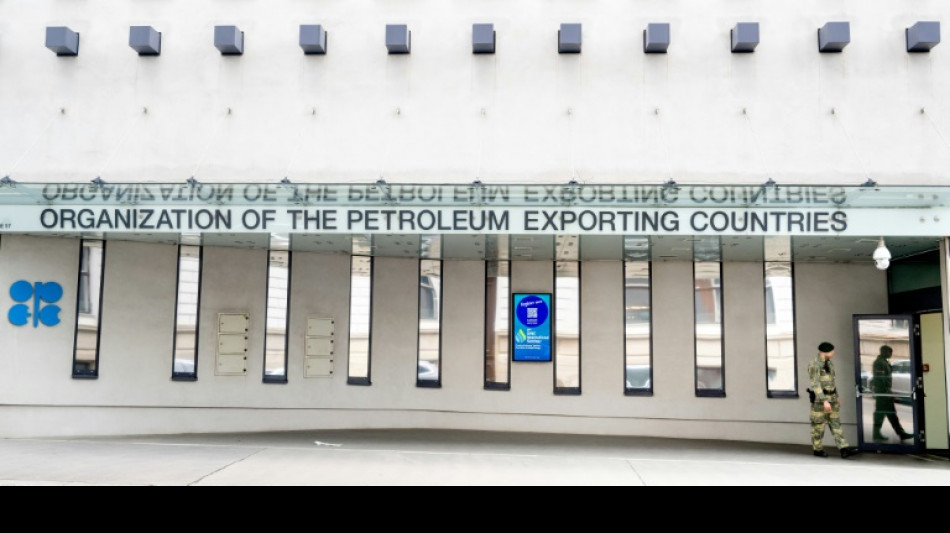
Key OPEC+ members boost oil production / Photo: JOE KLAMAR - AFP/File

Key OPEC+ members boost oil production

Eight key members of the OPEC+ alliance said Sunday they have agreed to again boost oil production, in a strategy analysts saw as a bid to gain a bigger market share of crude sales.

Text size:

Oil ministers in the V8 grouping -- comprising Saudi Arabia, Russia, Iraq, the United Arab Emirates, Kuwait, Kazakhstan, Algeria and Oman -- decided to increase production by 137,000 barrels a day (bpd) from next month, they said in a statement.

Those countries had already increased production by 2.2 million bpd in recent months.

In their statement issued after an online meeting on Sunday, they said that the new incoming cycle could see up to an extra 1.65 million bpd eventually coming onto the market.

"OPEC+ caught the market off guard today -- instead of pausing, the group signalled ambition with a production hike. The barrels may be small, but the message is big," said Jorge Leon, an analyst at Rystad Energy.

"OPEC+ is prioritising market share even if it risks softer prices," he said.

Oil prices are currently hovering around $65-70 per barrel, having tumbled 12 percent this year as global producers outside OPEC+ ramp up supply and tariffs curb demand.

OPEC+ -- which comprises the 12-nation Organization of the Petroleum Exporting Countries (OPEC) and its allies -- had in recent years seen through several output cuts amounting to a total of almost six million bpd.

Analysts, up to a week ago, had been saying the V8 was likely to maintain their current output levels in October.

By raising them, even by a relatively modest 137,000 bpd, the V8 instead indicated that OPEC+ was willing to weather prices falling below $60 a barrel if it meant regaining market share.

Leon said: "In reality, the actual production boost will be far smaller, given capacity limits and the compensation mechanism. But perception often matters more than physical barrels."

Still, he said, "the move raises questions about unity: countries like Russia depend on high prices to fund their war machine, while others are willing to test lower prices for market share".

- Geopolitical factors -

The real test for OPEC+ will be the last three months of this year, a period when seasonal demand tends to be lower, he said.

Oil specialists are keeping a close eye on Moscow's war in Ukraine as well as developments regarding US-Russia relations -- geopolitical factors that could impact oil prices.

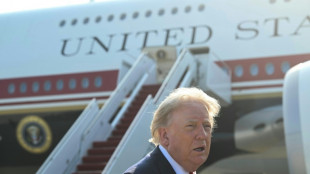
US President Donald Trump, whose efforts to mediate between Russia and Ukraine have failed to produce a breakthrough, has recently targeted Russian oil and those who buy it.

In August, he imposed higher tariffs on India as punishment for its purchases of Russian oil.

In a meeting with allies of Ukraine who gathered in Paris on Thursday, Trump told leaders via a video conference that he was frustrated with EU purchases of Russian oil, particularly by Hungary and Slovakia.

Curbing Russian exports could free up market space for OPEC+ nations.

B.Krishnan--DT