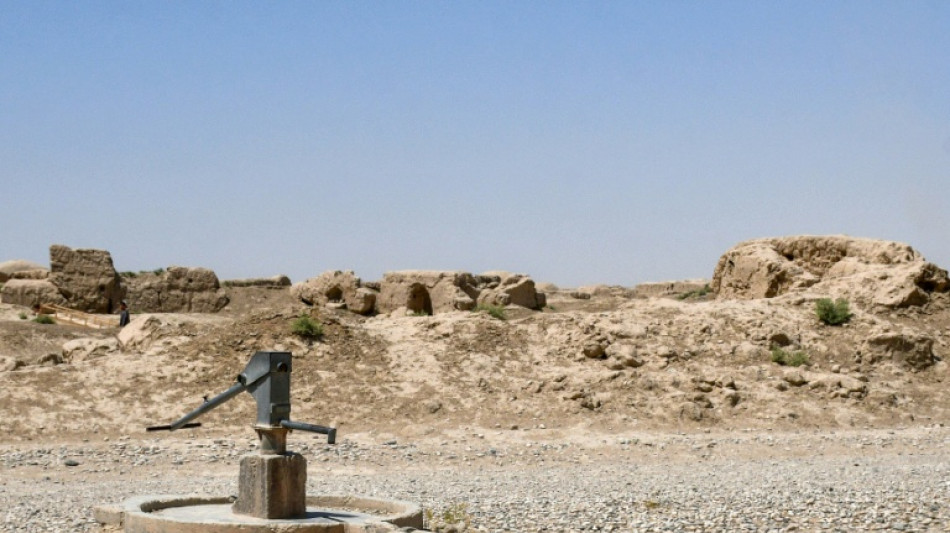
From drought to floods, water extremes drive displacement in Afghanistan / Photo: Atif Aryan - AFP
Next to small bundles of belongings, Maruf waited for a car to take him and his family away from their village in northern Afghanistan, where drought-ridden land had yielded nothing for years.
"When you have children and are responsible for their needs, then tell me, what are you still doing in this ruin?" said the 50-year-old.
Many of the mud homes around him are already empty, he said, his neighbours having abandoned the village, fleeing "thirst, hunger and a life with no future".
Successive wars displaced Afghans over 40 years, but peace has not brought total reprieve, as climate change-fuelled shocks drive people from their homes and strain livelihoods.
Since the war ended between the now-ruling Taliban and US-led forces in 2021, floods, droughts and other climate change-driven environmental hazards have become the main cause of displacement in the country, according to the UN's International Organization for Migration (IOM).
In early 2025, nearly five million people across the country were impacted and nearly 400,000 people were displaced, the IOM said in July, citing its Climate Vulnerability Assessment.
The majority of Afghans live in mud homes and depend heavily on agriculture and livestock, making them particularly exposed to environmental changes.
The water cycle has been sharply impacted, with Afghanistan again in the grip of drought for the fourth time in five years and flash floods devastating land, homes and livelihoods.
"Crop failure, dry pastures and vanishing water sources are pushing rural communities to the edge," the UN Food and Agriculture Organization said in July.
"It's getting harder for families to grow food, earn income or stay where they are."
Experts and Taliban officials have repeatedly warned of escalating climate risks as temperatures rise, extreme weather events intensify and precipitation patterns shift.
The country's limited infrastructure, endemic poverty and international isolation leave Afghans with few resources to adapt and recover -- while already facing one of the world's worst humanitarian crises worsened by severe aid cuts.
- Too little -
Abdul Jalil Rasooli's village in the drought-hit north has watched their way of life wither with their crops.
Drought already drove many from his village to Pakistan and Iran a decade ago.
Now they've returned, forced back over the border along with more than four million others from the two neighbouring countries since late 2023 -- but to work odd jobs, not the land.
"Everything comes down to water," said the 64-year-old, retreating from the day's heat in the only home in the village still shaded by leafy trees.
"Water scarcity ruins everything, it destroys farming, the trees are drying up, and there's no planting anymore," he told AFP.
Rasooli holds out hope that the nearby Qosh Tepa canal will bring irrigation from the Amu Darya river. Diggers are carving out the last section of the waterway, but its completion is more than a year away, officials told AFP.
It's one of the water infrastructure projects the Taliban authorities have undertaken since ousting the foreign-backed government four years ago.
But the theocratic government, largely isolated on the global stage over its restrictions on women, has limited resources to address a crisis long exacerbated by poor environmental, infrastructure and resource management during 40 years of conflict.
"The measures we have taken so far are not enough," Energy and Water Minister Abdul Latif Mansoor told journalists in July, rattling off a list of dam and canal projects in the pipeline.
"There are a lot of droughts... this is Allah's will, first we must turn to Allah."
Hamayoun Amiri left for Iran when he was a young man and drought struck his father's small plot of land in western Herat province.
Forced to return in a June deportation campaign, he found himself back where he started 14 years ago -- with nothing to farm and his father's well water "getting lower and lower every day".
The Harirud river was a dry bed in July as it neared the border with downstream Iran, following a road lined with empty mud buildings pummelled back to dust by the province's summer gales.
- Too much -
Taliban authorities often hold prayers for rain, but while the lack of water has parched the land in some parts of the country, changes in precipitation patterns mean rains can be more of a threat than a blessing.
This year, rains have come earlier and heavier amid above-average temperatures, increasing flood risks, the UN said.
A warmer atmosphere holds more water, so rain often comes in massive, destructive quantities.
"The weather has changed," said Mohammad Qasim, a community leader of several villages in central Maidan Wardak battered by flash floods in June.
"I'm around 54 years old, and we have never experienced problems like this before," he told AFP in the riverbed full of boulders and cracked mud.
Eighteen-year-old Wahidullah's family was displaced after their home was damaged beyond repair and all their livestock were drowned.
The family of 11 slept in or near a rudimentary tent on high ground, with no plans or means to rebuild.
"We're worried that if another flood comes, then there will be nothing left and nowhere to go."
Y.Chaudhry--DT