Tunisia U-turn on phosphate plant sparks anger in blighted city / Photo: MOURAD MJAIED - AFP
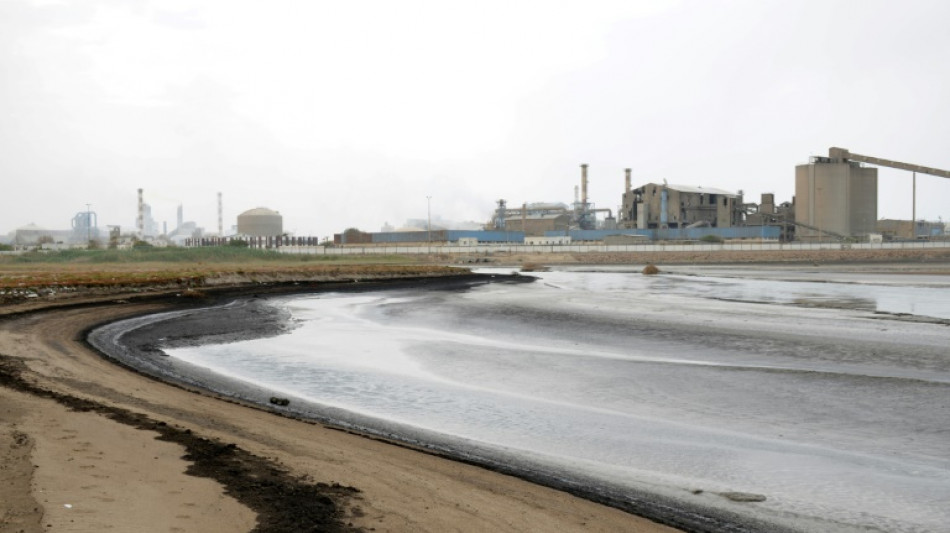
The bedroom of 74-year-old Cherifa Attia smells like burnt rubber. The vast phosphate processing plant beside her home has been belching out toxic fumes into the atmosphere, blighting this Tunisian city.
"This is killing us," said Cherifa as the foul air permeated her home. "That's all we breathe. Day and night."
Residents of Gabes, a city of around 400,000 people, have been campaigning for decades against the pollution from the plant, finally winning a promise from the government in 2017 to begin its gradual closure.
But with Tunisia now mired in public debt, the current government has gone back on that promise and is planning a fivefold increase in fertiliser output at Gabes in a bid to boost hard currency earnings.
The North African country used to be the world's fifth largest producer but has fallen back to 10th over the past decade and a half.
President Kais Saied has vowed to revitalise the sector and reverse long years of underinvestment in the Gabes plant.
The U-turn has angered environmental campaigners who had pressed successive governments to honour the 2017 pledge.
"This plant harms the air, the sea and all forms of life," said Khayreddine Debaya coordinator of local campaign group Stop Pollution.
"We waited on successive governments to act on the 2017 decision, but the current one has visibly abandoned the idea," Debaya added.
Cherifa said she had survived breast and uterus cancers, while her 76-year-old sister, Naftia, complained of heart complications.
Both women blame toxic waste from the plant for their health conditions.
- Radioactive -
The processing of phosphate rock into fertiliser emits toxic gases such as sulphur dioxide and ammonia.
The main solid waste product is phosphogypsum, which the plant discharges into the Mediterranean. It contains radioactive radium that decays into radon gas, which is also radioactive and can cause cancer.
But the government has announced that it will no longer consider phosphogypsum as hazardous waste.
Phosphate processing emits other toxic gases such as sulphur dioxide and ammonia, while heavy metals like lead and arsenic can contaminate the soil and groundwater.
The US National Institute of Health says exposure to the waste from phosphate processing can cause "hepatic failure, autoimmune diseases, pulmonary disorders and other health problems".
And a study by Geosciences Environnement Toulouse in December found that the Gabes plant was releasing "high levels of toxic contaminants".
It cited "devastating consequences" for residents' health including "heart malformations", "congenital" diseases and "lung, nose, breast, liver, kidney, stomach, blood" issues.
The absence of official figures makes it hard to pin down the health consequences for the people of Gabes.
Many medical professionals in the city are reluctant to speak out for fear of repercussions from the authorities.
One oncologist in Gabes interviewed by AFP refused to comment on cases specific to the city.
The plant employs 4,000 people and provides work to many more indirectly, an important consideration in a city where one in four people of working age was jobless in 2019, the last year for which official figures are available.
"If the authorities don't want to remove it, they should at least stop dumping those materials into the air and sea," said Gabes resident Mouna Bouali, 45.
"Since they make so much money out of phosphate, they should be able to afford a clean environment."
- 'Cheering our own demise' -
Bouali's widowed mother, Dhahbia, who said she suffered from an autoimmune disorder, said she hoped authorities would relocate them.
"Let them take all of Gabes," Dhahbia said. "We don't want this city anymore. The state gets the money and we get diseases."
The 67-year-old said she considered selling the family home to move elsewhere, but that proved impossible: "Who would buy a house here?"
"Everything is dying in Gabes," said her daughter.
Hundreds have protested outside the provincial governor's office in recent weeks, brandishing placards reading: "I want to live".
Authorities did not respond to repeated requests from AFP for comment.
The two families interviewed by AFP both said they voted for Saied in the 2019 election which brought him to power, hoping he might change things for the better in Tunisia's neglected south.
Yet it was at his behest that the North African country is now counting on phosphates to boost its struggling economy. They are a "pillar of the national economy", Saied said.
The government wants to increase the plant's output from less than three million tonnes a year now to 14 million tonnes a year by 2030 to take advantage of rising world fertiliser prices.
For Cherifa and Naftia, it is the latest false dawn touted by the country's leaders.
They still remember the celebrations in Gabes when then president Habib Bourguiba first opened the phosphates plant in 1972.
"We went out in the street singing and clapping," said Naftia. "We didn't know we were cheering our own demise."
S.Mohideen--DT