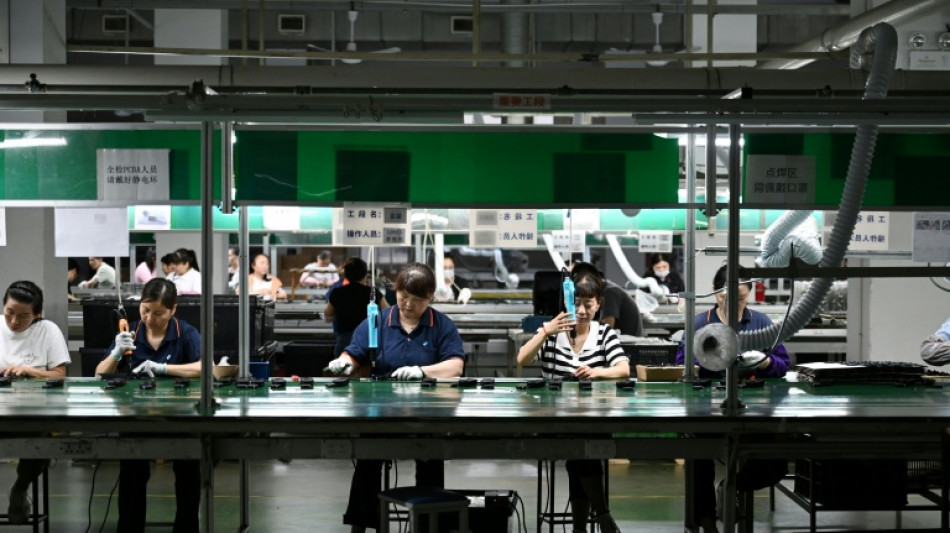
Taiwan's entrepreneurs in China feel heat from cross-Strait tensions / Photo: GREG BAKER - AFP
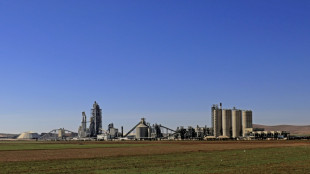
Bustling Taipei-style shopping streets, majestic temples to the island's deities and thriving factories dot the eastern Chinese city of Kunshan, for years a hub for Taiwanese businesses.
But now those firms are feeling the strain from cross-Strait tensions that have stoked safety fears among companies.
Taiwanese entrepreneurs -- known as "Taishang" in Mandarin -- poured billions into mainland China since ties began improving in the 1990s, playing an important role in its rise to become the world's second-largest economy.
But their numbers have dwindled in recent years, with the number of Taiwanese working in China dropping from 409,000 in 2009 to 177,000 in 2022, according to estimates provided to AFP by the Straits Exchange Foundation, an unofficial intermediary between Taipei and Beijing.
China's economic slowdown and mounting trade tensions with Washington are partially responsible, the organisation says.
But James Lee, a 78-year-old Taiwanese industrialist who was forced to close his cable and electrical outlet factory in southern Guangdong province in 2022, blames "politics".
"You have to be very careful when you speak," Lee told AFP.
"We Taiwanese businessmen are afraid."
Bolstered by their mastery of Mandarin and business acumen, Taishang have prospered as wily intermediaries between international markets and China's vast industrial manufacturing base.
Perhaps the most famous of them is Terry Gou, the founder of Foxconn whose vast factories in China churn out iPhones that have helped make it the world's biggest contract electronics manufacturer.
- No guarantee of safety -
An hour's drive from economic powerhouse Shanghai, Kunshan has been a key hub for Taiwanese-owned industry in China since the 1990s.
"Back then, it was a rice field," recalls Annie Wang, an industrialist from the island who arrived in Kunshan in 1996.
"Taiwanese companies were fortunate to coincide with the 30 most glorious years of Chinese manufacturing," she said.
Now, Wang heads an electronics subcontracting manufacturing plant, a small technology park and a coffee utensil brand.
At the height of the boom, Kunshan was home to more than 100,000 Taiwanese, according to unofficial figures from local associations.
But the number of Taiwanese companies in the city has shrunk from more than 10,000 a decade ago to fewer than 5,000 today, according to the data.
And the Taishang have felt the squeeze as relations between Taipei and Beijing plunge to their lowest depths in years.
The Chinese Communist Party -- which claims Taiwan as its territory but has never controlled it -- has hardened its stance against alleged "Taiwanese independence activists", even calling for the death penalty for alleged secessionism.
New rules, which also encourage citizens to report alleged pro-independence activities, have had a chilling effect on Taiwanese businesses in mainland China.
"We are not sending Taiwanese employees (to China) because we don't know how to guarantee their safety," said industrialist Lee.
"The initial favourable conditions have disappeared, and now there are many additional risks," Luo Wen-jia, vice chairman of the Straits Exchange Foundation, told AFP.
China's economic woes and rising production costs are adding to the problems.
"When we first went there, we thought that China's economy would continue to improve because its market is so large and its population is so big," Leon Chen, a Taiwanese businessman who worked at a battery component factory in the southeastern province of Jiangxi, said.
"But we haven't seen this materialise because there are some issues -- there is the US-China trade war and there was the pandemic," he added.
- Caught in crossfire -
In response, Taiwanese manufacturers are turning to new, more profitable -- and less politically sensitive -- locales.
"Some went to Vietnam, and some went to Thailand, Indonesia and the Philippines, and some returned to Taiwan," Luo said.
Between 2016 and 2024, Taiwanese investments in Vietnam approved by the Ministry of Economic Affairs in Taipei soared 129 percent, from US$451 million to more than US$1 billion.
Over the same period, those to mainland China fell 62 percent, according to the same source.
This decline could deal a blow to Beijing's "united front" strategy, which has seen it lean on Taishang communities to promote Taiwan's political integration and, ultimately, unification.
And as Beijing launches military drills practising a blockade of Taiwan and Taipei cracks down on Chinese spies, Taishang risk being caught in the crossfire.
In October 2023, Foxconn was placed under investigation by Chinese authorities -- a move widely seen as linked to a bid for the Taiwan presidency by its founder.
"There is no way to compare it with the heyday but we can still make ends meet," said Chen.
"If the environment for doing business in China becomes worse and worse, we would have no choice but to leave."
K.Al-Zaabi--DT