'Moving forward': the Gen-Z farmer growing Fukushima kiwis / Photo: Richard A. Brooks - AFP
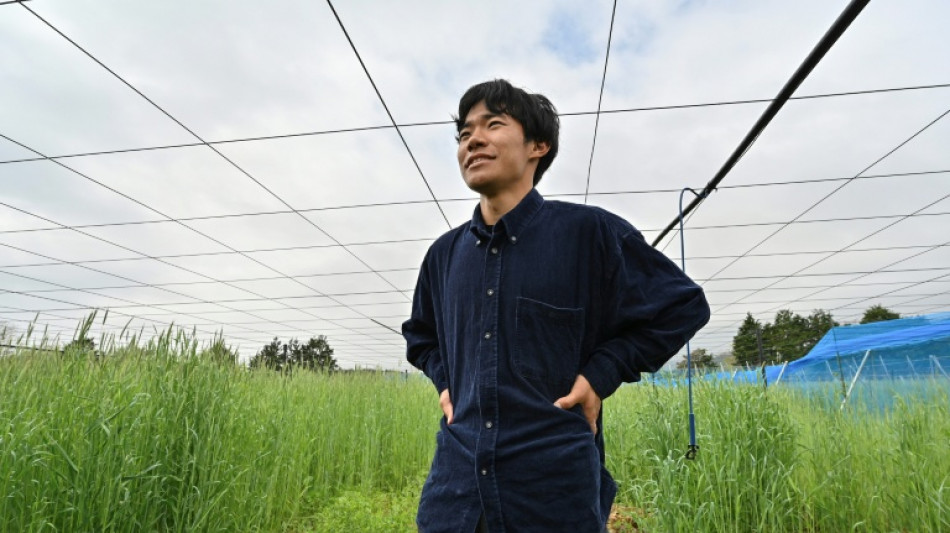
A short drive from the Fukushima nuclear disaster site, novice farmer Takuya Haraguchi tends to his kiwi saplings under the spring sunshine, bringing life back to a former no-go zone.
Haraguchi was 11 years old when Japan's strongest earthquake on record struck in March 2011, unleashing a tsunami that left 18,500 people dead or missing.
The wall of water crashed into the Fukushima nuclear plant on the northeast coast, causing a devastating meltdown.
At the time the bookish young Haraguchi, who grew up far away in Osaka, feared that radiation would make the whole country uninhabitable.
But now, aged 25, the new resident of the rural town of Okuma says he believes in the future of Fukushima region.
"Everyone knows about the nuclear accident. But not many people know about this area, and how it's moving forward," Haraguchi, tanned from working on his farm, told AFP.
"By growing kiwis here, I want people to take an interest in and learn about what Fukushima is really like these days."
The region of Fukushima is renowned for its delicious fruit, from pears to peaches, but the nuclear disaster led many people in Japan to shun produce grown there.
Just over 14 years later, following extensive decontamination work including stripping an entire layer of soil from farmland, authorities say food from Fukushima is safe, having been rigorously screened for radiation.
Last year Fukushima peaches were sold at London's Harrods department store, while in Japan some consumers now choose to buy the region's produce to support struggling farmers.
"The safety has been proven," said Haraguchi, who often sports a kiwi-print bucket hat. "I think it's important that we do it here."
- Starting from 'zero' -
Haraguchi studied software engineering at university but dreamed of becoming a fruit farmer.
He first visited Okuma in 2021 for an event targeted at students, and met residents trying to bring back kiwi farming in an effort to rebuild their community.
He also met a veteran farmer, who moved away after the disaster and whose kiwis' rich flavour left him stunned.
Inspired, Haraguchi returned many times for research before starting his venture, called ReFruits, with a business partner who recently graduated from university in Tokyo.
They manage 2.5 hectares (six acres) of land, and hope to harvest their first kiwis next year.
Haraguchi regards the destruction seen by the Fukushima region not as a blight, but an opportunity.
"Because it went to zero once, we can try and test all sorts of challenging new ideas," he said.
After the disaster, nuclear fallout forced all of Okuma's 11,000 residents to flee their homes.
Overall across Fukushima region, around 80,000 people were ordered to evacuate for their safety, while the same number again left voluntarily, authorities say.
Since then the stricken plant's reactors have been stabilised, although decommissioning work is expected to take decades.
Sections of Okuma, previously a no-go zone, were declared safe for residents to start to return in 2019.
Only a fraction of its previous population has come back -- but young outsiders like Haraguchi are moving there, taking advantage of government subsidies for things like housing and business assistance.
Now, of around 1,500 people living in Okuma, more than 1,000 are newcomers, including hundreds who work on the plant but also agriculture and even tech start-ups.
- Radiation tests -
Today dozens of sensors monitor radiation levels in Okuma, which are within officially set safety limits, but still higher than in areas far from the nuclear plant.
Some parts, such as unused hillsides, remain off-limits.
On Haraguchi's farm, soil tests show a slightly elevated level of radiation that meets an internationally accepted food standard.
Tests on fruit from Fukushima have also shown that the radiation levels are low enough for consumption, the government says.
Kaori Suzuki, who leads the non-profit citizen science group "Mothers' Radiation Lab Fukushima – TARACHINE", warns however that risks could remain now and in the future.
Among other activities, her group conducts its own radiation tests on Fukushima's soil and food to help residents who are choosing local products to consume.
Although "it's up to individuals to decide what to eat... it's better to be cautious, because people have become more relaxed", she said.
Haraguchi, who is travelling internationally to share his story and that of the region, hopes his work could eventually ease concerns about Fukushima's fruit.
"We don't need to force our products on people who are uneasy about this place and its crops," he said, adding that he was committed to transparency.
"We need to sell our products to people who understand."
J.Chacko--DT