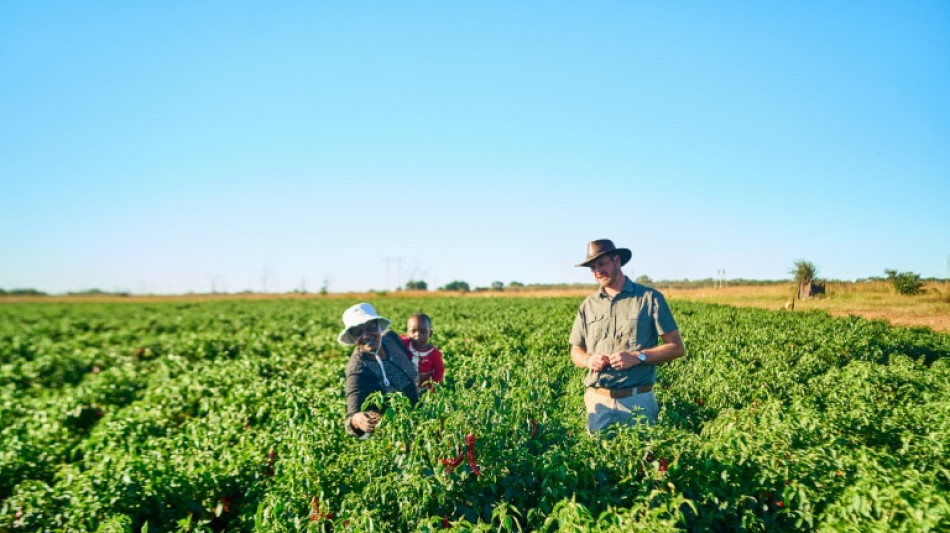
Zimbabwe's farmers push on as land grab compensation flounders / Photo: Zinyange Auntony - AFP
In a field of paprika plants in the heart of Zimbabwe, fourth-generation farmer Daniel Burger and relative newcomer Miriam Mupambawashe discuss the quality of the crop.
Burger, 36, and Mupambawashe, 59, are neighbours and partners in efforts to revive the country's once-flourishing agriculture sector cut down by a ruinous land reform drive in the 2000s.
The reform distributed land from the white minority, which still owned most of the best farmland 20 years after independence in 1980, to the black majority.
Around 4,000 white-owned farms were confiscated, some with deadly violence.
Mupambawashe was among thousands who received land. Though she initially knew little about farming, her small subsistence plot now thrives.
Other farms failed or were abandoned, with some new tenants unschooled in agriculture and others -- including politicians who were handed land -- uninterested.
There were food shortages and Zimbabwe soon required international aid.
"There was a bit of a tough period through the 2000s and, unfortunately, I think it sort of refuelled racial tensions to an extent," Burger told AFP.
"But being so passionate about farming was the motivator for me to move forward," he said.
- Good faith -
Mupambawashe moved to the area from the southern city of Bulawayo, around 200 kilometres (125 miles) away.
"When we first came here in 2001, it was a forest and there was nothing built," she said. "Some of the white farmers were angry but we managed to talk to each other in good faith and move forward."
"They never let us down and said, 'You grabbed the farm, let's see if you can do it'. But instead they brought their own tractors and equipment to come and help, which we felt was a nice gesture."
It was hard in the beginning, especially after irrigation equipment was stolen, and the early failures were "embarrassing", Mupambawashe said.
But today her plot does so well that she only needs to buy in sugar and cooking oil.
Burger leases land from her and lends tractors and expertise.
His family’s land was among the few hundreds that were not seized in the 2000s.
Nonetheless, "For a long time we became wound up in compensation," said Burger, vice-president of the Commercial Farmers Union of Zimbabwe (CFU) that represents mostly white farmers.
"But it wasn't our purpose. Our purpose was driving agriculture and current agricultural affairs forward," he said.
- Compensation frustration -
This year, some farm owners whose land was confiscated received the first compensation payments after decades of waiting.
The process has been complex and divisive.
The government committed to compensation as part of an effort to settle arrears and reform the economy in order to be able to regain access to international credit lines cut two decades ago.
It announced in 2020 the creation of a fund that would pay out US$3.5 billion for infrastructure on farms but not the land, which it says was taken by force by colonial settlers.
Unable to raise cash, the government in 2023 changed the offer to one percent in cash and the remainder in US dollar denominated treasury bonds.
In April, the first payments were made to 378 of 780 farmers approved for this scheme.
Deon Theron, who represents the Compensation Steering Committee group of former white farmers, says the introduction of the bonds has annulled the original deal and negotiations need to start over.
The bonds are "unsecured" and there is "limited recourse in the event of non-performance by government," he told AFP.
"The general feeling amongst the farmers is firstly frustration that after 20-odd years we still have not received anything," Theron said.
But the Property and Farm Compensation Association said its members would take what is on offer.
The bonds are under international guarantee, said leader Harry Orphanides, adding that "digging in" and seeking more from the government would be futile.
- Tenure -
Mupambawashe and Burger are encouraged by another major government announcement -- the granting of land ownership rights to beneficiaries of the 2000s land reform.
The tenure announced late last year replaces 99-year leases and means the new owners can deal with the property as they wish, including putting it up for sale.
"It makes us feel settled," Mupambawashe said. "No one could come and tell us to move off the land or take it away from us."
"It is just going to catapult us forward as a nation and an economy," Burger said. "We used to be the breadbasket of Africa and we lost it somewhat. But I just look at where we are now."
strs/br/ho/cw
R.El-Zarouni--DT