Misinformation casts shadow on US-China trade truce / Photo: SCOTT OLSON - GETTY IMAGES NORTH AMERICA/AFP
From false claims of Americans panic-buying Chinese goods to bot-driven attacks on US brands, a tide of misinformation is casting a shadow over a temporary trade truce between Washington and Beijing.
The world's two biggest economies agreed earlier this month to pause reciprocal tariffs for 90 days, a surprise de-escalation in their bitter trade war following high-level talks in Geneva.
But an alternate reality is unfolding across social media platforms, including China's Douyin and Weibo, where a surge of falsehoods is fueling anti-American sentiment that could undermine the fragile truce.
One online video, which garnered millions of views across those platforms and TikTok, claims to show panicked American shoppers snapping up Chinese-branded television sets in the aftermath of trade tensions.
But in reality, that was old footage from 2018 showing Black Friday shopping frenzy at a US supermarket.
The falsehood was further amplified by Chinese state media outlets, including China Daily, which ran headlines such as: "Americans are starting to stock up like crazy amid tariffs and snapping up Chinese-branded TVs."
A news clip on its website -- more recycled footage from 2018 -- bears a "file footage" watermark in the upper left corner, apparently to shield the outlet from legal liability.
Other unfounded claims emerged on Chinese platforms about Americans flying to China to shop for Chinese goods, and that US citizens -- reeling from the economic fallout of the trade war -- were queuing up to purchase supplies in bulk.
"These narratives are almost certainly curated by the state, which has become increasingly fluent in harnessing social media," Andrew Mertha, director of the SAIS China Global Research Center at Johns Hopkins University, told AFP.
"(They) help align Chinese public opinion with governmental strategy, in this case demonstrating -- albeit inaccurately, certainly prematurely -- that 'the US is already feeling the pain, so China must stay the course.'"
- Economic jitters -
US President Donald Trump's on-again, off-again tariffs have sent jitters through the world economy, unnerving investors and roiling financial markets.
Under the May 12 truce, the United States agreed to temporarily reduce the tariff on Chinese imports to 30 percent from 145 percent, while China said it would lower its import duty on American goods to 10 percent from 125 percent.
Some of the false narratives emerged before the agreement but have continued to spread online, fueling confusion and a broader wave of information chaos.
"A lot of friends in China asked me: Are there no eggs in the United States? Is it very unsafe? Are people rushing to buy things? Have you stockpiled anything?" Vivian Wei, a Chicago-based content creator, told AFP.
"Some people even (suggested) not to come to the United States for tourism or study."
The rumors prompted Wei to tour several supermarkets across Chicago, only to find shelves stocked.
While American shoppers seemed unfazed by the swirl of online misinformation, Wei observed that the "Chinese were getting very excited."
- 'Digital blitz' -
Last month, disinformation security firm Cyabra uncovered an anti-US influence campaign on the Elon Musk-owned X involving thousands of fake or bot-operated accounts.
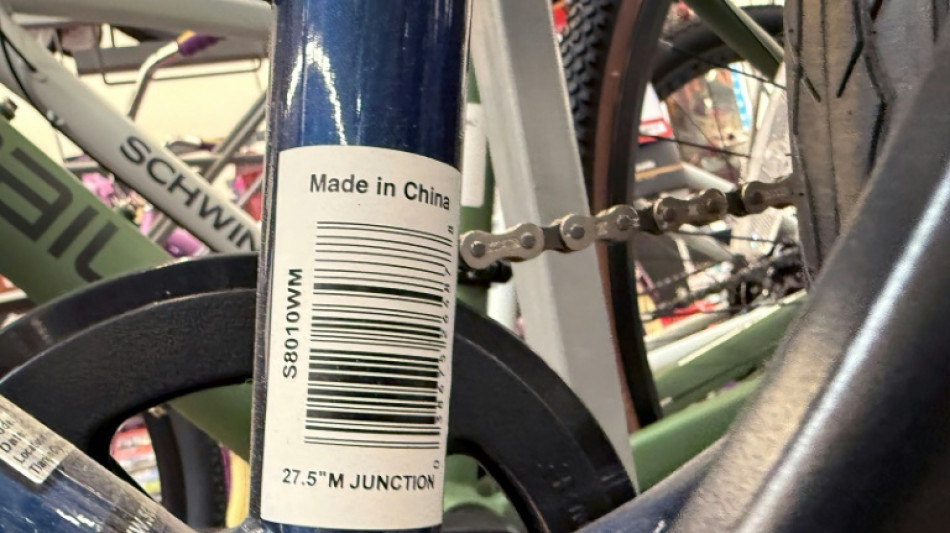
They targeted global brands such as Gucci, Chanel and Amazon, amplifying the unfounded narrative that they produced goods in China while branding them as "Made in France" or "Made in Italy."
The accounts blamed Trump's trade policies for enabling such deceptive marketing practices, while urging consumers to ditch those brands and purchase products directly from China.
"This was a digital blitz. A third of the accounts weren't real, but the backlash they triggered was," Dan Brahmy, chief executive of Cyabra, told AFP.
"Fake profiles hijacked luxury brands, pushed anti-US narratives, and steered buyers away without raising suspicion. That's what makes it effective."
Last month, AFP also uncovered viral TikTok videos by Chinese content creators promoting the spurious claim that international luxury brands were secretly manufacturing their products in China.
The targeted brands did not respond to the claim, which appeared to be part of a sprawling campaign exploiting US-China trade tensions to market counterfeit luxury goods.
The false narratives are unlikely to fade as trade negotiations continue, experts say.
"I believe these narratives will continue and will evolve in parallel with strengthening the Chinese government's negotiating position," said Mertha from Johns Hopkins University.
burs-ac/sla/dhc
I.Menon--DT