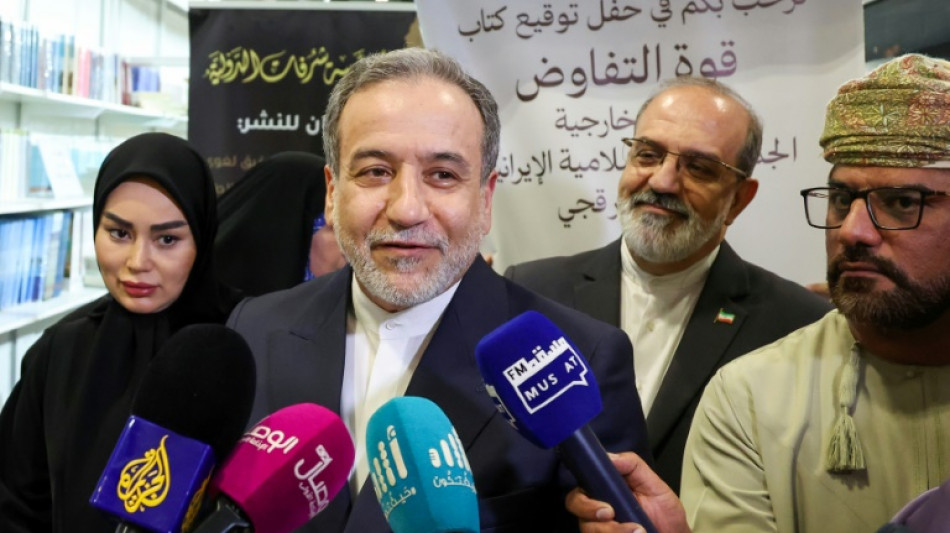
Iran, US hold new round of high-stakes nuclear talks / Photo: Haitham AL-SHUKAIRI - AFP
The United States and Iran were expected to start haggling over details of a potential nuclear deal in Oman on Saturday as they entered their third round of talks in as many weeks.
US special envoy Steve Witkoff and Iranian Foreign Minister Abbas Araghchi are again leading the discussions, which this time included a technical-level meeting between experts from both sides.
The talks are aimed at striking a new deal that would stop Iran from developing nuclear weapons -- an objective Tehran denies pursuing -- in return for relief from crippling sanctions.
US President Donald Trump pulled out of an earlier, multilateral deal during his first term in office.
Araghchi has expressed "cautious optimism" about the process, saying this week: "If the sole demand by the US is for Iran to not possess nuclear weapons, this demand is achievable."
But if Washington had "impractical or illogical demands, we will naturally encounter problems", he added.
Michael Anton, the State Department's head of policy planning, will lead Washington's expert-level delegation, while deputy foreign ministers Kazem Gharibabadi and Majid Takht-Ravanchi will lead Tehran's, according to Iran's Tasnim news agency.
Iranian state TV reported that the talks started around midday Omani time (0800 GMT).
The state news agency IRNA said that while only one day of talks was scheduled, "given that the negotiations have entered technical and expert-level discussions and the examination of details... (they) may be extended if necessary".
- Trump would 'prefer deal' -
US President Donald Trump, in an interview published Friday by Time magazine, reiterated his threat of military action if a deal fell through.
But he added that he "would much prefer a deal than bombs being dropped".
Iranian foreign ministry spokesman Esmaeil Baqaei said Friday that the new talks, like the previous rounds in Muscat and Rome the past two Saturdays, would be mediated by Omani Foreign Minister Badr Albusaidi.
The negotiations are the highest-level engagement between the long-time foes since 2018, when Trump withdrew from the landmark 2015 accord that gave Iran sanctions relief in return for curbs on its nuclear programme.
Since returning to office in January, Trump has reinstated his "maximum pressure" policy of sanctions against Tehran.
In March, he wrote to Iran's supreme leader Ayatollah Ali Khamenei proposing talks, but also warning of potential military action if diplomacy failed.
On Tuesday, Washington announced new sanctions targeting Iran's oil network -- a move Tehran described as "hostile" ahead of Saturday's talks.
Western nations, including the United States, have long accused Iran of seeking to develop nuclear weapons -- an allegation Tehran has consistently denied.
Iran maintains its nuclear programme is strictly for peaceful purposes.
On Wednesday, UN nuclear watchdog chief Rafael Grossi called on Iran to explain tunnels built near its Natanz nuclear site, seen in satellite imagery released by the Institute for Science and International Security.
The Washington-based think-tank also noted construction of a new security perimeter.
"We're asking them, what is this for? They are telling us, it's none of your business," Grossi told reporters.
Tehran had no immediate comment.
- 'Non-negotiable' right -
In an interview released Wednesday, US Secretary of State Marco Rubio reiterated Washington's firm stance against Iran's uranium enrichment.
"If Iran wants a civil nuclear programme, they can have one just like many other countries in the world have one: and that is they import enriched material," he said on the Honestly podcast.
Iran currently enriches uranium up to 60 percent, far above the 3.67 percent limit imposed by the 2015 deal but still below the 90 percent threshold required for weapons-grade material.
Araghchi has previously called Iran's right to enrich uranium "non-negotiable".
The foreign minister said in the text of a speech posted to X earlier this week that Iran was looking "to build at least 19 more reactors".
Tehran has recently sought to reopen dialogue with Britain, France and Germany -- also signatories to the 2015 deal -- holding several rounds of nuclear talks ahead of the US meetings.
On Thursday, Araghchi said he was willing to visit the European countries for talks.
Last week, Rubio urged them to decide whether to trigger the "snapback" mechanism under the 2015 agreement, which would automatically reinstate UN sanctions on Iran over its non-compliance.
The option to use the mechanism expires in October.
Iran has warned that it could withdraw from the nuclear Non-Proliferation Treaty if the snapback is triggered.
K.Javed--DT