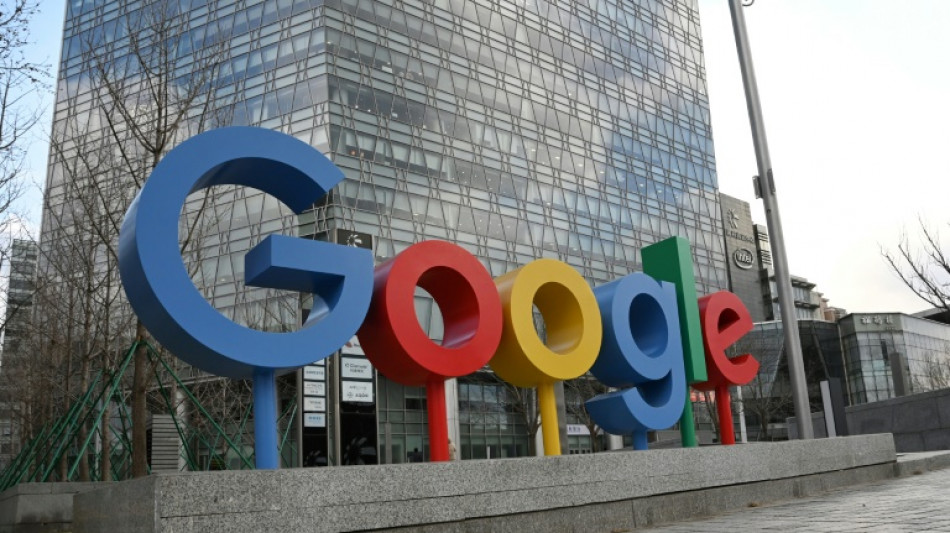
Google has illegal monopoly in ad tech, US judge rules / Photo: GREG BAKER - AFP/File
A US judge on Thursday ruled that Google illegally wielded monopoly power in the online ad technology market, in a legal blow that could rattle the tech giant's revenue engine.
The federal government and more than a dozen US states filed the antitrust suit against Alphabet-owned Google, accusing it of acting illegally to dominate three sectors of digital advertising -- publisher ad servers, advertiser tools, and ad exchanges.
It is one of two federal suits targeting Google that could ultimately see the company split up and curb its influence -- and part of a wider government push to rein in Big Tech.
The vast majority of websites use the trio of Google ad software products that together leave no way for publishers to escape Google's advertising technology, the plaintiffs alleged.
District Court Judge Leonie Brinkema agreed with most of that reasoning, ruling that Google built an illegal monopoly over ad software and tools used by publishers, but partially dismissed the argument related to tools used by advertisers.
"Google has willfully engaged in a series of anticompetitive acts to acquire and maintain monopoly power in the publisher ad server and ad exchange markets for open-web display advertising," Brinkema said in her ruling.
"Google further entrenched its monopoly power by imposing anticompetitive policies on its customers and eliminating desirable product features," she wrote.
"In addition to depriving rivals of the ability to compete, this exclusionary conduct substantially harmed Google's publisher customers, the competitive process, and, ultimately, consumers of information on the open web."
Google quickly vowed to appeal the ruling.
"We won half of this case and we will appeal the other half," the company's vice president of regulatory affairs Lee-Anne Mulholland said in a statement.
"The court found that our advertiser tools and our acquisitions, such as DoubleClick, don't harm competition," Mulholland said.
For Emarketer senior analyst Evelyn Mitchell-Wolf, "the bigger picture is crystal clear: the antitrust tides have turned against Google and other digital advertising giants."
"The extent of the fallout will depend on the legal remedies employed, and the implementation timeline is likely to span years if Google loses its anticipated appeals," Mitchell-Wolf told AFP.
- What to do? -
Launched under the presidential administrations of Donald Trump and Joe Biden, five major antitrust cases from the Federal Trade Commission and the US Justice Department are proceeding against major US technology companies.
These cases represent an aggressive shift in antitrust enforcement, after a relatively quiet period in antitrust prosecution since the Microsoft case in the late 1990s.
In August last year, a US judge ruled that Google maintained a monopoly with its dominant search engine. The company has appealed that ruling as well.
Online advertising is the driving engine of Google's fortune and pays for widely used online services such as Maps, Gmail, and search offered free.
Money pouring into Google's coffers also allows the Silicon Valley company to spend billions of dollars on its artificial intelligence efforts, as it tries to keep up with rivals.
Brinkema gave attorneys on both sides of the online ad tech case seven days to submit a schedule for arguing their positions regarding what remedies should be imposed on Google.
Ordering Google to spin off its ad publisher and exchange operations is likely to be among the plaintiffs' proposals.
For Mitchell-Wolf, the ruling has "profound implications for the advertising industry."
"The open web is so deeply rooted in Google's advertising technology that any change to the status quo could crush vulnerable publishers," the analyst said.
Nicole Gill, co-founder of advocacy group Accountable Tech, called Brinkema's decision a "massive victory," while Amnesty International Secretary-General Agnes Callamard called for a "rights-respecting structural break-up of Google."
G.Mukherjee--DT