Dubai Telegraph - Spring in February: UK plants flowering 'a month early'

EUR -
AED 4.188674
AFN 75.843643
ALL 93.82096
AMD 416.103902
AOA 1045.884523
ARS 1694.663361
AUD 1.629636
AWG 2.05299
AZN 1.9408
BAM 1.956288
BBD 2.293242
BDT 140.44507
BHD 0.429396
BIF 3401.430056
BMD 1.14055
BND 1.469703
BOB 12.644157
BRL 5.799736
BSD 1.138554
BTN 109.889476
BWP 15.727514
BYN 3.265815
BYR 22354.776053
BZD 2.289942
CAD 1.606025
CDF 2577.642277
CHF 0.929422
CLF 0.027486
CLP 1081.754496
CNY 7.723917
CNH 7.720376
COP 3671.030609
CRC 518.115747
CUC 1.14055
CUP 30.22457
CVE 110.291573
CZK 24.127589
DJF 202.74796
DKK 7.475961
DOP 66.304812
DZD 151.83592
EGP 58.456254
ERN 17.108247
ETB 183.768654
FJD 2.56772
FKP 0.856096
GBP 0.854037
GEL 2.993979
GGP 0.856096
GHS 13.24119
GIP 0.856096
GMD 84.401234
GNF 9989.012592
GTQ 8.686169
GYD 238.207393
HKD 8.944294
HNL 30.495813
HRK 7.533351
HTG 148.860645
HUF 359.762426
IDR 20521.912526
ILS 3.474514
IMP 0.856096
INR 109.62873
IQD 1491.57245
IRR 1568255.973375
ISK 143.014139
JEP 0.856096
JMD 180.590344
JOD 0.808681
JPY 186.564295
KES 147.644505
KGS 99.741222
KHR 4603.947789
KMF 494.99854
KRW 1671.886558
KWD 0.353662
KYD 0.948837
KZT 541.36518
LAK 25781.4377
LBP 101960.259774
LKR 382.625543
LRD 206.079652
LSL 19.231102
LTL 3.367748
LVL 0.689907
LYD 7.285723
MAD 10.662569
MDL 20.124025
MGA 5045.12708
MKD 61.590379
MMK 2395.153746
MNT 4099.131858
MOP 9.196997
MRU 45.442152
MUR 54.084915
MVR 17.621765
MWK 1974.241045
MXN 19.888454
MYR 4.658118
MZN 72.856824
NAD 19.231102
NGN 1558.02479
NIO 41.898442
NOK 10.914831
NPR 175.820278
NZD 1.968332
OMR 0.437834
PAB 1.138584
PEN 3.874768
PGK 5.093026
PHP 70.404425
PKR 316.261953
PLN 4.313474
PYG 6883.628332
QAR 4.139234
RON 5.213338
RSD 117.41932
RUB 88.961544
RWF 1677.674792
SAR 4.274311
SBD 9.216903
SCR 15.357094
SDG 684.89354
SEK 11.036984
SGD 1.471018
SLE 27.62981
SOS 650.645354
SRD 43.104231
STD 23607.07807
STN 24.504937
SVC 9.962488
SZL 19.228296
THB 38.280844
TJS 10.503331
TMT 3.991924
TND 3.374843
TRY 54.01781
TTD 7.735932
TWD 36.931916
TZS 3010.829064
UAH 51.024799
UGX 4292.034102
USD 1.14055
UYU 45.721016
UZS 13779.440767
VES 845.491158
VND 30024.973448
VUV 135.352588
WST 3.14372
XAF 656.103573
XAG 0.019211
XAU 0.000279
XCD 3.082393
XCG 2.052012
XDR 0.815982
XOF 656.112204
XPF 119.331742
YER 272.078451
ZAR 19.0677
ZMK 10266.319355
ZMW 21.091989
ZWL 367.25657
  • CMSD

    -0.0200

    21.98

    -0.09%

  • RIO

    -0.2900

    91.22

    -0.32%

  • CMSC

    -0.0650

    21.725

    -0.3%

  • BCC

    1.3800

    77.84

    +1.77%

  • RYCEF

    -0.1900

    18.17

    -1.05%

  • BCE

    0.0900

    21.3

    +0.42%

  • RBGPF

    -0.7300

    66

    -1.11%

  • RELX

    1.5500

    34.41

    +4.5%

  • JRI

    0.1600

    13.06

    +1.23%

  • BTI

    1.1200

    60.96

    +1.84%

  • GSK

    0.6100

    51.35

    +1.19%

  • NGG

    -0.0700

    82.3

    -0.09%

  • VOD

    -0.1000

    15.15

    -0.66%

  • AZN

    0.9900

    169.26

    +0.58%

  • BP

    -0.1100

    43.82

    -0.25%

Spring in February: UK plants flowering 'a month early'

Spring in February: UK plants flowering 'a month early'

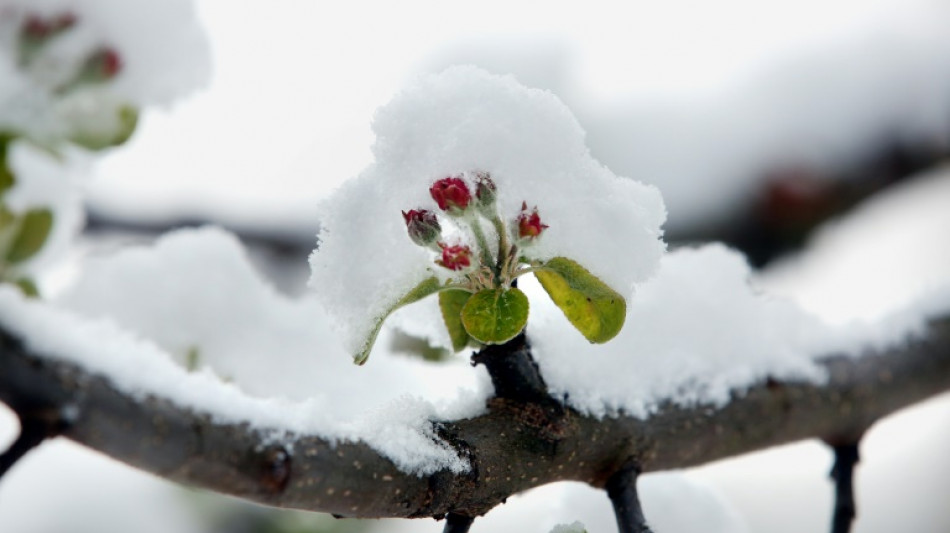
Global warming is causing plants in the UK to burst into flower around a month earlier, with potentially profound consequences for crops and wildlife, according to research Wednesday that used nature observations going back to the 1700s.

Text size:

Trees, herbs and other flowering plants have shifted seasonal rhythms as temperatures have increased, according to the study led by the University of Cambridge.

The results are "truly alarming" because of the ecological threats posed by early flowering, said Ulf Buntgen, a professor from Cambridge's Department of Geography, who led the research published in the journal Proceedings of the Royal Society B.

Crops can be killed off if they blossom early and are then lashed by a late frost, but reasearchers said the bigger threat was to wildlife.

This is because insects and birds have evolved to synchronise their own development stages with the plants they rely on. When they are no longer in phase, the result is an "ecological mismatch".

"A certain plant flowers, it attracts a particular type of insect, which attracts a particular type of bird, and so on," Buntgen said in a press release from the university.

"But if one component responds faster than the others, there's a risk that they'll be out of synch, which can lead species to collapse if they can't adapt quickly enough."

- Spring backwards? -

To track the changes in flowering patterns, researchers used a database known as Nature's Calendar, which has entries by scientists, naturalists, amateur and professional gardeners, as well as organisations such as the Royal Meteorological Society, going back more than 200 years.

Looking at more than 400,000 observations of 406 trees, shrubs, herbs and climbing plants across swathes of Britain, they found that the average first flowering date from 1987 to 2019 is 30 days earlier than the average first flowering date from 1753 to 1986.

The changes seen in recent decades coincide with accelerating impacts of human-caused climate change, especially higher temperatures.

Spring in Britain might eventually creep into the historically wintry month of February if global temperatures continue to increase at their current rate, said Buntgen.

That rapid shift in natural cycles could reverberate through forests, farms and gardens.

Buntgen said scientists need to have access to data that track whole ecosystems over long periods of time, if we are to truly understand the implications of climate change.

"We can use a wide range of environmental datasets to see how climate change is affecting different species, but most records we have only consider one or a handful of species in a relatively small area," said Buntgen.

There is growing concern among scientists about the scale of the impact of a rapidly warming world, on everything from extreme weather events to loss of biodiversity.

The United Nations last month confirmed that the past seven years have been the hottest on record, while the average global temperature in 2021 was around 1.11 degrees Celsius above the pre-industrial levels measured between 1850 and 1900.

Y.Chaudhry--DT