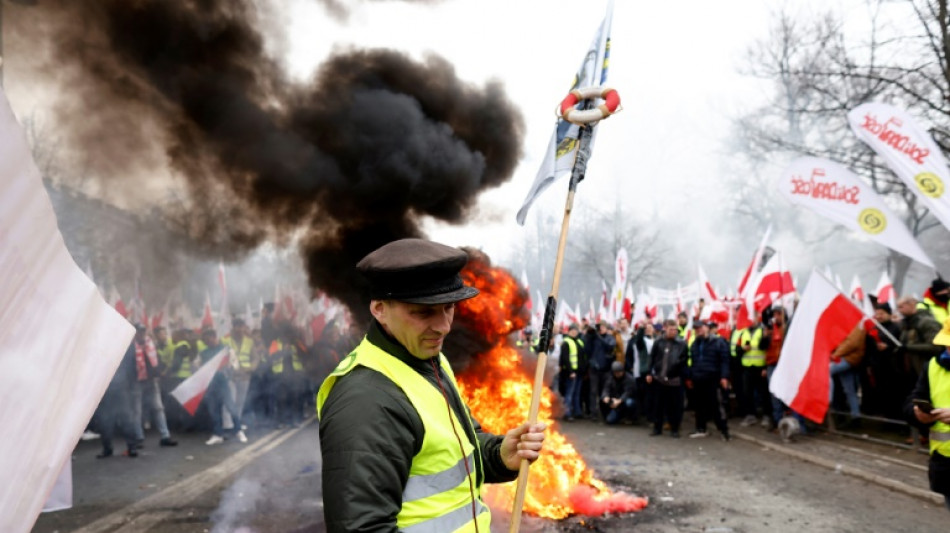
Polish farmers block roads to protest Ukraine imports / Photo: Wojtek Radwanski - AFP
Polish farmers on Wednesday staged tractor blockades on roads nationwide in their latest protest against farm imports from outside the European Union and the bloc's environmental red tape.
The farmers have been blocking border crossings with Ukraine since last month to protest at what they say is unfair competition from goods entering from neighbouring war-torn Ukraine.
This week they expanded their protests to the western border with Germany.
Earlier this month they held a demonstration in the capital Warsaw attended by thousands that devolved into clashes with the police, with over two dozen people detained.
"Throughout the country today more than 580 protests are planned, with nearly 70,000 people estimated to take part," Polish police said in a statement.
The farmers are notably blocking access roads to Warsaw and other big cities including Wroclaw, Poznan and Bydgoszcz.
"We as farmers will not give up so long as our demands are not fully met," protest organisers said in a statement ahead of the nationwide blockade.
Ukraine has seen its agriculture sector crippled by Russia's invasion in 2022. Many of its major export routes through the Black Sea have been blocked and its farmland rendered unusable by warfare.
In a bid to help Kyiv economically, the European Union in 2022 scrapped tariffs on Ukrainian goods transiting the 27-nation bloc by road.
On Wednesday, EU member states and lawmakers reached a deal to cap duty-free imports of some Ukrainian grains.
The border blockades and grain dispute have strained ties between the neighbours, even as Poland has shown staunch support since the Russian invasion.
Farmers in several other European countries have also been protesting for weeks over conditions.
The EU has come forward with propositions to revamp the bloc's subsidy programme, known as the Common Agricultural Policy (CAP), in a bid to assuage the farmers across the continent.
The proposed changes to the CAP still need to be negotiated between EU member states and the European Parliament.
H.Sasidharan--DT