Dubai Telegraph - African children 'least able to cope' with climate risks: UN

EUR -
AED 4.268247
AFN 73.79462
ALL 95.927446
AMD 438.452408
ANG 2.079752
AOA 1065.597492
ARS 1650.190476
AUD 1.651808
AWG 2.091685
AZN 1.980093
BAM 1.965895
BBD 2.34081
BDT 142.13987
BGN 1.914642
BHD 0.439947
BIF 3445.469246
BMD 1.162047
BND 1.489189
BOB 8.031205
BRL 6.094984
BSD 1.162268
BTN 106.748682
BWP 15.772242
BYN 3.420147
BYR 22776.120479
BZD 2.337493
CAD 1.577189
CDF 2582.653931
CHF 0.90237
CLF 0.026822
CLP 1059.078442
CNY 8.014348
CNH 8.026264
COP 4397.662148
CRC 554.908796
CUC 1.162047
CUP 30.794245
CVE 110.830276
CZK 24.393462
DJF 206.519443
DKK 7.473361
DOP 70.158632
DZD 152.581461
EGP 58.453726
ERN 17.430704
ETB 181.400032
FJD 2.56871
FKP 0.872592
GBP 0.866746
GEL 3.166625
GGP 0.872592
GHS 12.521103
GIP 0.872592
GMD 85.414927
GNF 10202.77275
GTQ 8.916787
GYD 243.147021
HKD 9.089474
HNL 30.881444
HRK 7.536809
HTG 152.47227
HUF 392.551535
IDR 19684.959352
ILS 3.594514
IMP 0.872592
INR 106.839121
IQD 1522.862545
IRR 1534715.424716
ISK 145.198216
JEP 0.872592
JMD 182.014622
JOD 0.823937
JPY 183.373921
KES 150.078812
KGS 101.621453
KHR 4659.80873
KMF 492.708319
KPW 1045.853037
KRW 1725.977179
KWD 0.357334
KYD 0.968527
KZT 574.226107
LAK 24896.856592
LBP 104061.30596
LKR 361.550067
LRD 212.654999
LSL 19.255561
LTL 3.431223
LVL 0.702911
LYD 7.396474
MAD 10.802434
MDL 20.100261
MGA 4863.166944
MKD 61.61363
MMK 2440.182354
MNT 4147.433579
MOP 9.360623
MRU 46.633385
MUR 55.110122
MVR 17.965686
MWK 2018.475976
MXN 20.682
MYR 4.585482
MZN 74.259135
NAD 19.255556
NGN 1612.921584
NIO 42.682422
NOK 11.136017
NPR 170.786474
NZD 1.969572
OMR 0.44837
PAB 1.162263
PEN 4.045671
PGK 5.005704
PHP 68.613108
PKR 324.705017
PLN 4.272324
PYG 7604.045807
QAR 4.231304
RON 5.092675
RSD 116.987961
RUB 92.107154
RWF 1694.264472
SAR 4.361452
SBD 9.34888
SCR 17.099565
SDG 698.97552
SEK 10.670501
SGD 1.481382
SHP 0.871836
SLE 28.499246
SLL 24367.54304
SOS 664.114095
SRD 43.758626
STD 24052.025975
STN 24.98401
SVC 10.169218
SYP 128.779675
SZL 19.255547
THB 36.924086
TJS 11.17435
TMT 4.078785
TND 3.382142
TOP 2.797931
TRY 51.205643
TTD 7.87486
TWD 36.973201
TZS 2998.081554
UAH 50.786382
UGX 4289.02359
USD 1.162047
UYU 45.724791
UZS 14188.593809
VES 494.034976
VND 30468.871375
VUV 138.627857
WST 3.168035
XAF 659.288464
XAG 0.013775
XAU 0.000225
XCD 3.14049
XCG 2.094647
XDR 0.816219
XOF 655.979686
XPF 119.331742
YER 277.152371
ZAR 19.226219
ZMK 10459.82129
ZMW 22.471291
ZWL 374.178648
  • RBGPF

    0.1000

    82.5

    +0.12%

  • CMSD

    -0.0100

    23.2

    -0.04%

  • BCE

    0.0800

    26.06

    +0.31%

  • VOD

    -0.1100

    14.51

    -0.76%

  • RYCEF

    -0.2500

    17

    -1.47%

  • CMSC

    -0.1050

    23.185

    -0.45%

  • NGG

    0.1200

    89.86

    +0.13%

  • GSK

    -0.7600

    54.51

    -1.39%

  • BTI

    -0.7200

    57.87

    -1.24%

  • RIO

    -0.6200

    90.21

    -0.69%

  • RELX

    0.5000

    35.68

    +1.4%

  • JRI

    -0.2300

    12.57

    -1.83%

  • BCC

    -1.9600

    75.35

    -2.6%

  • AZN

    -3.3000

    194.22

    -1.7%

  • BP

    1.1400

    40.44

    +2.82%

African children 'least able to cope' with climate risks: UN
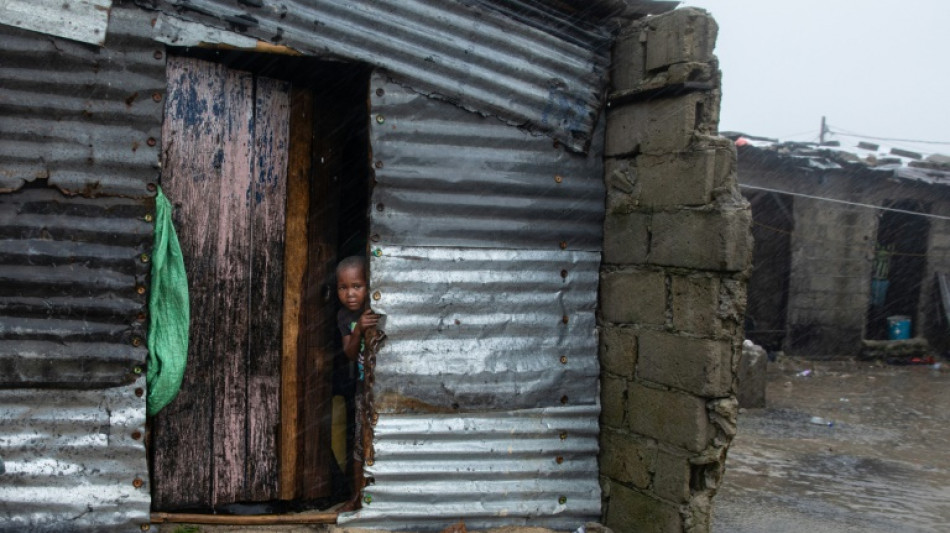
African children 'least able to cope' with climate risks: UN / Photo: - - UNICEF/AFP/File

African children 'least able to cope' with climate risks: UN

Children in Africa are exceptionally vulnerable to climate change but are "woefully" ignored by those responsible for funding the fight against the crisis, the United Nations said Friday.

Text size:

Africa -- a continent of 1.2 billion people -- is home to some of the countries least responsible for carbon emissions but is hit disproportionately hard by droughts, flooding, storms and heatwaves.

Children in 48 of the 49 countries assessed are at "high or extremely high risk" of climate shocks, the UN childrens' agency UNICEF said in a report titled "Time to Act".

"It is clear that the youngest members of African society are bearing the brunt of the harsh effects of climate change," said Lieke van de Wiel, UNICEF deputy director for eastern and southern Africa.

"They are the least able to cope, due to physiological vulnerability and poor access to essential social services."

Furthermore, they "are woefully neglected by the key climate financing flows required to help them adapt, survive and respond to the climate crisis," UNICEF said.

Children living in Nigeria, Guinea, Guinea-Bissau, Chad, the Central African Republic and war-weary Somalia are at most risk, it said.

A key concern is exposure to diseases as the children face a "deadly combination of intensified exposure to multiple and increasingly severe shocks".

The UN agency said that less than three percent of global funding to tackle climate change was directed at children, and called for more to be done, especially by the private sector.

"We need to see a stronger focusing of funding towards this group, so they are equipped to face a lifetime of climate-induced disruptions," said van de Wiel.

The UNICEF report was published days before the first ever Africa Climate Summit in the Kenyan capital Nairobi next week.

The conference is designed to showcase Africa as a potential powerhouse for green energy, in the first of a flurry of big meetings ahead of crunch UN talks.

With the world far adrift of its goal of slashing carbon emissions and communities battered by extreme weather events, the November climate summit in the oil-rich United Arab Emirates will be dominated by clashing visions for energy.

The climate conference opens on Monday and is due to wrap up on Wednesday.

A.El-Nayady--DT