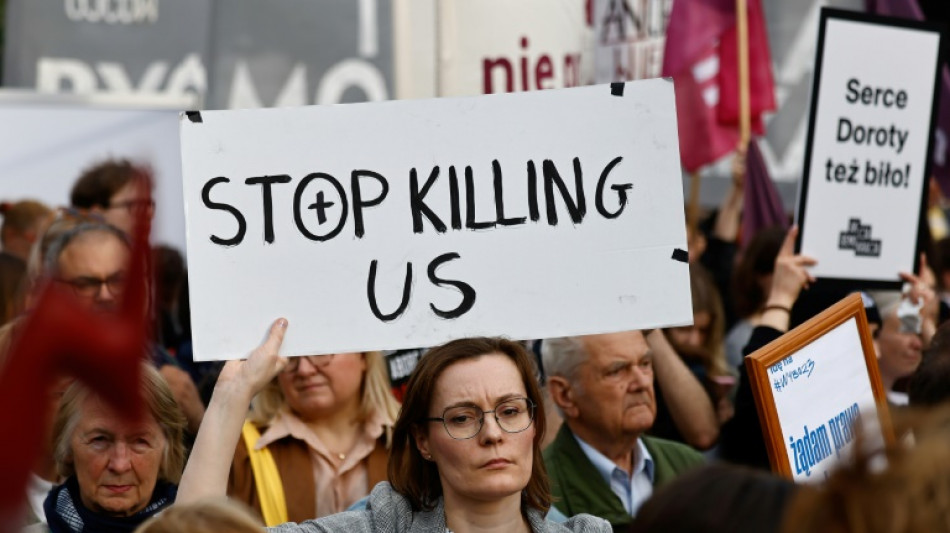
Poles protest restrictive abortion law after pregnant woman dies / Photo: Wojtek Radwanski - AFP
Several thousand people took to streets in Poland Wednesday to protest a near-total ban on abortion that they blame for a new case of a death of a pregnant woman.
Women rights groups organised gatherings in more than 50 Polish towns and cities, with protesters chanting "disgrace" and carrying pictures of the victim, 33-year-old Dorota Lalik.
Lalik died in a hospital in Nowy Targ, southern Poland on May 24, three days after having been admitted there when her waters broke.
She died of septicaemia after her 20-week-old foetus died in the womb, her family said in a statement.
The existing law does still allow the termination of a pregnancy if a woman's life is in danger.
But the woman's family said the hospital had not done the necessary examination in time, nor informed them that her life was in danger.
"The nurses told her to lie down with legs above her head because they said it would let the waters return," her husband told a Polish daily Gazeta Wyborcza.
"No one mentioned that you could induce a miscarriage and save Dorota, as the chances of the child surviving were slim," Marcin Lalik said.
- 'Everything is political' -
Prosecutors have opened an investigation into Lalik's death. They are already looking at two similar cases of pregnant women who died in hospital after the death of the foetus they were carrying.
In 2021, after a pregnant 30-year-old mother from Pszczyna died, her family blamed doctors' "wait-and-see attitude".
A year later, a 37-year-old woman died in Czestochowa, a few weeks after she lost 12-week-old twin foetuses.
Questioned over the effects of the restrictive abortion ban, Polish Prime Minister Mateusz Morawiecki warned against "politicising" the case of Dorota Lalik.
But to Katarzyna Kotula, a New Left lawmaker who attended the protest in Warsaw, "everything is political when you are a woman in Poland."
"Particularly political, unfortunately, is a woman's pregnancy," she told AFP.
Also protesting was 40-year-old Julia Cieslak, bearing a banner that read: "Stop killing us".
She argued that the law had a chilling effect on doctors.
"Out of fear of the consequences, or some personal worldview, they contribute to the young women, young mothers dying in Poland," Cieslak told AFP.
B.Krishnan--DT