'All this rubble': Pollution fears over Turkey quake waste / Photo: Sameer Al-DOUMY - AFP
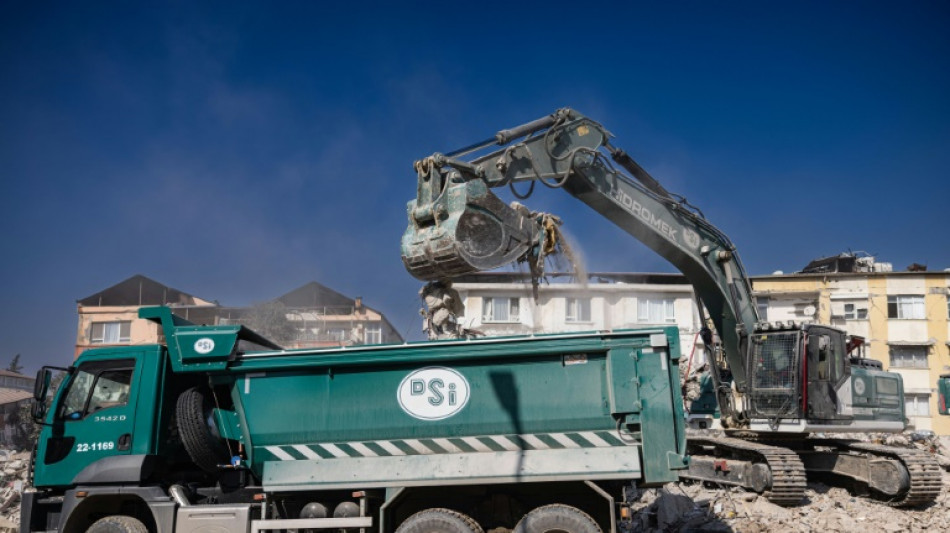
Half a dozen dump trucks offloaded their potentially hazardous cargo of rubble in a cloud of dust by a roadside in Antakya, Turkey, one of the cities worst hit by a deadly earthquake.
Two weeks after an earthquake devastated southern Turkey, which on Monday was once again rattled by a quake, experts fear millions of tons of debris will end up dumped in the open.
Police watched on as the rubble-laden trucks trundled along a winding road leading to the ancient citadel that overlooks the city of 400,000 people which is now almost entirely deserted.
An excavator and two diggers sat idle, surrounded by dozens of mounds that were once homes and workplaces.
Similar efforts to remove the ubiquitous rubble that now dominates quake-hit cities are under way in central Iskenderun, about 60 kilometres (40 miles) north of Antakya, AFP correspondents saw.
In Hatay province, the region worst-hit by the February 6 earthquake, the question of how to handle the debris is increasingly taking centre stage.
In Antakya, hundreds of excavators filled dump trucks which moved on in single file as operations to find survivors wound down.
In total, more than 118,000 buildings were destroyed or severely damaged by the earthquake, which killed more than 42,000 people in Turkey, and nearly 46,000 in total including neighbouring Syria.
Displaced people will start to move in within a year, he promised.
- 'Harming the environment' -
The scale of the task is daunting, but Erdogan has vowed the rubble will be removed and processed "without harming the environment and the people".
Last week, authorities had to reassure conservationists after footage emerged showing waste being dumped at a bird sanctuary in Hatay province.
"We have solved this problem. We will collect this waste... as soon as possible," Deputy Environment Minister Mehmet Emin Birpinar said on Twitter.
Koray Dogan Urbarli, a spokesman for Turkey's Green Party, said the authorities were only interested in getting "rid of the images that will lose votes for the government".
One hundred million tons containing "many substances harmful to human health and the ecosystem" must be removed with great care, he said.
The potentially harmful rubble being moved around the city on a vast fleet of trucks was entirely uncovered, AFP correspondents saw.
Asbestos, an insulating and carcinogenic substance which was permitted for use in Turkey until 2014, is almost certainly present, experts have said.
- 'Uncontrolled manner' -
"(It) can contain many different chemicals like lead or microplastics or asbestos," said Sedat Gundogdu, a plastic pollution specialist at Cukurova University in Adana.
The researcher estimates that the 200 million tons of rubble created by the earthquake is "seven times the amount of waste generated by Turkey yearly".
"We don't have the capacity to manage that amount of waste," he said.
The earthquake-related rubble, first temporarily transported to one site, will then be transferred to a second site and sorted before being buried, he said.
Authorities must ensure the floors of the dumping pits are not porous or else "they must be covered" with an impermeable layer to prevent contamination of groundwater, said Gundogdu.
"Moving these materials... in an uncontrolled manner will endanger the soil, water, air, the whole ecosystem, and life as a whole for many years," environmental campaign group Greenpeace told AFP.
Urbarli says the rapid removal of rubble may also hinder any investigation into possibly corrupt developers and contractors whose buildings collapsed.
"All this rubble is evidence!" he said.
Y.Chaudhry--DT