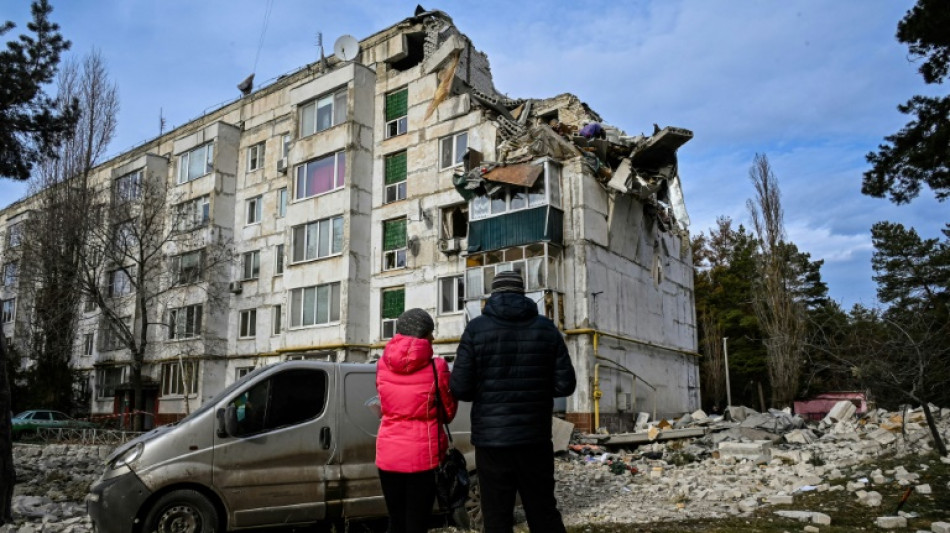
Ukraine welcomes Russian oil price cap agreed by EU, G7 / Photo: SERGEY BOBOK - AFP
Ukraine on Saturday welcomed a $60 price cap on Russian oil agreed by the EU, G7 and Australia, saying it would "destroy" Russia's economy.
The price cap, previously negotiated on a political level between the G7 group of wealthy democracies and the European Union, will come into effect with an EU embargo on Russian crude oil from Monday.
Poland had refused to back the price cap plan over concerns the ceiling was too high, before its ambassador to the EU confirmed Warsaw's agreement on Friday evening.
The embargo will prevent shipments of Russian crude by tanker vessel to the EU, which account for two thirds of imports, potentially depriving Russia's war chest of billions of euros.
"We always achieve our goal and Russia's economy will be destroyed, and it will pay and be responsible for all its crimes," Ukraine's presidential chief of staff Andriy Yermak said on Saturday on Telegram.
But a cap of "$30 would have destroyed it more quickly", he added.
The G7 said it was delivering on its vow "to prevent Russia from profiting from its war of aggression against Ukraine, to support stability in global energy markets and to minimise negative economic spillovers of Russia's war of aggression".
The White House described the deal as "welcome news", saying a price cap will help limit Russian President Vladimir Putin's ability to fund the Kremlin's "war machine".
- Infrastructure strikes 'inevitable' -
After suffering humiliating defeats during what has become the largest armed conflict in Europe since World War II, Russia began targeting Ukrainian energy infrastructure in October, causing sweeping blackouts.
Putin said Russian strikes on Ukrainian infrastructure were "inevitable", in his first conversation with German Chancellor Olaf Scholz since mid-September.
"Such measures have become a forced and inevitable response to Kyiv's provocative attacks on Russia's civilian infrastructure," Putin told Scholz, according to a Kremlin readout of the telephone talks.
The Kremlin leader referred in particular to the October attack on a bridge linking Moscow-annexed Crimea to the Russian mainland.
During the hour-long call, Scholz "urged the Russian president to come as quickly as possible to a diplomatic solution, including the withdrawal of Russian troops", according to the German leader's spokesman.
But Putin urged Berlin to "reconsider its approaches" and accused the West of carrying out "destructive" policies in Ukraine, the Kremlin said, stressing that its political and financial aid meant Kyiv "completely rejects the idea of any negotiations".
Ukrainian President Volodymyr Zelensky had ruled out any talks with Russia while Putin is in power, shortly after the Kremlin claimed to have annexed several Ukrainian regions.
- Talks off the table -
The Kremlin also indicated Moscow was in no mood for talks over Ukraine, after US President Joe Biden said he would be willing to sit down with Putin if the Russian leader truly wanted to end the fighting.
"What did President Biden say in fact? He said that negotiations are possible only after Putin leaves Ukraine," Putin's spokesman Dmitry Peskov told reporters, adding Moscow was "certainly" not ready to accept those conditions.
The White House, meanwhile, sought to pour water on the idea of talks as well on Friday, saying Biden currently has "no intention" of sitting down with Putin.
Russia's strikes have destroyed close to half of the Ukrainian energy system and left millions in the cold and dark at the onset of winter.
In the latest estimates from Kyiv, Mykhaylo Podolyak, an adviser to Zelensky, said as many as 13,000 Ukrainian soldiers have died in the fighting.
Both Moscow and Kyiv are suspected of minimising their losses to avoid damaging morale.
Top US general Mark Milley last month said more than 100,000 Russian military personnel have been killed or wounded in Ukraine, with Kyiv's forces likely suffering similar casualties.
Those who remain in the country have had to cope with emergency blackouts as authorities seek to relieve the pressure on the energy infrastructure.
burs-raz/gil
G.Gopinath--DT