Dubai Telegraph - 'Our home': Lesotho's last cave dwellers

EUR -
AED 4.166945
AFN 72.043593
ALL 94.496675
AMD 417.46613
ANG 2.031455
AOA 1040.460699
ARS 1677.275747
AUD 1.6462
AWG 2.043762
AZN 1.925407
BAM 1.956767
BBD 2.285029
BDT 139.552004
BGN 1.918533
BHD 0.427925
BIF 3386.677268
BMD 1.134635
BND 1.473873
BOB 7.840114
BRL 5.930963
BSD 1.13456
BTN 107.36387
BWP 15.522009
BYN 3.197479
BYR 22238.854557
BZD 2.281797
CAD 1.61561
CDF 2574.48791
CHF 0.922186
CLF 0.026505
CLP 1043.217941
CNY 7.70474
CNH 7.733584
COP 3893.217842
CRC 516.471035
CUC 1.134635
CUP 30.067839
CVE 110.312195
CZK 24.248744
DJF 202.035134
DKK 7.474689
DOP 66.504901
DZD 151.550983
EGP 56.300159
ERN 17.019532
ETB 182.916591
FJD 2.551512
FKP 0.860277
GBP 0.86268
GEL 3.001102
GGP 0.860277
GHS 12.707669
GIP 0.860277
GMD 82.264637
GNF 9941.129314
GTQ 8.654275
GYD 237.323497
HKD 8.895423
HNL 30.357995
HRK 7.536928
HTG 148.34785
HUF 356.337365
IDR 20406.418327
ILS 3.390174
IMP 0.860277
INR 106.959076
IQD 1486.234104
IRR 1560180.457463
ISK 143.814675
JEP 0.860277
JMD 178.6922
JOD 0.804473
JPY 183.557898
KES 146.946721
KGS 99.223523
KHR 4558.392164
KMF 489.028057
KPW 1021.17229
KRW 1750.84427
KWD 0.351203
KYD 0.945488
KZT 552.139753
LAK 24904.069215
LBP 101613.424928
LKR 382.759058
LRD 206.656628
LSL 18.862117
LTL 3.350284
LVL 0.68633
LYD 7.296765
MAD 10.667251
MDL 20.093368
MGA 4739.487199
MKD 61.680359
MMK 2382.212372
MNT 4062.070221
MOP 9.163428
MRU 45.365207
MUR 54.700986
MVR 17.541556
MWK 1967.323747
MXN 20.005777
MYR 4.695142
MZN 72.508194
NAD 18.862117
NGN 1556.90121
NIO 41.751542
NOK 11.192384
NPR 171.777847
NZD 2.010818
OMR 0.436276
PAB 1.134595
PEN 3.847885
PGK 4.97759
PHP 69.450741
PKR 315.542658
PLN 4.289739
PYG 6920.540287
QAR 4.124646
RON 5.236911
RSD 117.380269
RUB 84.983411
RWF 1666.659945
SAR 4.26043
SBD 9.150881
SCR 15.491856
SDG 681.345125
SEK 11.082949
SGD 1.472751
SHP 0.84712
SLE 28.081966
SLL 23792.741946
SOS 648.420278
SRD 42.503547
STD 23484.662718
STN 24.512107
SVC 9.927122
SYP 125.413635
SZL 18.859897
THB 37.919704
TJS 10.534435
TMT 3.98257
TND 3.372666
TOP 2.73193
TRY 52.757717
TTD 7.693037
TWD 36.005728
TZS 2973.315576
UAH 50.927601
UGX 4186.067647
USD 1.134635
UYU 45.29317
UZS 13642.979233
VES 699.917201
VND 29880.624223
VUV 134.792911
WST 3.133456
XAF 656.301415
XAG 0.019303
XAU 0.000284
XCD 3.066409
XCG 2.044773
XDR 0.813495
XOF 656.292735
XPF 119.331742
YER 270.780817
ZAR 18.840906
ZMK 10213.084035
ZMW 20.450732
ZWL 365.352148
  • RYCEF

    -0.4700

    18.16

    -2.59%

  • CMSC

    -0.0550

    22.055

    -0.25%

  • NGG

    0.5650

    82.135

    +0.69%

  • GSK

    -0.9500

    51.12

    -1.86%

  • VOD

    -0.2300

    13.82

    -1.66%

  • RIO

    -1.9600

    93.62

    -2.09%

  • BTI

    0.6750

    61.415

    +1.1%

  • BCE

    0.1200

    23.16

    +0.52%

  • AZN

    2.3600

    183.38

    +1.29%

  • RBGPF

    0.9600

    61.3

    +1.57%

  • BP

    -1.5100

    37.82

    -3.99%

  • BCC

    4.3000

    76.1

    +5.65%

  • CMSD

    0.1000

    22.06

    +0.45%

  • JRI

    -0.0300

    12.6

    -0.24%

  • RELX

    0.0250

    31.235

    +0.08%

'Our home': Lesotho's last cave dwellers
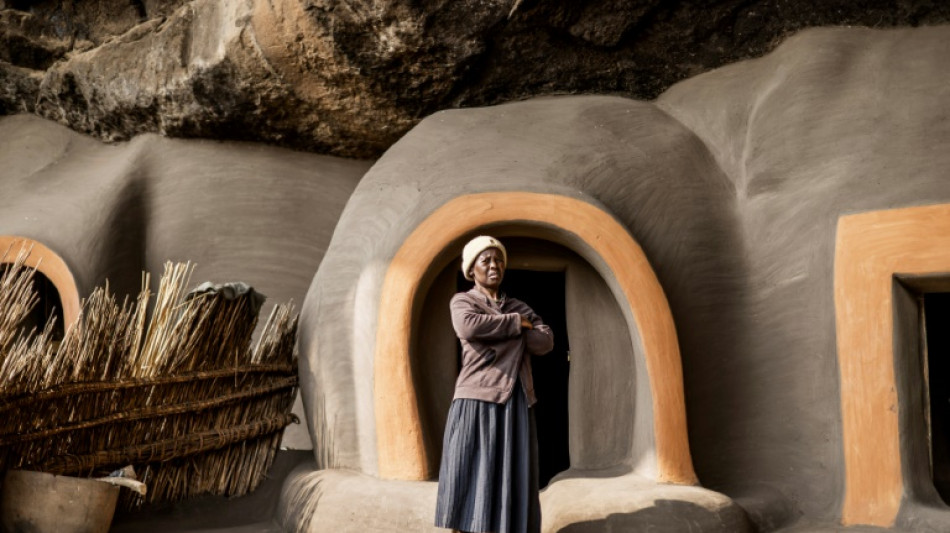
'Our home': Lesotho's last cave dwellers / Photo: Marco Longari - AFP

'Our home': Lesotho's last cave dwellers

Inside a dimly-lit mud dwelling nestled within a rocky mountain in the southern African kingdom of Lesotho, Mamotonosi Ntefane, 67, dusts off an animal skin.

Text size:

Her household is among a handful of families who still inhabit the Kome Caves, a heritage site in the north of the country, first occupied about 200 years ago by local tribes seeking shelter from conflict and cannibalism.

"Life is good, we grow our own vegetables, I can pray anytime I want," Ntefane, a rosary around her neck, tells AFP.

More than 1,800 metres above sea level, some 50 kilometres (30 miles) from the capital Maseru, the settlement is surrounded by barren pastures, where shepherds draped in long woollen blankets graze cattle in the morning mist.

Thin white smoke billows from outside the caves as "papa", a traditional corn porridge, boils in a black cast iron pot over a wood fire.

The cave is divided into several round houses propped against the basalt rock.

Open passages just high enough for a person to walk through serve as doorways. Walls and floors are made of a mix of mud and manure that require regular upkeep.

Inside are basic items including pots, plastic buckets to store water and a cowhide for a bed.

"There's no electricity and no fridge but this is our home, it's our history," says 44-year-old Kabelo Kome who is descended from the first people to settle the caves, after whom the place is named.

- Hideout -

The caves became a hideout for members of the Basia and Bataung tribes in the 19th century, when conflict and a severe drought ravaged the region.

Christian missionaries travelling the area at the time reported some groups resorted to cannibalism to survive, as livestock and grain reserves dwindled.

It was in this period that Lesotho emerged as a single entity, as the Sotho, the region's largest ethnic group, united to fight Zulu raiders and European settlers.

Today, most of the country's two million people live off subsistence farming.

Inhabitants of the Kome Caves grow corn, sorghum and beans and raise chickens and cattle.

The elderly receive a state allowance, while others make money showing their homes to tourists.

Some like Mamatsaseng Khutsoane, a 66-year-old former teacher, have moved to a nearby village with greater creature comforts.

"I come here to eat, or with my grandchildren," she says.

There is mobile phone coverage, but no fixed internet or running water.

"None of that here," scoffs Ntefane, as she stands outside her home, gazing at the mountains, while cow bells ring in the distance.

J.Alaqanone--DT