Dubai Telegraph - Danish fish fossil cliffs set to gain UNESCO status

EUR -
AED 4.211192
AFN 74.534894
ALL 91.798294
AMD 418.583419
ANG 2.052982
AOA 1051.508635
ARS 1734.686313
AUD 1.61298
AWG 2.06403
AZN 1.9526
BAM 1.95619
BBD 2.324263
BDT 142.088317
BGN 1.930374
BHD 0.435087
BIF 3451.587861
BMD 1.146684
BND 1.469493
BOB 12.688529
BRL 5.908976
BSD 1.15403
BTN 110.738069
BWP 15.652119
BYN 3.504498
BYR 22474.997001
BZD 2.320963
CAD 1.604761
CDF 2648.838265
CHF 0.945767
CLF 0.027702
CLP 1093.84416
CNY 7.690122
CNH 7.690783
COP 3593.924023
CRC 516.202873
CUC 1.146684
CUP 30.387113
CVE 110.286979
CZK 24.326834
DJF 205.500954
DKK 7.475132
DOP 68.123576
DZD 153.519917
EGP 59.858023
ERN 17.200253
ETB 188.498165
FJD 2.569431
FKP 0.852762
GBP 0.856842
GEL 2.98718
GGP 0.852762
GHS 13.253641
GIP 0.852762
GMD 84.854456
GNF 10147.022181
GTQ 8.809756
GYD 241.438116
HKD 8.996082
HNL 30.973173
HRK 7.534514
HTG 150.830059
HUF 364.99048
IDR 20354.779172
ILS 3.486142
IMP 0.852762
INR 109.959209
IQD 1511.801284
IRR 1576202.500407
ISK 139.803249
JEP 0.852762
JMD 182.116294
JOD 0.813022
JPY 178.606852
KES 149.045502
KGS 100.277358
KHR 4672.93126
KMF 490.780837
KPW 1032.015533
KRW 1586.488226
KWD 0.354061
KYD 0.961692
KZT 513.142263
LAK 25832.007893
LBP 103332.632108
LKR 382.464534
LRD 200.219901
LSL 18.786488
LTL 3.385858
LVL 0.693617
LYD 7.329461
MAD 10.882269
MDL 20.118343
MGA 4989.994447
MKD 61.537264
MMK 2407.651041
MNT 4124.449997
MOP 9.324758
MRU 46.206208
MUR 54.650852
MVR 17.670513
MWK 2001.098795
MXN 19.762248
MYR 4.697937
MZN 73.304886
NAD 18.788044
NGN 1525.960921
NIO 42.468463
NOK 10.806425
NPR 177.18131
NZD 2.000826
OMR 0.4409
PAB 1.15403
PEN 3.871672
PGK 5.21804
PHP 71.954853
PKR 319.861345
PLN 4.363635
PYG 6828.360812
QAR 4.195236
RON 5.263736
RSD 117.372257
RUB 96.606803
RWF 1702.739336
SAR 4.244305
SBD 9.174055
SCR 15.903892
SDG 689.732465
SEK 11.282193
SGD 1.463151
SHP 0.856533
SLE 28.254038
SLL 24045.370772
SOS 659.531437
SRD 43.290166
STD 23734.033729
STN 24.504884
SVC 10.098012
SYP 14909.179425
SZL 18.785744
THB 38.252789
TJS 10.645722
TMT 4.013392
TND 3.378573
TOP 2.760939
TRY 55.814717
TTD 7.824559
TWD 36.571523
TZS 3045.508853
UAH 51.464956
UGX 4517.900364
USD 1.146684
UYU 46.42905
UZS 13605.711457
VES 969.469258
VND 29808.611456
VUV 135.660782
WST 3.145254
XAF 655.957
XAG 0.017967
XAU 0.000266
XCD 3.098969
XCG 2.079814
XDR 0.810765
XOF 655.957
XPF 119.331742
YER 271.362267
ZAR 18.723823
ZMK 10321.524262
ZMW 22.647513
ZWL 369.231626
SSP 6488.13688
MXV 2.240628
  • RBGPF

    0.0000

    69.99

    0%

  • CMSC

    0.1400

    20.48

    +0.68%

  • CMSD

    0.1785

    20.29

    +0.88%

  • VOD

    -0.2200

    17.46

    -1.26%

  • RIO

    -1.4700

    95.79

    -1.53%

  • GSK

    0.2800

    50.29

    +0.56%

  • RYCEF

    -0.0100

    19.29

    -0.05%

  • NGG

    1.1000

    76.03

    +1.45%

  • BCE

    -0.4000

    22.5

    -1.78%

  • BCC

    -0.6200

    75.31

    -0.82%

  • BTI

    -0.4300

    56.09

    -0.77%

  • BP

    -1.5800

    45.38

    -3.48%

  • AZN

    1.0400

    162.89

    +0.64%

  • RELX

    0.0500

    34.27

    +0.15%

  • JRI

    -0.1200

    11.5

    -1.04%

Danish fish fossil cliffs set to gain UNESCO status
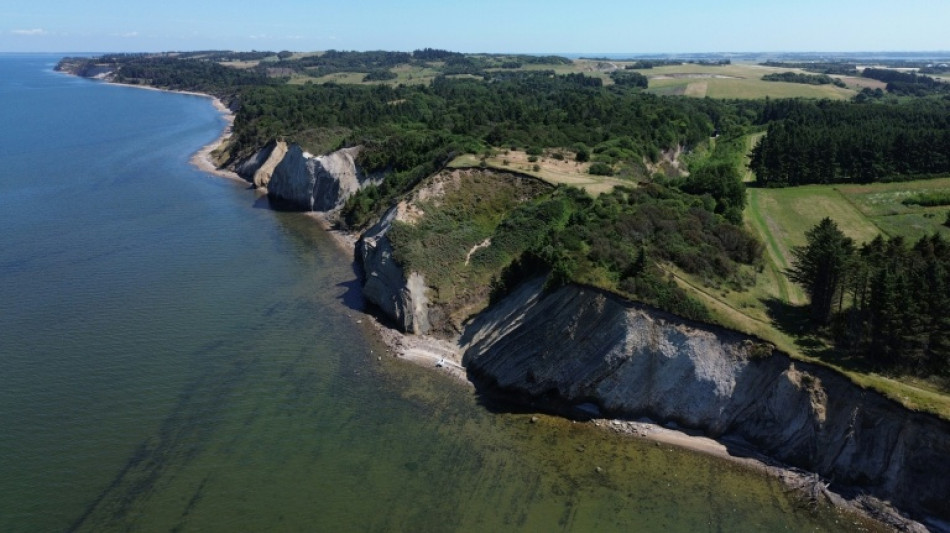
Danish fish fossil cliffs set to gain UNESCO status / Photo: James BROOKS - AFP

Danish fish fossil cliffs set to gain UNESCO status

Two Danish coastal cliffs where palaeontologists have uncovered 55-million-year-old fossils of prehistoric wildlife are likely to gain World Heritage status as UNESCO's committee meets in South Korea.

Text size:

, have for decades been known for what UNESCO terms "exceedingly well-preserved" fossils of early insects, birdlife, and more than 80 different fish species, including ancient relatives of mackerel and herring.

"It's very unique," said Jan Audun Rasmussen, a researcher and curator from Museum Mors, who co-authored the UNESCO bid.

"What we can show in these deposits is the first evolution of many of the fish lineages and bird lineages," he told AFP.

Fifty-five million years ago, all of Denmark was covered by water and Limfjord's low-oxygen clay seafloor provided a perfect time capsule for fish, birds and turtles that died and sank to the seabed.

There was no oxygen for small organisms that would eat the bodies of dead animals, explained Audun Rasmussen, standing below the towering 60-metre-high (200-foot) Hanklit.

"That means that the preservation of the fossils... it's excellent."

The cliffs are already on the UNESCO's tentative list and the International Union for Conservation of Nature (IUCN) has recommended they be included on the World Heritage list.

- Climate change insight -

Beyond providing a glimpse into the distant past, Hanklit and Knudeklint might also offer some lessons on the impact of climate change that is warming our planet.

The cliffs' rock layers capture a dramatic, 56-million-year-old global warming event -- one of the largest climate catastrophes in Earth's history -- when a massive release of greenhouse gases sent global temperatures soaring by between 5 and 8 degrees Celsius.

"Obviously, warming causes a lot of changes in the animals," said Laura Jane Cotton of Denmark's Natural History Museum.

Cotton told AFP the Limfjord cliff fossils -- which include specimens from during and after the event -- provide researchers with an environmental "snapshot" that was the "best analogue for modern warming".

"While we can't say exactly what went extinct when, we can get an idea of it if things disappear from this environment very suddenly," she said.

If listed, the Hanklit and Knudeklint cliffs on the fjord islands of Mors and Fur would become the fifth natural site on Danish soil to receive UNESCO World Heritage status -- including one in the autonomous territory of Greenland.

Discussions on a UNESCO bid began in 2010.

The area is popular with amateur fossil hunters, and the "treasure troves" of Hanklit and Knudeklint have been protected for decades under Danish law.

Thomas Olesen, project leader for the local Skive municipality, believes UNESCO recognition will provide a welcome boost to tourism, particularly on the small island of Fur, home to just 700 residents.

"Hopefully it will have a very positive effect on the local economy," said Olesen, standing atop the 30-metre Knudeklint cliff.

H.El-Hassany--DT