Dubai Telegraph - New dyeing method could help jeans shrink toxic problem

EUR -
AED 4.237091
AFN 72.685001
ALL 95.954988
AMD 434.520707
ANG 2.065282
AOA 1057.974892
ARS 1578.268494
AUD 1.674968
AWG 2.079607
AZN 1.961076
BAM 1.955893
BBD 2.321221
BDT 141.406739
BGN 1.97209
BHD 0.434945
BIF 3423.363136
BMD 1.153735
BND 1.481071
BOB 7.98138
BRL 6.041996
BSD 1.15246
BTN 108.601646
BWP 15.844824
BYN 3.46098
BYR 22613.205604
BZD 2.317921
CAD 1.598326
CDF 2636.861817
CHF 0.916875
CLF 0.027131
CLP 1071.288545
CNY 7.973981
CNH 7.982415
COP 4256.232177
CRC 534.325463
CUC 1.153735
CUP 30.573977
CVE 110.270255
CZK 24.510982
DJF 205.230669
DKK 7.473549
DOP 69.483311
DZD 153.46996
EGP 60.805986
ERN 17.306025
ETB 178.11666
FJD 2.604445
FKP 0.862804
GBP 0.865071
GEL 3.109331
GGP 0.862804
GHS 12.5996
GIP 0.862804
GMD 84.806546
GNF 10103.481469
GTQ 8.81642
GYD 241.11149
HKD 9.029246
HNL 30.602591
HRK 7.535854
HTG 150.927192
HUF 387.816349
IDR 19534.982991
ILS 3.604379
IMP 0.862804
INR 108.656856
IQD 1509.77849
IRR 1515200.148882
ISK 143.420403
JEP 0.862804
JMD 181.129416
JOD 0.818
JPY 184.183982
KES 149.651251
KGS 100.893962
KHR 4615.219932
KMF 492.645362
KPW 1038.428166
KRW 1741.043798
KWD 0.354439
KYD 0.96045
KZT 555.218864
LAK 24893.29414
LBP 103205.065372
LKR 362.458843
LRD 211.480994
LSL 19.716525
LTL 3.406679
LVL 0.697883
LYD 7.359383
MAD 10.760113
MDL 20.243052
MGA 4803.249709
MKD 61.64141
MMK 2422.824743
MNT 4134.787378
MOP 9.286983
MRU 45.972191
MUR 53.798539
MVR 17.836537
MWK 1998.403892
MXN 20.670085
MYR 4.609743
MZN 73.734887
NAD 19.716525
NGN 1597.645586
NIO 42.412021
NOK 11.188379
NPR 173.763034
NZD 2.002301
OMR 0.443616
PAB 1.152455
PEN 3.98849
PGK 4.980237
PHP 69.473364
PKR 321.687324
PLN 4.276492
PYG 7544.392214
QAR 4.2022
RON 5.096397
RSD 117.469833
RUB 93.889678
RWF 1682.987494
SAR 4.328787
SBD 9.278308
SCR 15.858649
SDG 693.394519
SEK 10.87701
SGD 1.483547
SHP 0.8656
SLE 28.32444
SLL 24193.258148
SOS 658.634241
SRD 43.33659
STD 23879.9847
STN 24.501168
SVC 10.084524
SYP 128.575537
SZL 19.711025
THB 38.038772
TJS 11.029273
TMT 4.04961
TND 3.391062
TOP 2.777916
TRY 51.293934
TTD 7.822407
TWD 36.856028
TZS 2967.654281
UAH 50.571029
UGX 4287.204301
USD 1.153735
UYU 46.722226
UZS 14037.668947
VES 537.661435
VND 30402.070452
VUV 137.321383
WST 3.172229
XAF 655.991103
XAG 0.016798
XAU 0.000262
XCD 3.118027
XCG 2.077108
XDR 0.815842
XOF 655.991103
XPF 119.331742
YER 275.338743
ZAR 19.72108
ZMK 10385.000211
ZMW 21.638125
ZWL 371.502193
  • RBGPF

    -13.5000

    69

    -19.57%

  • BCC

    -0.3600

    74.29

    -0.48%

  • CMSC

    -0.0900

    22.82

    -0.39%

  • RYCEF

    -0.6000

    15.3

    -3.92%

  • BCE

    -0.0200

    25.47

    -0.08%

  • BTI

    -0.1900

    58.26

    -0.33%

  • GSK

    -0.7600

    53.94

    -1.41%

  • RIO

    -1.7500

    85.79

    -2.04%

  • JRI

    -0.0300

    12.07

    -0.25%

  • RELX

    -0.4000

    32.07

    -1.25%

  • NGG

    -1.8900

    82.4

    -2.29%

  • CMSD

    0.0700

    22.75

    +0.31%

  • VOD

    -0.0900

    14.63

    -0.62%

  • AZN

    -3.7400

    183.4

    -2.04%

  • BP

    0.7600

    46.17

    +1.65%

New dyeing method could help jeans shrink toxic problem
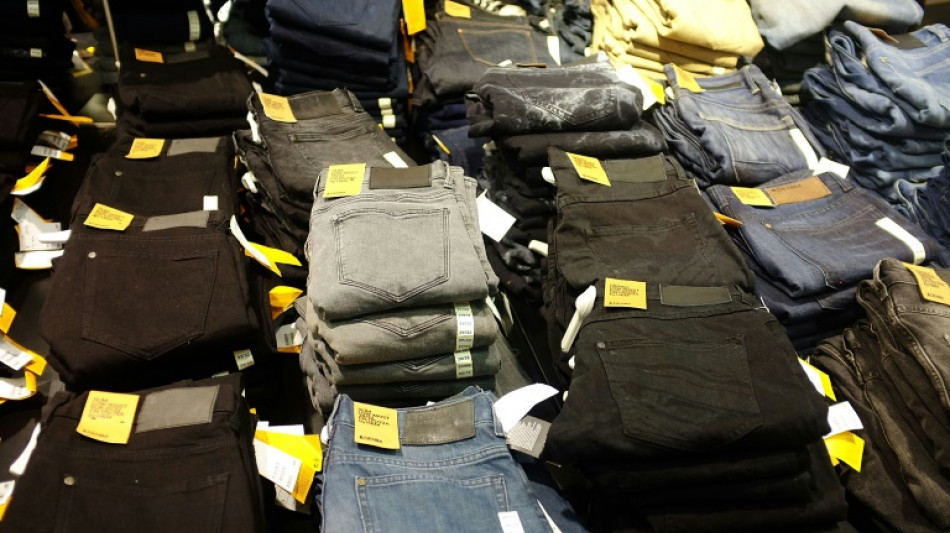
New dyeing method could help jeans shrink toxic problem / Photo: SPENCER PLATT - GETTY IMAGES NORTH AMERICA/AFP/File

New dyeing method could help jeans shrink toxic problem

Can the multi-billion-dollar denim industry keep producing blue jeans in every shape, size and silhouette, while shrinking oversized levels of hazardous pollution? Research published Tuesday suggests a new dye could be a step in the right direction.

Text size:

Scientists have been searching for ways to make a more sustainable form of indigo, used for centuries to colour textiles, but which in its modern synthetic form needs toxic chemicals, large quantities of water and is linked to substantial carbon dioxide emissions.

But a study published in the journal Nature Communications suggests ditching the classic dye altogether.

Using Indican -- a colourless compound also derived form indigo-producing plants -- could reduce the environmental and societal impacts associated with dying jeans by around 90 percent because it does not need toxic chemicals, researchers said.

"It's been known for some years that indigo could be replaced by this other chemical called indican, because you can use it without any strong chemicals," study author Ditte Hededam Welner, a researcher at the Novo Nordisk Foundation Center for Biosustainability Enzyme Engineering and Structural Biology, told AFP.

The researchers engineered a variant of an enzyme found in the indigo-producing plant that could produce indican on an industrial scale.

While they said production of indican would still require polluting petrochemicals, so would not be significantly better than producing synthetic indigo, the benefits come when the dye is put to use.

Indican in powdered form can be dissolved in water then used on fabric and activated with either an enzyme or exposure to light.

The study found light-driven dyeing could cut the environmental damage of traditional indigo dyeing by 73 percent, while using the enzyme could slash the impacts by up to 92 percent.

In both cases, the classic blue jean colour turns up the same as when conventional indigo is used.

Researchers suggest that, if indican were to replace indigo to dye the nearly four billion jeans traded annually, there would be a significant reduction in production of toxic waste and global CO2 emissions.

The authors, who have a published patent for their study, acknowledged limitations to their work, including a lack of facilities to simulate indican production at scale.

Indican could also be slightly more expensive than traditional dye, they said.

But the study said growing consumer demand for sustainable clothing could still make indican "a commercially viable route".

V.Munir--DT