Nepal's young PM faces gravest test after flood catastrophe / Photo: Arun SANKAR - AFP
Nepal's rapper-turned-prime minister swept to power six months ago promising reform, but his young government now faces its gravest test after a glacial collapse unleashed catastrophe, analysts say.
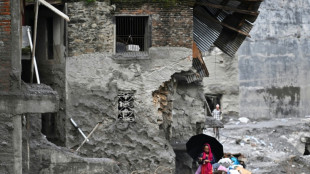
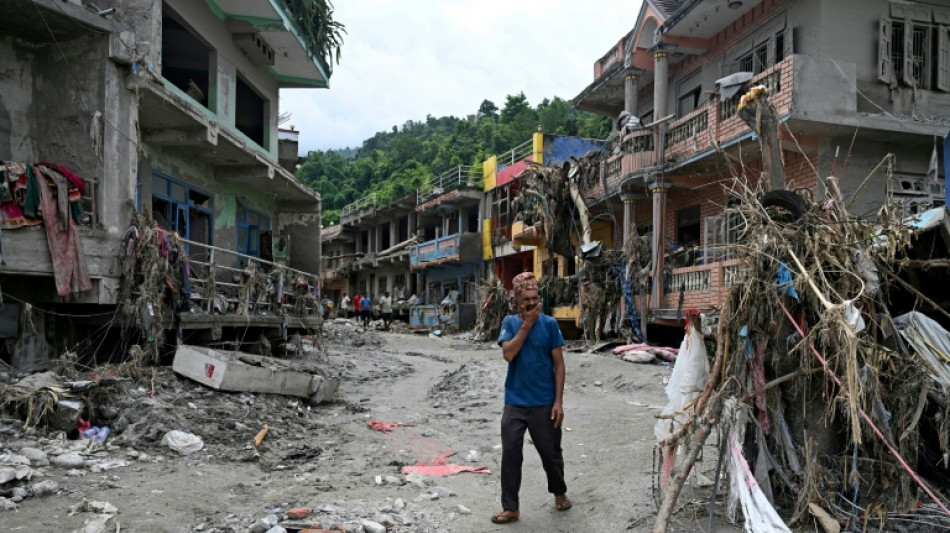
A huge wave of freezing water and debris killed more than 1,000 people and left nearly 4,500 missing, with Kathmandu warning reconstruction costs could run into the "billions of dollars".
The Himalayan nation has limited resources to confront destruction on such a scale, and the disaster is stark warning of the dangerous fragility of its mountain environment in a rapidly heating world.
But the August 26 disaster also came just ahead of the anniversary of last year's September 8-9 youth-driven anti-corruption protests that toppled the previous government.
Prime Minister Balendra Shah, the 36-year-old former Kathmandu mayor widely known as "Balen", won March elections on a wave of euphoria and promises of political change.
But he has since remained an elusive public figure -- often seen in a sharp black suit and sunglasses, while largely communicating through social media.
He posted a message hours after the floods, urging the country to "stand together", and has visited the disaster zones.
But, one week after Nepal's deadliest disaster since the 2015 earthquake, Shah has still not publicly addressed the nation.
- 'First major test' -
Many say the scale of the catastrophe meant any government would have struggled with the rescue and relief effort.
"The government may be inexperienced, but it has done its best," said Prakash Aryal, who has been searching morgues for his sister and her family, speaking to AFP at a Kathmandu hospital.
"The previous government would not even take calls, but this time there are officers everywhere helping people like us."
Shah's government said they were doing their best under the hardest of circumstances.
"Definitely, with this scale of disaster, often times there will be areas where we still need to improve," Nepal's Foreign Minister Shisir Khanal told AFP in an interview.
"But we're listening to people and if there are other challenges that we need to overcome... we'll continuously ensure that we perform the best given the challenges."
Shah was propelled to office with enormous support offering a new face of old generation of leaders.
"Expectations were exceptionally high when Balen came to office, especially among young voters who saw him as a break from Nepal's political establishment," said Brian Braun of the Control Risks consultancy.
"Six months in, the picture is more mixed."
Braun said Shah could point to faster public services and an anti-corruption push, but voters were still waiting for the jobs, higher incomes and economic opportunities that formed a central part of his promise of transformation.
"The floods are now his first major test of whether that goodwill can survive a genuine crisis," Braun said.
The crisis has also renewed scrutiny of Shah's leadership style.
"He shies away from the cameras, he doesn't address the nation at times and moments when people might expect him to," said Ashish Pradhan of the International Crisis Group.
Yet Pradhan said there remained a widespread belief that Shah represented "a different form of politics", particularly through his government's emphasis on fighting corruption.
- 'Optics are encouraging' -
Kunda Dixit, publisher of the Nepali Times weekly, said the government's early response had provided encouraging images of ministers and officials on the ground.
"During the earthquake, officials were hardly seen on the ground," Dixit said, contrasting that 2015 response with the scenes from this disaster.
"Those optics are encouraging to the people but, in the end, the results have to be evaluated on how people are helped, and how efficient is the government in the relief and rescue operation," he told AFP.
The disaster could also derail Shah's ambitious reform agenda.
Pradhan said the scale of devastation meant reconstruction could take precedence over promises to transform the economy and accelerate development.
"Reconstruction might take the priority over reform," he said, pointing to devastated hydropower projects, destroyed communities and the urgent need to restore livelihoods.
Braun warned the economic consequences could extend long beyond the immediate disaster, particularly because flooding damaged critical hydropower infrastructure in Nepal's key electricity export sector.
The disaster also destroyed a key trade route with China and struck areas popular with trekkers and pilgrims, threatening further economic losses.
For Shah, analysts say, the catastrophe may also force climate change to the centre of Nepal's national agenda.
Pradhan said Nepal may ultimately have to view climate change "as a national security imperative", given the scale of destruction and loss of life.
Dixit, noting the millions of international aid being pledged for Nepal, said the government will be judged on how it is used.
"The real test will be how that money is spent -- will it go first to the most needy people?" he said.
Y.Al-Shehhi--DT