Dubai Telegraph - UN says Sudan resources fuel civil war

EUR -
AED 4.240661
AFN 75.055375
ALL 91.712691
AMD 419.720863
ANG 2.067349
AOA 1060.021451
ARS 1740.139649
AUD 1.619478
AWG 2.079918
AZN 1.959843
BAM 1.957789
BBD 2.325642
BDT 142.164398
BGN 1.943883
BHD 0.435238
BIF 3452.47682
BMD 1.154708
BND 1.46938
BOB 13.33643
BRL 5.941086
BSD 1.154663
BTN 110.801583
BWP 15.627738
BYN 3.506131
BYR 22632.273853
BZD 2.322239
CAD 1.608158
CDF 2670.239636
CHF 0.944783
CLF 0.027901
CLP 1101.683802
CNY 7.749764
CNH 7.746993
COP 3607.111022
CRC 516.720364
CUC 1.154708
CUP 30.599758
CVE 110.375676
CZK 24.299695
DJF 205.617067
DKK 7.475313
DOP 67.898377
DZD 154.384613
EGP 59.959244
ERN 17.320618
ETB 185.907753
FJD 2.55531
FKP 0.85672
GBP 0.856522
GEL 3.001296
GGP 0.85672
GHS 13.261297
GIP 0.85672
GMD 84.868683
GNF 10153.224815
GTQ 8.814877
GYD 241.573277
HKD 9.057534
HNL 31.084527
HRK 7.531701
HTG 150.911976
HUF 365.231755
IDR 20432.555399
ILS 3.503617
IMP 0.85672
INR 110.753109
IQD 1513.244637
IRR 1587261.41017
ISK 139.833216
JEP 0.85672
JMD 181.861569
JOD 0.818648
JPY 179.232626
KES 149.696591
KGS 100.978968
KHR 4677.710693
KMF 493.060761
KPW 1039.237432
KRW 1580.056315
KWD 0.356297
KYD 0.962269
KZT 516.430071
LAK 25841.023227
LBP 103400.029098
LKR 380.923609
LRD 201.603025
LSL 18.787083
LTL 3.409552
LVL 0.698472
LYD 7.320632
MAD 10.917094
MDL 20.074216
MGA 5051.84629
MKD 61.588623
MMK 2424.452972
MNT 4151.261485
MOP 9.329495
MRU 46.246332
MUR 54.537163
MVR 17.782612
MWK 2005.164634
MXN 19.788407
MYR 4.670101
MZN 73.797481
NAD 18.77731
NGN 1530.415431
NIO 42.27396
NOK 10.776525
NPR 177.282533
NZD 2.007154
OMR 0.443985
PAB 1.154663
PEN 3.874038
PGK 5.129788
PHP 72.414013
PKR 320.101358
PLN 4.340789
PYG 6872.921382
QAR 4.205388
RON 5.259927
RSD 117.361067
RUB 97.22604
RWF 1696.193464
SAR 4.333705
SBD 9.279521
SCR 15.946242
SDG 694.558334
SEK 11.28179
SGD 1.470087
SHP 0.857053
SLE 28.451622
SLL 24213.636878
SOS 659.858797
SRD 43.590087
STD 23900.121142
STN 24.883954
SVC 10.103174
SYP 15013.511755
SZL 18.752618
THB 38.424637
TJS 10.651727
TMT 4.053025
TND 3.36453
TOP 2.780259
TRY 56.184391
TTD 7.835891
TWD 36.692226
TZS 3057.09247
UAH 51.54701
UGX 4537.549896
USD 1.154708
UYU 46.436764
UZS 13584.798231
VES 971.32176
VND 29994.113748
VUV 136.436829
WST 3.160128
XAF 655.957
XAG 0.017914
XAU 0.000267
XCD 3.120655
XCG 2.081032
XDR 0.816438
XOF 655.957
XPF 119.331742
YER 273.129813
ZAR 18.747086
ZMK 10393.757908
ZMW 22.544704
ZWL 371.815456
SSP 6530.200245
MXV 2.243736
  • CMSD

    -0.1700

    20.07

    -0.85%

  • CMSC

    -0.1000

    20.32

    -0.49%

  • NGG

    -0.0300

    74.93

    -0.04%

  • GSK

    -0.0400

    50.01

    -0.08%

  • RIO

    -0.3800

    97.26

    -0.39%

  • BTI

    -0.7700

    56.52

    -1.36%

  • BCE

    -0.2534

    22.9

    -1.11%

  • BCC

    0.6800

    75.93

    +0.9%

  • RYCEF

    0.2600

    19.3

    +1.35%

  • JRI

    -0.2065

    11.62

    -1.78%

  • RELX

    -1.5000

    34.22

    -4.38%

  • RBGPF

    0.0000

    69.99

    0%

  • VOD

    0.1500

    17.68

    +0.85%

  • AZN

    -1.9300

    161.85

    -1.19%

  • BP

    1.0300

    46.96

    +2.19%

UN says Sudan resources fuel civil war
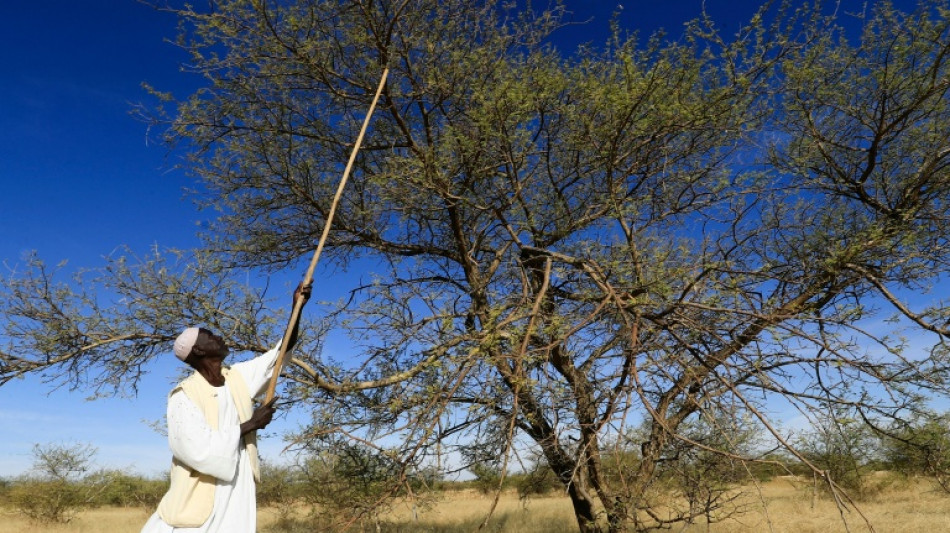
UN says Sudan resources fuel civil war / Photo: ASHRAF SHAZLY - AFP

UN says Sudan resources fuel civil war

Sudan's rival factions are profiting from control over the country's resources and the "war economy" was sustaining the conflict, the United Nations said Wednesday.

Text size:

To fund the growing cost of military operations, the two sides rely on exploiting territory, trade routes, and commodities, contributing to a conflict that has become "increasingly self-perpetuating", said the UN human rights office OHCHR.

The war between Sudan's regular army and the paramilitary Rapid Support Forces (RSF), that erupted in April 2023, has killed 200,000 people by some estimates and displaced upwards of 11 million. Several areas of Sudan have been plunged into hunger and famine.

OHCHR called on the two sides, and corporations involved in collecting and selling Sudanese commodities, to ensure compliance with international law.

"Sudan's vast wealth of natural resources should benefit its people," said UN rights chief Volker Turk.

"Distressingly, what we are seeing today is anything but that. In fact, this wealth is only serving to undermine human rights and drive conflict, bringing pain and suffering on an enormous scale.

"This war economy must be disrupted, and the international community must pay much closer attention to the commodities and trade routes that help keep it alive."

- Gum arabic trade -

OHCHR issued a report focusing on the trade in gum arabic -- a key ingredient in products ranging from soft drinks, to cosmetics and pharmaceuticals.

Sudan accounted for 70-80 percent of global crude gum arabic exports before the war.

Although modest in export value compared with other commodities, it is an important income source for millions of Sudanese, and remains one of the country's most internationally relied-upon exports.

The report found that many who depend on the gum arabic trade have faced looting, extortion, arbitrary detention and threats -- particularly at the hands of the parties to the conflict and their allies.

In May 2025, for instance, the Gum Arabic Exchange and its warehouses, plus part of the local market in El-Nuhud in West Kordofan state, were reportedly looted by the RSF when stocks were full and ready for export.

This severely disrupted local trade and livelihoods, the report said.

OHCHR said that Sudan's gum arabic trade had been reshaped by the fragmentation of the country since the war started.

Gum arabic from areas controlled by the armed forces goes towards Port Sudan for export, while significant quantities from RSF-controlled areas have been redirected to neighbouring countries via cross-border smuggling routes.

The report said this may then be treated and traded as locally-produced, making its origin hard to verify.

Turk, the UN high commissioner for human rights, urged countries and companies linked to trade in Sudanese commodities, including gum arabic, to ensure their business was not fuelling the conflict or damaging human rights.

He urged countries to strengthen accountability, traceability and regulatory oversight and respect human rights.

"Companies cannot continue business as usual when sourcing from conflict-affected value chains," Turk said.

X.Wong--DT